From Cotton to Credibility: Can Uzbekistan Meet Europe’s New Sustainability Test?
Uzbekistan can strengthen its place in European textile value chains through better product information, water and energy efficiency, and manufacturing technology. Practical EU–Uzbekistan partnerships can benefit producers and buyers alike.
Analysis. By Jakhongir Isaev, Head of the Department, NGO Centre for Sustainable Development, Uzbekistan.
1. A new opportunity for industry and exports
A shirt sold in Europe carries more than a price tag. Increasingly, buyers also want reliable information about where its materials came from and how efficiently it was made. For Uzbekistan, whose textile industry links cotton cultivation to spinning, fabric production and finished garments, those expectations create a practical opportunity: to compete through quality, traceability and resource efficiency, not only price.
The opportunity is mutual. Uzbek producers can gain access to higher-value customer relationships, production know-how and new technologies. European buyers can broaden their supplier networks and develop partnerships in which product characteristics and environmental performance are supported by clear records. This is a story about industrial upgrading, rather than geopolitical competition for Central Asia.
2. Europe’s market is changing—but not all rules are in force
European trade policy already connects access to the EU market with sustainable development commitments. Uzbekistan has benefited from the EU’s GSP+ arrangement since April 2021. The European Commission’s July 2026 assessment reported that EU imports using GSP+ preferences from Uzbekistan reached €448.2 million in 2024, almost five times the 2021 level. The figure covers preferential imports generally; it should not be mistaken for the value of textile imports alone. [1]
The EU adopted its revised Generalised Scheme of Preferences (GSP) Regulation (EU) 2026/1395 in June 2026; the new rules are due to apply from 1 January 2027. Exporters can use this transition period to strengthen product documentation, quality assurance and their understanding of applicable market requirements. GSP+ and ecodesign rules are distinct policy instruments: preferential tariffs do not themselves establish that a product meets future ecodesign obligations. [2]
A separate development concerns product sustainability. Under the EU's Ecodesign for Sustainable Products Regulation, textiles are a priority product group. The European Commission currently plans to adopt textile-specific measures in the fourth quarter of 2027. Future Digital Product Passport requirements are intended to improve access to relevant product information. They are not yet a universal, binding obligation for all textile products; details and application dates will depend on subsequent product-specific rules. [3]
The policy direction is clearer than the precise final compliance calendar: durability, resource efficiency, product information and traceability are becoming more important. Uzbek companies need not wait for every detailed rule to be finalised before improving the quality of their records. They should, however, avoid spending heavily on unverified claims about requirements that have not yet been adopted.
3. Making sustainability a competitive advantage
For cotton-growing and textile-producing economies, environmental performance can be improved through better irrigation management, efficient machinery, responsible chemical use, wastewater treatment and more consistent information across production stages. These are not simply reporting exercises: they can lower operating costs, improve product quality and help producers demonstrate progress to prospective buyers.
Water offers a concrete example. According to the World Bank, agriculture accounts for around 90 per cent of Uzbekistan's water consumption. In May 2025, the Bank approved a $200 million project to modernise irrigation infrastructure in five regions. The project is expected—once implemented—to reduce annual water losses by approximately 540 million cubic metres and save more than 165 million kilowatt-hours of electricity a year. These are programme targets, not achieved savings, and they relate to irrigation generally rather than to the measured footprint of a particular textile product. [4]
For the textile sector, the practical lesson is to measure resource use where improvements can be demonstrated. A participating factory could establish a baseline for water use in dyeing, electricity consumption per unit of output and wastewater treatment performance, and then publish comparable results after an equipment upgrade. At the cultivation stage, reliable irrigation data would make it easier to understand how resource-efficient sourcing is developing.
Traceability can be approached in similarly manageable steps. A pilot product line can record its movement through ginning, spinning, weaving or knitting, dyeing, finishing and garment assembly. Simple, standardised records—used consistently and verified where appropriate—could make Uzbek products easier for European partners to evaluate without imposing disproportionate costs on smaller businesses.
4. Four practical steps for EU–Uzbekistan cooperation
The most useful next step is a focused partnership organised around results that companies and public institutions can jointly measure. Instead of launching a large new reporting exercise, European buyers, Uzbek manufacturers, technical specialists and development partners could test a limited set of solutions and publish what they learn.
First, establish a voluntary EU–Uzbekistan product-traceability pilot. Select a small number of participating product lines and document material inputs, production stages and relevant product attributes. A successful pilot would yield information that buyers can actually use, together with a clear account of the method and its limitations. Its findings could inform wider adoption once EU textile-specific requirements are settled.
Second, connect water- and energy-saving investment with verifiable outcomes. Participating producers could set a baseline before modernisation and compare it with results after installing metering, more efficient processing equipment or water-reuse systems. Reporting should distinguish facility-level efficiency gains from broader water-basin outcomes, avoiding claims that the available data cannot support.
Third, develop joint technology-demonstration projects. European technology suppliers and Uzbek textile enterprises could test heat recovery, efficient dyeing, wastewater treatment and digital monitoring in real facilities. Publicly available performance summaries—without disclosing commercially sensitive information—would help other enterprises judge whether the technologies are suitable for them.
Fourth, make the transition accessible to small and medium-sized suppliers. Shared testing services, tailored training and practical guidance on developing EU requirements would allow more producers to participate. This would support European buyers seeking dependable partners while making technological upgrading more affordable in Uzbekistan.
5. A shared opportunity beyond export growth
The proposals connect directly with Sustainable Development Goal 6 on water, Goal 9 on industry and innovation, Goal 12 on responsible consumption and production, and Goal 13 on climate action. A useful scorecard would look at export value alongside a few comparable operational indicators: energy intensity, water efficiency, traceable product lines and firms able to meet buyers' documented specifications.
For European businesses, a more capable Uzbek supply base offers opportunities to diversify sourcing and collaborate on efficient production. For Uzbekistan, the same process can support modern manufacturing, technical skills and more value added within the country. The common interest is to turn sustainability from a broad ambition into a driver of industrial competitiveness.
A practical first year could begin with agreeing on pilot participants, choosing a modest set of indicators and establishing baselines; it could then move to testing technology and product-data systems before publishing independently reviewable results. That timetable is a proposal, not an existing government or EU programme. Uzbekistan has the industrial foundation to pursue this course, while European partners bring market knowledge and technology. The opportunity is to build a textile partnership in which environmental progress and commercial value reinforce each other.
Sources and notes
[1] European Commission. GSP+ assessment of the Republic of Uzbekistan covering 2023–2025, SWD (2026) 187. 16 July 2026. Source link
[2] European Commission. Generalised System of Preferences: Regulation (EU) 2026/1395, published 22 June 2026; rules applying from 1 January 2027. Source link
[3] European Commission. Textile Apparel and the Digital Product Passport (DPP): indicative fourth-quarter 2027 timetable. Accessed 21 October 2026. Source link
[4] World Bank. Uzbekistan to Modernize Its Irrigation Infrastructure with World Bank Support. 21 May 2025. Source link
Jakhongir Isaev works on sustainable development policy, the implementation of the UN Sustainable Development Goals, climate and green-economy issues, and international cooperation. Affiliation is provided for identification; the views expressed are the author's own.
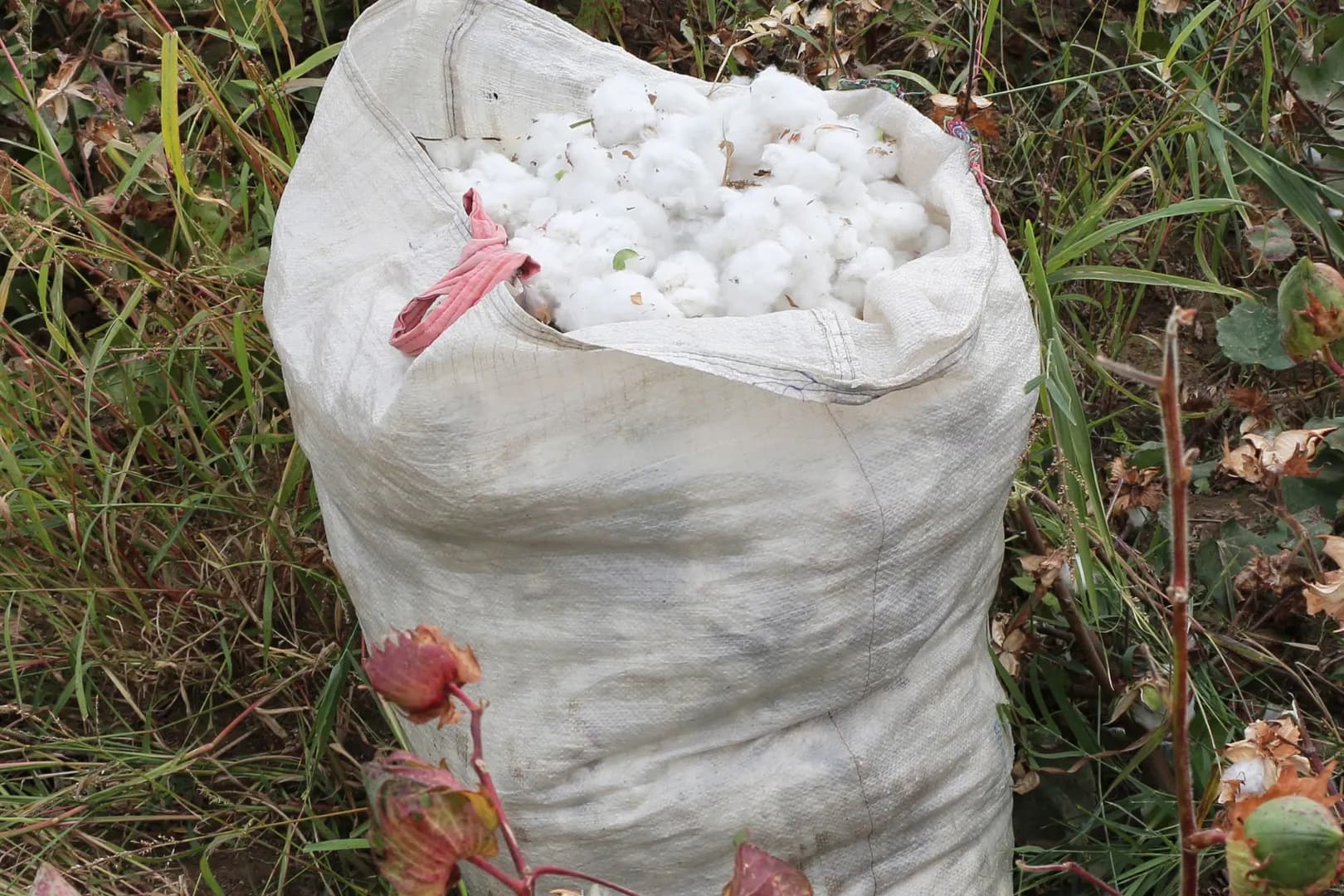
Main image: Freshly picked cotton in a field in Uzbekistan, where the textile sector is adapting to new EU sustainability rules. Photo: Bernard Gagnon / Wikimedia Commons, CC0.
Related Topics
EUReflect News
Site Administrator
Follow EUReflect
See more of our reporting on Google
Mark EUReflect as a preferred source and our stories are ranked higher for you in Top Stories, Discover and Google News — and carry a “preferred” badge when they are cited in AI results.
Add EUReflect as a preferred source