Future of Trade Among APEC Economies
APEC's 21 economies produce about 61% of world GDP. Keeping their supply chains connected as security concerns reshape trade policy is the region's central test.
Opinion. By Muhammad Asif Noor.
The economic significance of APEC is considerable. Its 21 member economies accounted for approximately 61 percent of global GDP and 46 percent of world trade in goods and commercial services in 2025. These figures illustrate the scale of the economic relationships connecting North America, East Asia, Southeast Asia, Oceania and the Pacific coast of Latin America. Decisions affecting trade within this region consequently influence investment, production and employment far beyond its geographical boundaries.
What makes APEC particularly important is the depth of economic complementarity among its members. Chinese manufacturing networks, American technological capabilities, Japanese and South Korean industrial expertise, Southeast Asian production centres and Latin American mineral resources form interconnected systems of economic activity. Each contributes different capabilities to regional production, creating commercial relationships that have evolved over several decades.
A product assembled in Vietnam may incorporate components manufactured in China, specialized materials from Japan and sophisticated technologies developed in the United States. Its final destination could be a consumer market elsewhere in the Pacific. Such arrangements illustrate how modern trade depends on coordinated production across several economies rather than isolated national industries.
Economic security and open trade
The central challenge is preserving these relationships as economic security concerns increasingly influence commercial policies. Export restrictions, investment screening, industrial subsidies and tariff disputes are changing business calculations. Governments understandably seek greater resilience in essential industries, particularly semiconductors, energy and critical minerals. Yet resilience achieved through excessive fragmentation can increase costs, reduce efficiency and undermine the advantages that made regional integration successful.
The Shenzhen summit addressed this tension through its emphasis on open regionalism, trade facilitation and supply chain resilience. Its declarations reinforced the importance of the Free Trade Area of the Asia-Pacific as a long-term objective. While the proposed arrangement remains a vision rather than an imminent agreement, its continued inclusion reflects an important principle. Economic integration can advance through gradual convergence among existing trade arrangements and regulatory practices.
This approach is particularly relevant because the region already contains major frameworks such as the Regional Comprehensive Economic Partnership and the Comprehensive and Progressive Agreement for Trans-Pacific Partnership. Their membership, regulatory standards and commercial provisions differ. APEC can provide a wider platform for reducing regulatory incompatibilities, encouraging dialogue and developing common practices without requiring every economy to adopt identical commitments.
Digital trade after Shenzhen
Perhaps the most practical outcome of Shenzhen was the APEC Trade Digitalization Cooperation Framework for 2027 to 2030. Its provisions cover electronic signatures, paperless trade, digital customs procedures, electronic invoicing, data management and cross-border payments. These measures may appear technical, yet they address substantial obstacles facing international businesses.
For a small exporter, delayed customs clearance, incompatible documentation and costly payment procedures can matter as much as tariffs. Digital interoperability could reduce these barriers, allowing smaller enterprises to participate more effectively in regional commerce. The framework offers an opportunity to make trade facilitation a source of wider economic inclusion.
However, implementing these commitments requires more than technological infrastructure. Participating economies must develop confidence in one another's regulatory systems, establish credible data protection arrangements and improve institutional capacity. Differences in digital readiness also require attention. Without targeted assistance, technologically advanced economies could capture a disproportionate share of the benefits while smaller businesses struggle to adapt.
China's role in this process deserves consideration. As a major manufacturing economy, trading partner and increasingly influential source of technological innovation, China occupies an important position in regional production networks. Its support for economic integration and digital cooperation can help create additional commercial opportunities. The long-term effectiveness of these efforts will also depend upon predictable market access, regulatory transparency and confidence among international investors.
Energy, infrastructure and shared gains
The wider economic agenda must extend to energy security, climate resilience and reliable infrastructure. Disruptions to shipping routes, energy markets and essential commodities can rapidly affect production costs throughout the region. Coordinated investments in logistics, clean energy and diversified supply networks would strengthen resilience while creating opportunities for industrial development.
A further challenge concerns the distribution of economic gains. Regional trade can generate substantial wealth while leaving certain workers, communities and smaller enterprises vulnerable to industrial change. Investment in education, vocational skills, technology access and social protection is therefore an economic necessity. A successful integration agenda must enable societies to adapt to technological transformation while sustaining public confidence in international commerce.
The Shenzhen summit offered a timely reminder that APEC's greatest contribution lies in keeping economic dialogue open across political differences. Its voluntary and consensus-based structure provides flexibility, although implementation depends upon the sustained commitment of individual economies.
The future of Asia-Pacific trade will ultimately be determined by whether members can transform their commercial interdependence into a stronger foundation for cooperation. If they succeed, the region can demonstrate that economic competition and integration can coexist, supporting innovation, resilience and shared prosperity in an increasingly uncertain world.
*The writer is Founder, Friends of BRI Forum and Advisor to Pakistan Research Centre, Hebei Normal University
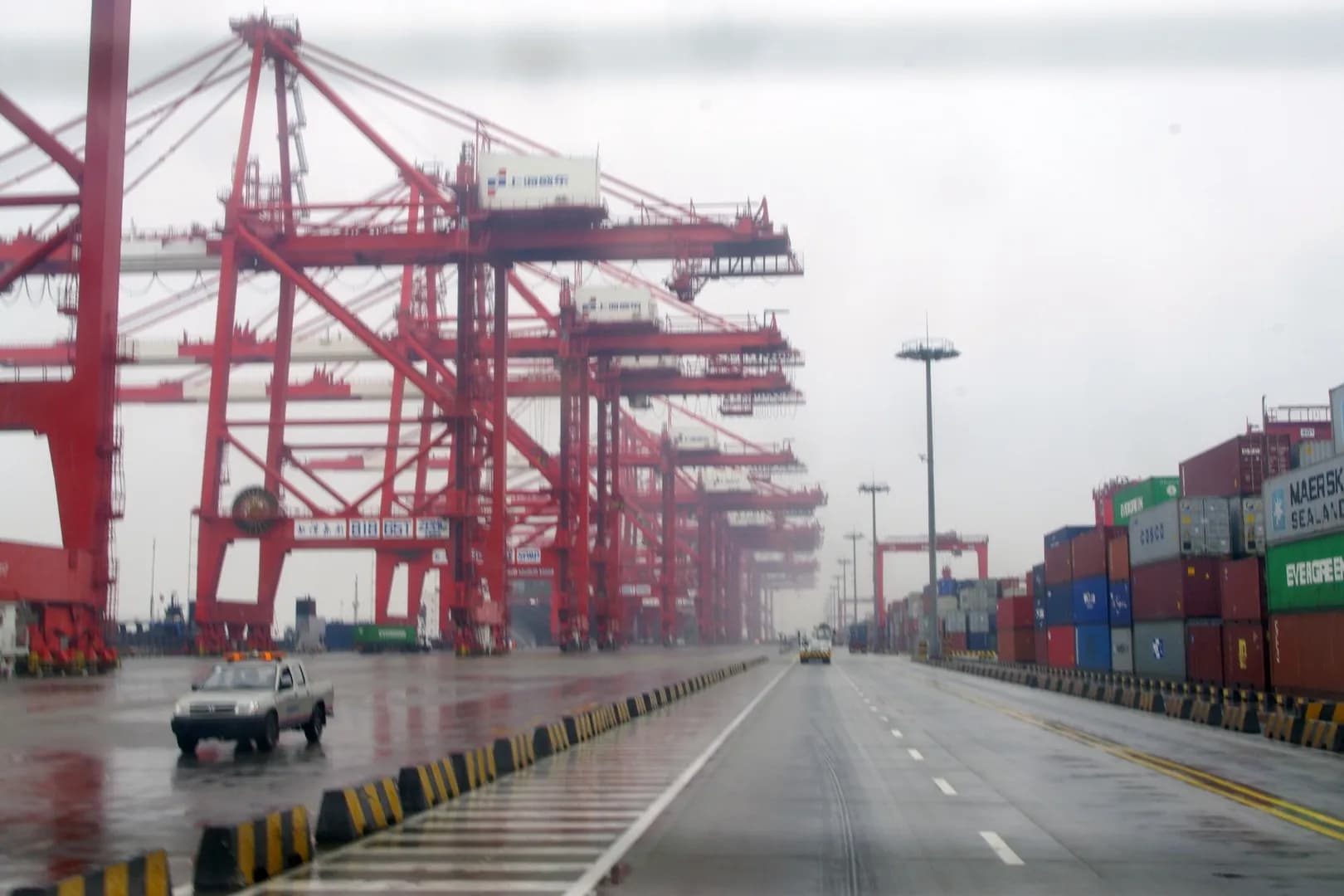
Main image: Container cranes at Yangshan Deep-Water Port, Shanghai, one of the busiest hubs in Asia-Pacific trade. Photo: Acstar / Wikimedia Commons, CC0.
Related Topics
Muhammad Asif Noor
Contributing writer at EUReflect.
Follow EUReflect
See more of our reporting on Google
Mark EUReflect as a preferred source and our stories are ranked higher for you in Top Stories, Discover and Google News — and carry a “preferred” badge when they are cited in AI results.
Add EUReflect as a preferred source