From Oil to Smart Cities: What Does Azerbaijan Want from WUF13?
Azerbaijan is positioning Baku’s 2026 World Urban Forum as a global platform for urban innovation, green economy transition, and post-conflict reconstruction. The country aims to showcase smart cities, attract investment, and link sustainability with regional development strategy long-term vision.
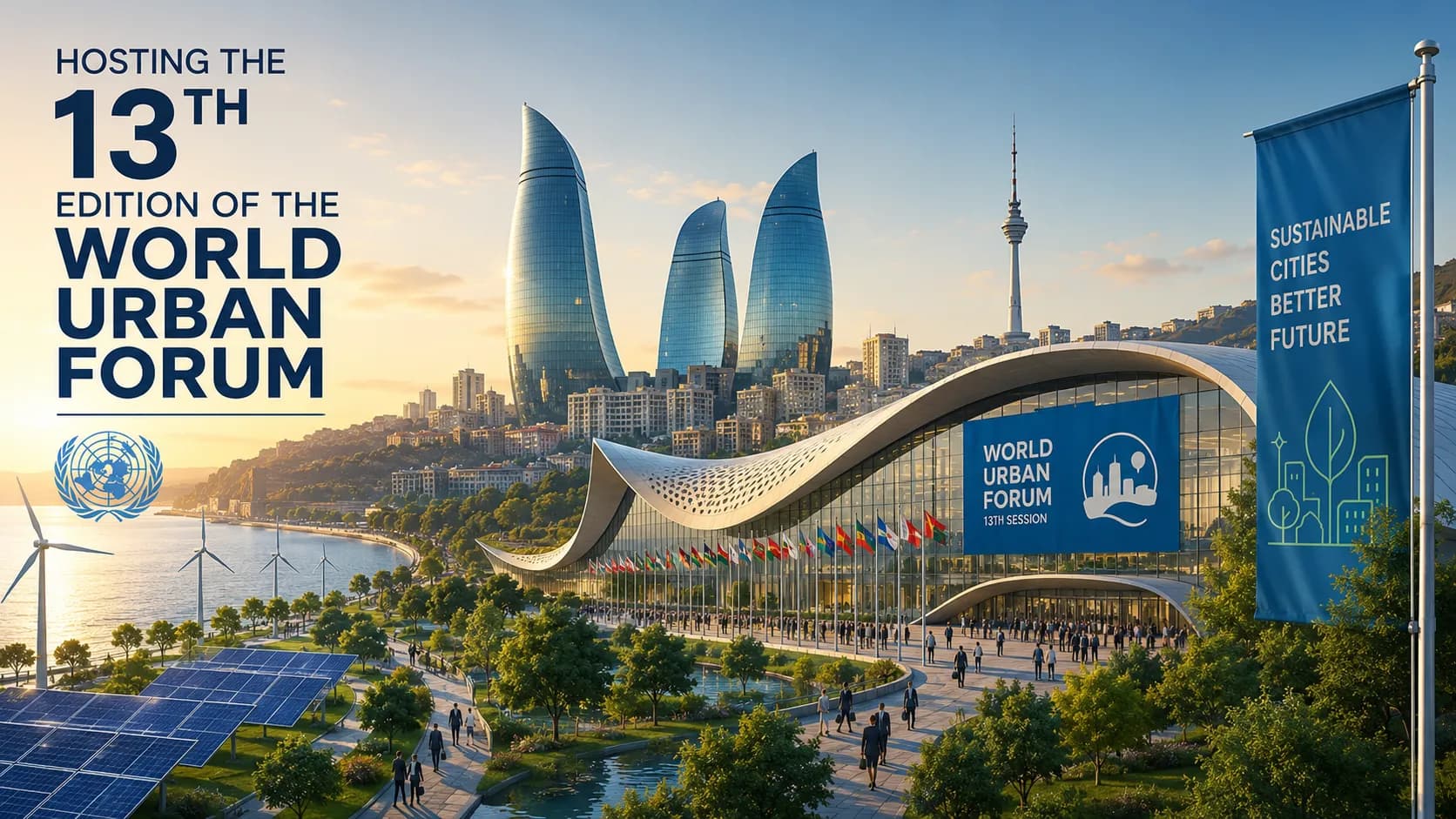
In May 2026, Baku will be more than just a capital city hosting another international conference. It will position itself as a global platform for redefining the relationship between urban development, political stability, and the green economy. Hosting the 13th edition of the World Urban Forum should not be viewed merely as a UN-led urban planning event, but rather as part of a broader Azerbaijani strategy aimed at presenting the country as a regional model that combines economic modernization, environmental transition, and the reconstruction of urban identity after years of geopolitical transformation.
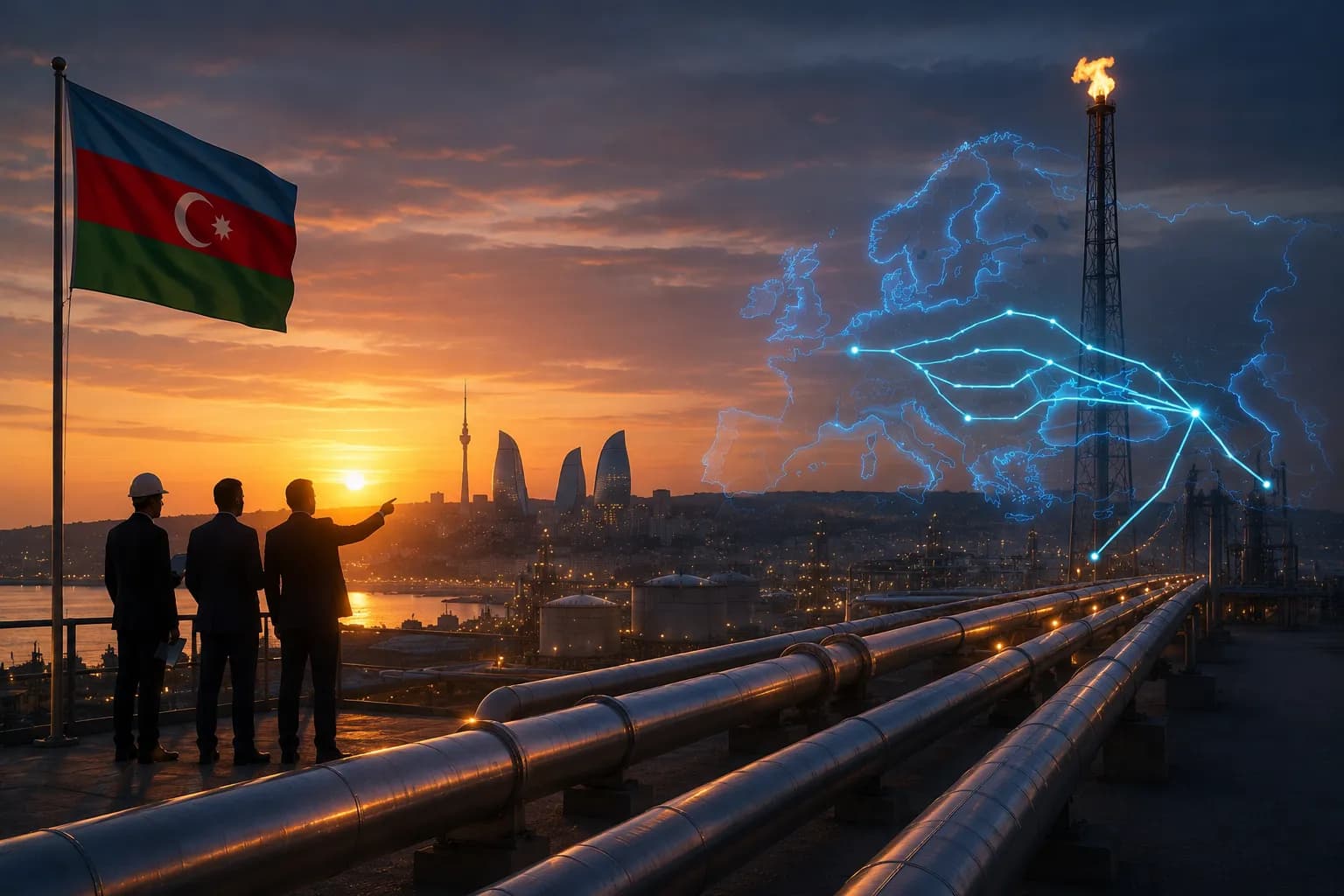
The forum comes at a time when governments worldwide are facing mounting pressures related to population growth, housing shortages, climate change, and uncontrolled urban expansion. In this context, Azerbaijan seeks to present itself not only as an oil-producing state in the Caucasus, but also as a regional actor engaged in the global conversation surrounding smart cities, clean energy, and sustainable urban development.
What stands out in Azerbaijan’s experience is that urban transformation in Baku is no longer limited to modern infrastructure or large-scale architectural projects. Instead, it has become part of a broader political and economic narrative. Through projects such as “White City Baku,” the government is attempting to showcase a model for transforming former industrial zones into modern districts based on green urban planning, public spaces, and smart infrastructure.
Economically, the forum carries dimensions that go beyond symbolism. Hosting tens of thousands of experts, decision-makers, and international companies offers Baku an opportunity to strengthen its exhibitions, conferences, and urban tourism sectors. According to official figures, the non-oil sector accounted for nearly 72 percent of GDP in 2025, compared to around 58 percent just a few years earlier. Meanwhile, the government plans to spend 13.5 billion manats (approximately $8 billion) between 2026 and 2029 on reconstruction projects in Karabakh and East Zangezur, including 3.5 billion manats ($2.06 billion) in 2026 alone.
These investments are turning the liberated territories into a living laboratory for smart cities and smart villages, while also creating opportunities for foreign investment in sustainable construction, urban technology, and renewable energy. Baku is also seeking to use the forum to deepen partnerships with international institutions and companies specializing in environmental and digital solutions.
However, the most significant dimension lies in how Azerbaijan is linking the forum to its reconstruction agenda in the liberated territories. It is increasingly clear that Baku aims to shift the discussion from the framework of political conflict toward one centered on development and reconstruction. Smart village and modern city projects in areas such as Zangilan and Fuzuli are being presented as part of a broader vision for post-conflict reconstruction based on technology, renewable energy, and modern infrastructure.
From an analytical perspective, this strategy provides Azerbaijan with several advantages at once. It strengthens the country’s image as a development-oriented partner capable of attracting international institutions and investments, while aligning reconstruction efforts with globally accepted concepts such as sustainability, urban resilience, and green transformation.
On the human dimension, Azerbaijan understands that the success of any modern urban narrative depends not only on skyscrapers and megaprojects, but also on people themselves. This is why Azerbaijani youth are playing an increasingly visible role in technology, innovation, entrepreneurship, and digital services connected to smart city development.
Nevertheless, the success of this vision will ultimately depend on Azerbaijan’s ability to translate ambitious projects into sustainable economic and social outcomes, particularly amid challenges related to reconstruction financing and regional economic uncertainties.
In the end, the success of the World Urban Forum in Baku may not be measured solely by the number of sessions or agreements announced, but by Azerbaijan’s ability to transform this international momentum into a long-term development project capable of redefining its regional position. Today, states are no longer judged only by the size of their natural resources, but by their ability to build resilient cities and adaptive urban economies capable of responding to global transformations.
Baku 2026 is not merely a hosting milestone, but a starting point for positioning Azerbaijan as a bridge between energy and sustainability, and between reconstruction and innovation.
Abdul Hamid Hamid Al-Kba
Contributing writer at EUReflect.
Follow EUReflect
See more of our reporting on Google
Mark EUReflect as a preferred source and our stories are ranked higher for you in Top Stories, Discover and Google News — and carry a “preferred” badge when they are cited in AI results.
Add EUReflect as a preferred source