Amid financial difficulties, Rosatom has signed a contract to build Kazakhstan’s Balkhash Nuclear Power Plant (NPP).
The EPC contract covers two VVER-1200 units with a combined 2,400 MW capacity, with construction slated to begin in 2027 and commissioning in the mid-2030s.
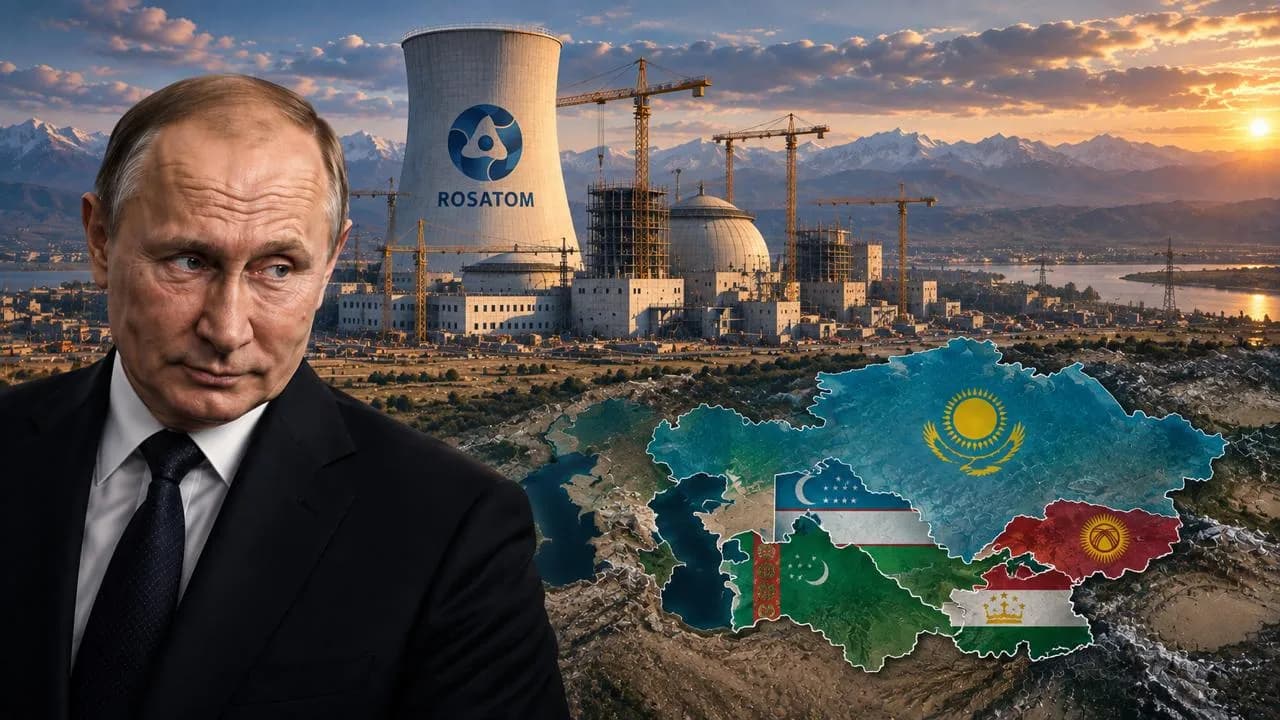
Rosatom, one of Russia’s strategically important state-owned corporations, has signed an EPC contract with Kazakhstan Nuclear Power Plants LLP (KAES) for the construction of two power units with a combined capacity of 2,400 MW at the Balkhash Nuclear Power Plant in Kazakhstan.
According to previous statements by Rosatom CEO Alexey Likhachev and Almasadam Satkaliyev, chairman of Kazakhstan’s Atomic Energy Agency, Rosatom is expected to obtain the necessary license and begin construction of the NPP in 2027. The plant is scheduled to be commissioned in the mid-2030s. In May, Likhachev said that active construction was expected to begin in 2027, with commissioning to take place in stages.
In the near future, Rosatom is expected to complete the design work and form an international consortium of equipment suppliers. Rosatom CEO Alexey Likhachev announced this earlier.
Rosatom is currently continuing engineering and survey work at the site where the future NPP will be built. According to the corporation, these activities are expected to be completed in 2027. Engineers will then begin preparing the documentation required to obtain the permits necessary for construction of the power units. Engineering and survey work began in August 2025, and more than 60 boreholes have been drilled at the site.
In 2025, Rosatom signed a “roadmap” with Kazakhstan for the construction of two VVER-1200 nuclear power units. The Russian state corporation was also designated as the leader of the international consortium responsible for implementing the project.
Could Rosatom’s Financial Situation Affect the Project?
On July 17, 2026, Eurasianet reported that Rosatom CEO Alexey Likhachev had said the company would cut its investment program by nearly 50 percent this year due to “difficult economic conditions.” Likhachev also said the company would seek to reduce operating expenses by 10 percent over the following 18 months.
Eurasianet linked the company’s financial difficulties to Russia’s war in Ukraine and the international sanctions imposed in response. The publication noted that the war and sanctions were putting pressure on the Russian economy as well as the operations of certain companies.
According to the publication, Rosatom’s decision to reduce its investment program has raised questions about the future of nuclear energy projects in Central Asia, including those in Kazakhstan and Uzbekistan. However, the company’s management has not publicly specified which projects could be cut or delayed. Therefore, there is currently insufficient evidence to conclude that the projects in Kazakhstan or Uzbekistan will necessarily be postponed.
“This Is a Long-Term Investment in Kazakhstan”
According to Central Asia expert and political scientist Mukhtor Nazirov, the agreement signed between Rosatom and Kazakhstan is being implemented in Kazakhstan’s interests. He described the project as a long-term investment in the country.
“Building a nuclear power plant means long-term investment and long-term cooperation. A country that wants to build a nuclear power plant needs to have friendly, or at least strategic, relations with the country building it. Kazakhstan does not see Russia as a major source of risk, as we might think. And because it understands that these projects can be brought to completion, it is accepting participation in the project,” the political scientist said.
According to Nazirov, the Russia-Ukraine war is negatively affecting Rosatom’s ability to implement projects and its reputation, as well as the Russian economy. Nevertheless, he believes Rosatom remains one of Russia’s most competitive sectors.
“They have unique advantages in this field, particularly in developing nuclear energy and advancing it at the scientific level. Rosatom also has its own reactor technologies. Other companies do not have reactors like these. That is why I would not say that a project involving Rosatom is inherently risky.
But the concerns surrounding the construction process are more serious. There are fears that if you cooperate with Russia now, it could use that cooperation in the future and exert pressure on you. There are also concerns that once the cost of constructing the Rosatom nuclear power plant increases, it could drag down that country and its economy, making it dependent on Russia and preventing it from developing,” said Central Asia expert Mukhtor Nazirov.
In his view, such concerns are justified to some extent. If Russia offers a solution to Kazakhstan’s energy problems that is available to it but not offered by alternative projects, Kazakhstan may choose to accept it. However, Nazirov believes that cooperation can also be acceptable if Russia participates without attaching political conditions.
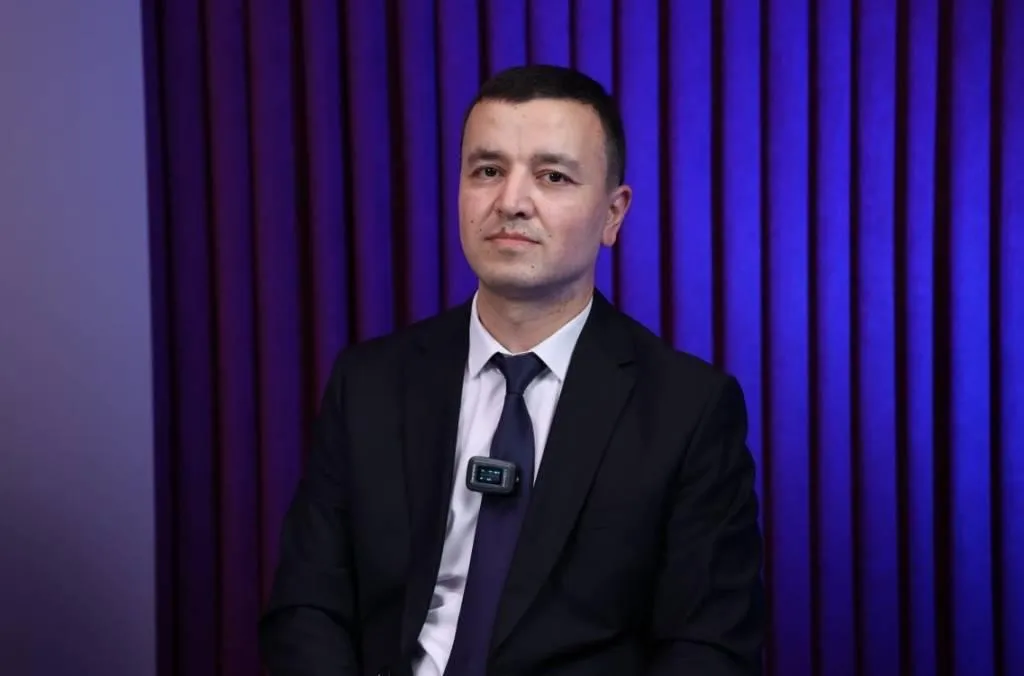
Against this backdrop, Mukhtor Nazirov raised the question: “Why have the Central Asian countries been unable to develop nuclear power and this form of energy until now?”
“Perhaps the war has encouraged Russia to expand cooperation in this area. Perhaps it has helped Russia open up more to the world in this particular sector. I think we should look at it from that perspective.
I have also examined some of the technical aspects, including several of these reactors. Why are Russian reactors relatively competitive? As you know, many industrial sectors in Russia were originally developed for military purposes and later adapted for civilian use. Because they were developed for military purposes, particularly when we are talking about a specific reactor—for example, the small reactors being installed in Uzbekistan—it turns out that they were used on large nuclear-powered icebreakers. In other words, they were initially developed for military purposes and proven over many years. They were later adapted for civilian use. In Uzbekistan’s case, the reactor under construction is being described as experimental—a hybrid between a small and a large reactor.
Kazakhstan’s natural conditions are more favorable than Uzbekistan’s: it has flat terrain, desert areas, and the lake as well. And what does this give Kazakhstan? First of all, it provides an opportunity to develop expertise in the energy sector. Once an energy facility is built, specialists will be trained and the facility will be operated. This is a scientific field. Related areas will emerge. Nuclear energy can also be used in medicine, industry and other sectors, and so on. It will give impetus to the development of this entire field. From this perspective, I believe it is appropriate,” Nazirov said.
“Is Rosatom a Tool of Pressure on Countries?”
Farhod Tolipov, director of the non-governmental scientific institution Bilim Karvoni and a professor at Webster University in Tashkent, argued that regardless of where a project implemented by Russia is located, it should be viewed as a manifestation of Russia’s imperial policy.
“Especially when we look at large-scale projects, it is not just through a single nuclear power plant. Other projects, other contracts and business activities also serve, to one degree or another and in one form or another, as instruments of pressure by Russia. When it comes to nuclear power plants, this is where that policy of pressure is manifested on the largest scale…”
Uzbekistan’s Nuclear Energy Project
A 200-hectare industrial zone has been proposed in Forish district.
The industrial zone is expected to host at least 100 joint ventures, with the localization of production across 15 areas.
For the external infrastructure of the NPP, 388 kilometers of electricity transmission lines, 21 kilometers of drinking-water pipelines, 120 kilometers of technical water pipelines, 39.5 kilometers of roads and 11 kilometers of railway will be constructed. The authorities have set a target of increasing the share of locally produced goods and services in these infrastructure projects to 60–70 percent.
Alongside the construction of the NPP, a residential settlement covering 200 hectares is also planned for nuclear energy specialists and their families.
Sama Bilbao y León, director general of the World Nuclear Association, gave Zamon.uz journalist Shohjahon Majidov a brief interview about the nuclear power project being implemented between Uzbekistan and Russia. In an interview with Euronews, Bilbao y León also attributed the country’s nuclear development plans to growing demand for electricity and Uzbekistan’s desire to reduce its reliance on natural gas.
She welcomed Uzbekistan’s launch of its nuclear energy program and said Rosatom had extensive experience in the nuclear energy sector.
“It is very positive that Uzbekistan is starting its nuclear energy program. A few weeks ago, we began the initial stage of construction with the pouring of the first concrete for the project.
Yes, you are right, this is a project being implemented with Rosatom. Rosatom has extensive experience in the nuclear energy sector. As you know, Rosatom is currently building nuclear power plants in Russia. In addition, the company is actively involved in nuclear energy projects in Bangladesh, Türkiye, Egypt and Belarus. It is also participating in nuclear power plant projects in Kazakhstan and India.
Therefore, it can be seen as an internationally recognized, reputable company with extensive experience. Of course, there are other major nuclear energy companies in the world as well, including those from South Korea, Japan, the United States, France, the United Kingdom and Canada.
So, there are many countries and companies active in this sector around the world. Uzbekistan is simply cooperating with Rosatom at this stage,” said the director general of the World Nuclear Association.
Shohjahon Majidov
Contributing writer at EUReflect.
Follow EUReflect
See more of our reporting on Google
Mark EUReflect as a preferred source and our stories are ranked higher for you in Top Stories, Discover and Google News — and carry a “preferred” badge when they are cited in AI results.
Add EUReflect as a preferred source