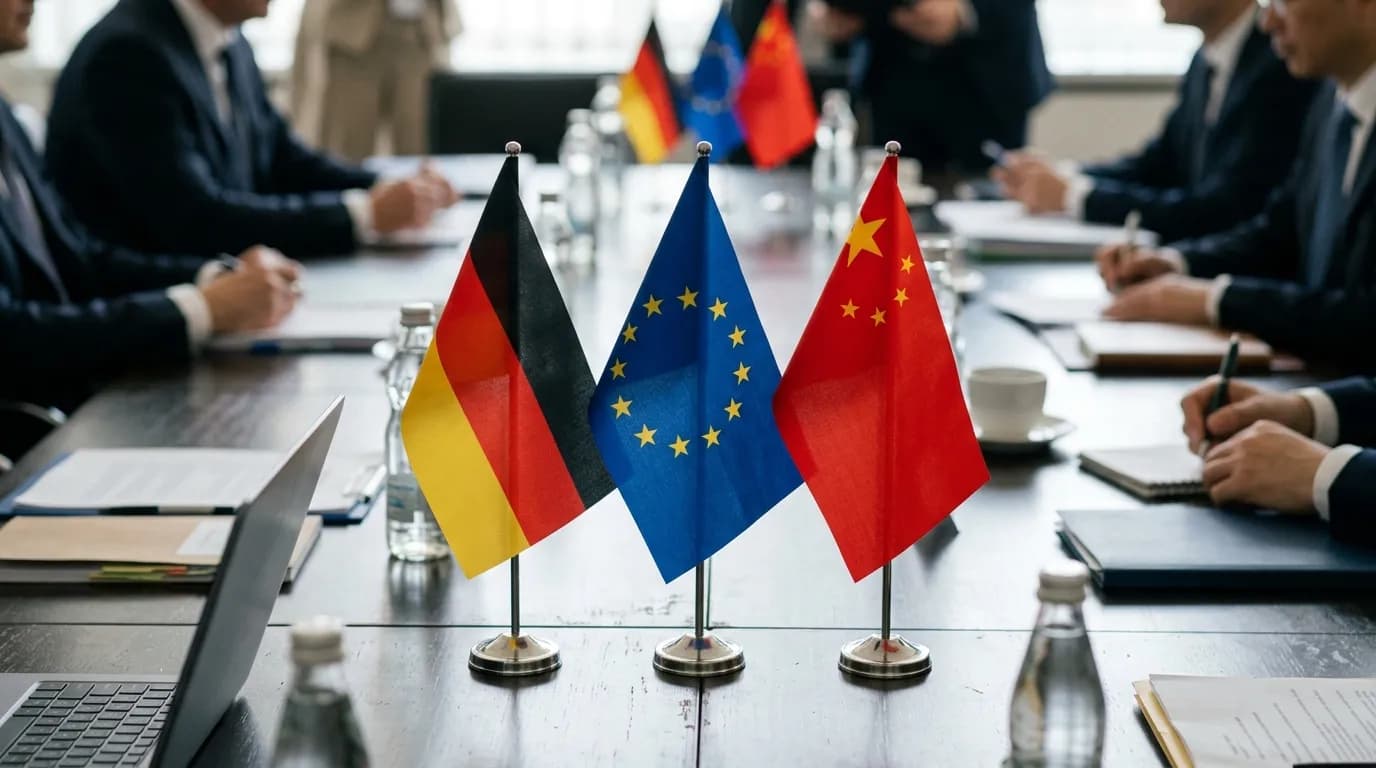
Global Companies Are Shaping Economic Policy
A record 229 investment-policy measures were adopted by governments in 2025, with incentives increasingly focused on strategic sectors like semiconductors and AI.

The relationship between governments and multinational corporations is changing rapidly in 2026. Global companies are no longer simply responding to national economic policies. Through investment decisions, supply chains, technology, employment and access to strategic industries, they are increasingly influencing how those policies are designed.
This shift is particularly visible in semiconductors, artificial intelligence, energy, critical minerals and advanced manufacturing. Governments want investment from global companies, but corporations increasingly negotiate over the conditions under which that investment will take place.
The result is a new economic relationship in which governments shape corporate behavior through tariffs and subsidies, while companies influence governments through decisions about where to build factories, locate supply chains and deploy capital.
Investment Has Become Negotiating Power
Foreign direct investment has traditionally been viewed as capital entering a country under rules established primarily by the host government. Today, major investment projects can themselves influence those rules.
UN Trade and Development reported in July that governments adopted a record 229 investment-policy measures in 2025. Although most remained favorable to investors, incentives are becoming increasingly concentrated in strategic sectors including digital infrastructure, advanced manufacturing, energy-transition technologies and critical minerals.
Large companies therefore have considerable bargaining power. A semiconductor fabrication plant, battery factory or data center can represent billions of dollars in investment, thousands of jobs and an important position within an international supply chain. Governments competing for these projects may adjust tax incentives, infrastructure spending, energy policies or regulatory frameworks.
Washington Links Trade Policy to Corporate Investment
The United States provides one of the clearest examples.
Washington is reportedly considering new semiconductor-related tariffs that could extend beyond chips to products such as laptops, gaming consoles and data-center servers. One proposal would connect tariff exemptions with commitments by foreign companies to increase semiconductor manufacturing investment inside the United States.
A similar principle is already visible in U.S. aluminum policy. In July, the White House announced an incentive system under which companies investing in new or expanded U.S. aluminum-smelting capacity could qualify for reduced tariff rates on certain imports.
The distinction between trade policy and investment policy is consequently becoming weaker. Tariffs can now function not only as protection against imports but also as leverage encouraging multinational companies to relocate production.
Governments Are Competing for Strategic Corporations
At the same time, companies are benefiting from a global revival of industrial policy.
OECD data show that subsidies across 15 major industrial sectors reached $108 billion in 2024, equivalent to around 1.3 percent of the revenues of the firms studied. Semiconductors, solar equipment, steel, aluminum and shipbuilding were among the sectors receiving particularly significant support.
This competition creates a powerful cycle.
Governments subsidize strategic industries because they fear becoming dependent on foreign suppliers. Corporations compare those incentives before deciding where to invest. Governments then improve their offers to prevent strategically important companies from choosing competing countries.
Economic sovereignty and corporate investment are therefore becoming increasingly interconnected.
Europe Is Trying to Restore the Balance
The European Union is responding differently by strengthening oversight of foreign-backed companies operating within its market.
The EU's Foreign Subsidies Regulation allows the European Commission to investigate whether subsidies provided by non-EU governments give companies an unfair advantage in acquisitions, public procurement or other economic activities inside the Single Market. A Commission review published in July 2026 concluded that the mechanism remained fit for purpose while considering targeted adjustments.
This demonstrates the other side of corporate influence. Governments want global capital, but they increasingly fear that foreign-supported corporations could become powerful enough to distort domestic competition or create strategic dependencies.
A New Economic Power Structure
The emerging global economy cannot easily be described as either state-led or corporate-led.
Governments still control taxation, regulation, tariffs and public spending. Yet multinational corporations control something governments increasingly need: mobile capital, advanced technology, global supply networks and specialized knowledge.
A decision by a major technology or manufacturing company to invest several billion dollars in one country rather than another can affect employment, exports, technological capacity and even national security strategies.
Economic policy is therefore increasingly being created through interaction between states and corporations rather than by governments alone.
The central question for the coming years will not simply be whether governments can attract global companies. It will be whether countries can benefit from multinational investment without allowing their long-term economic strategies to become dependent on the decisions of a relatively small number of globally dominant corporations.
Ahmet Balakan
Contributing writer at EUReflect.
Follow EUReflect
See more of our reporting on Google
Mark EUReflect as a preferred source and our stories are ranked higher for you in Top Stories, Discover and Google News — and carry a “preferred” badge when they are cited in AI results.
Add EUReflect as a preferred source