Greece's Political Crisis Deepens: Ministers Resign Over EU Farm Subsidy Fraud
6 April 2026 Greece faces one of its most serious political scandals in years after three senior ministers resigned on April 3, 2026, amid a widening European Union investigation into agricultural subsidy fraud. Prime Minister Kyriakos Mitsotakis responded immediately with a cabinet reshuffle, appointing high profile replacements in a bid to contain the
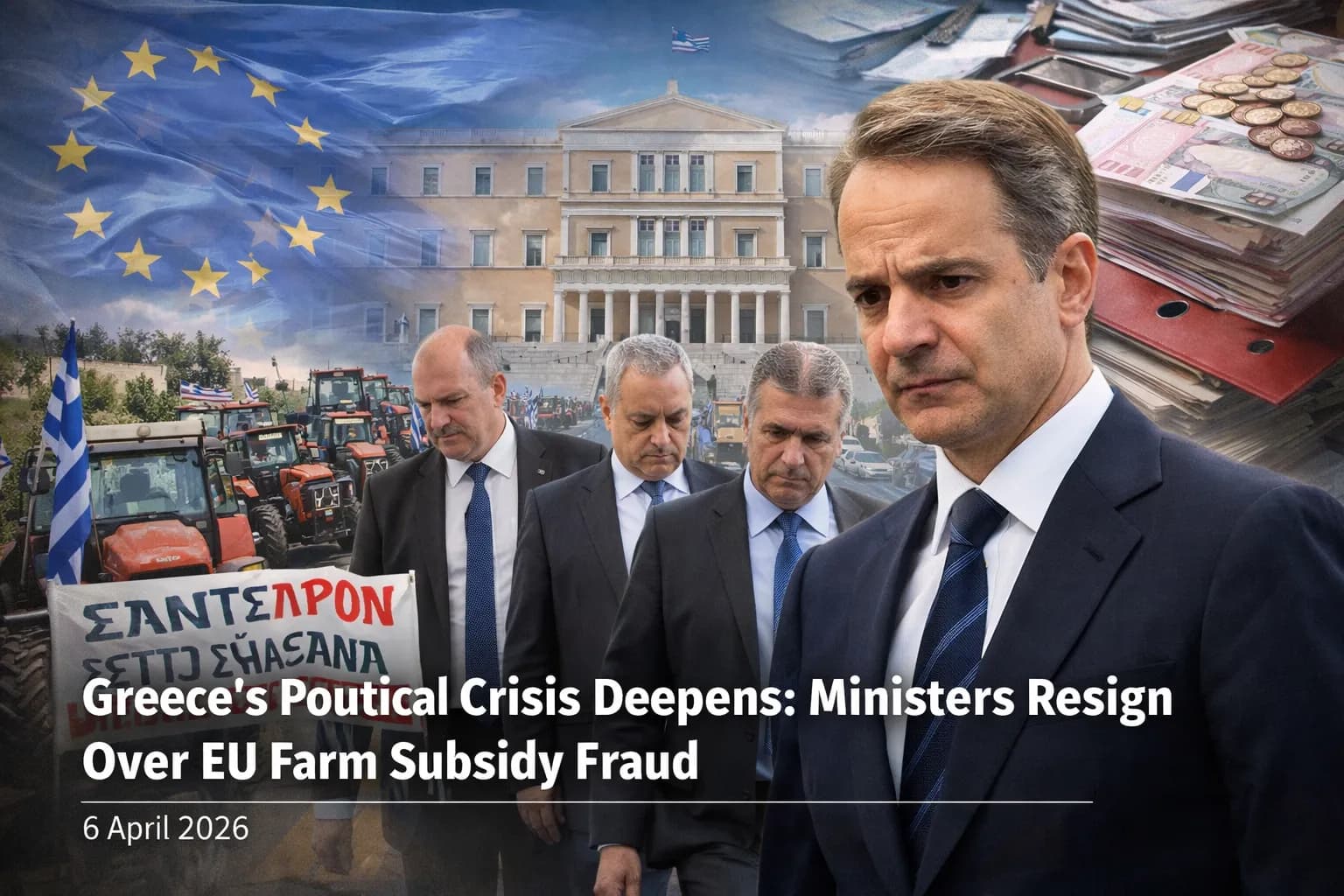
Agriculture Minister Kostas Tsiaras, Civil Protection Minister Yiannis Kefalogiannis, and Deputy Health Minister Dimitris Vartzopoulos stepped down following intense pressure from the European Public Prosecutor’s Office. The probe centres on claims that ruling party figures orchestrated a scheme that defrauded the EU of millions of euros since 2018 through false land ownership declarations, exaggerated livestock numbers, and fictitious invoices.
Crete has emerged as the scandal’s focal point, with investigators highlighting disproportionate subsidy flows to the island, where Mitsotakis maintains strong political roots, despite a national decline in livestock farming. This marks the second round of resignations linked to the affair. Five government officials departed last year over similar accusations, fuelling concerns about systemic problems within the subsidy distribution system. The European Public Prosecutor’s Office has requested that parliamentary immunity be lifted for several lawmakers, including active and former MPs, on charges ranging from breach of trust to computer fraud. Leaked phone recordings reportedly show politicians pressuring officials to approve improper payments, intensifying public outrage. Mitsotakis acted swiftly to install former European Commission Vice President Margaritis Schinas as the new agriculture minister, a move designed to bring Brussels experience into the heart of the crisis and signal zero tolerance for corruption.
Other 2 key posts were also filled, while the prime minister vowed to recover misappropriated funds and ensure those responsible face justice. He insisted that the scandal predates his government, but said his administration would clean house. Opposition parties including PASOK and Syriza have seized on the crisis, accusing New Democracy of protecting insiders and calling for early elections before the scheduled 2027 vote. Farmers across Greece have blocked roads in protest, frustrated by legitimate subsidy delays caught in the investigation’s net. With polls still favouring Mitsotakis but public trust eroding, the scandal threatens to undermine his economic recovery narrative established since he took office in 2019.
The affair highlights ongoing European Union concerns over agricultural fund mismanagement, placing Greece under intense scrutiny from Brussels. As investigations continue, with raids, arrests, and possible ministerial involvement still looming, the government’s reshuffle may stabilise the cabinet temporarily, but restoring credibility will require more than personnel changes. This article is based on information from Euractiv and Radio France Internationale. All details have been independently re
Dmytro Melnyk
Contributing writer at EUReflect.
Follow EUReflect
See more of our reporting on Google
Mark EUReflect as a preferred source and our stories are ranked higher for you in Top Stories, Discover and Google News — and carry a “preferred” badge when they are cited in AI results.
Add EUReflect as a preferred source