North America’s Trade War Deepens
The collapse of negotiations came after Washington introduced new conditions that Ottawa deemed unacceptable, suspending talks indefinitely.
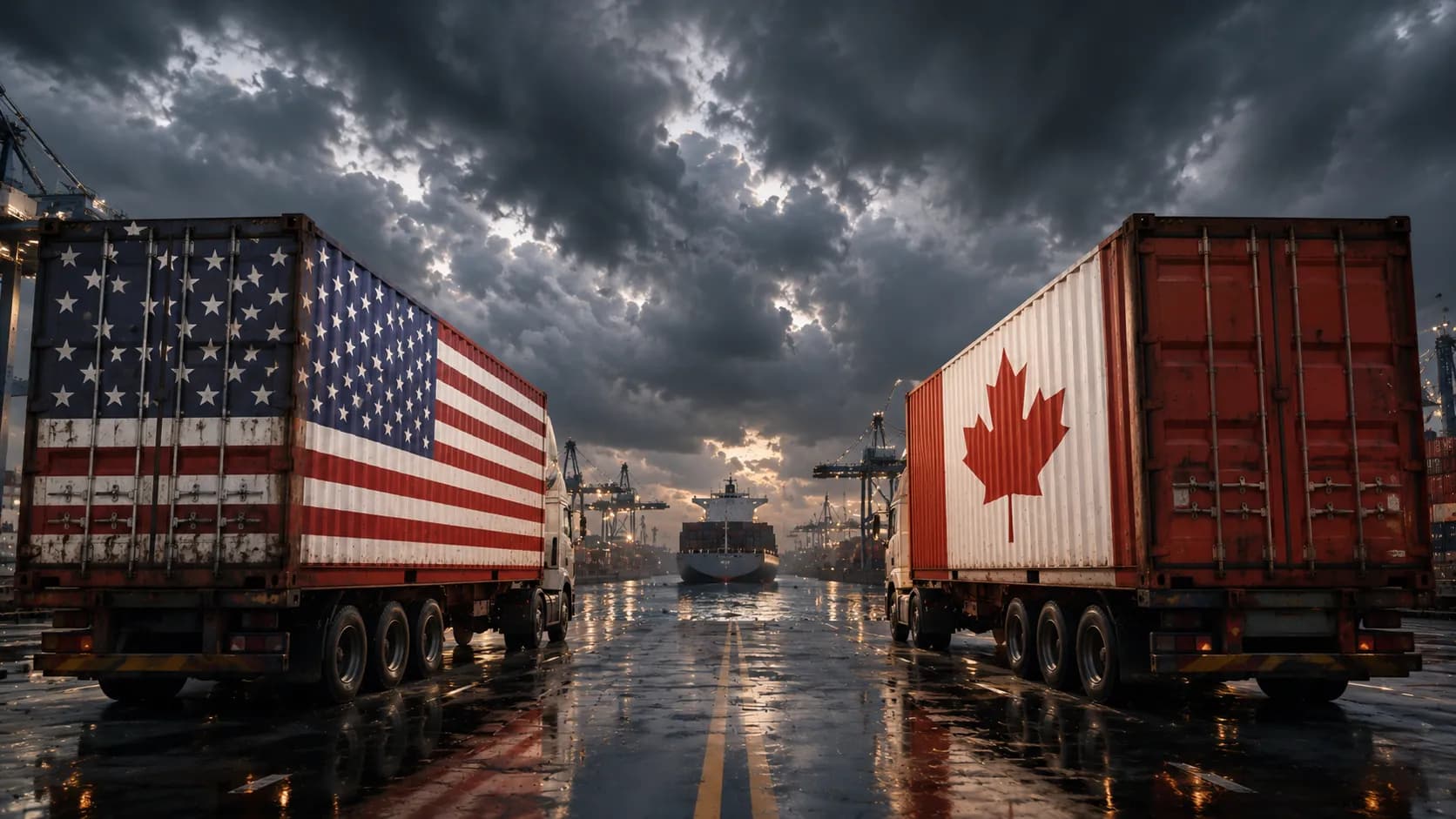
The trade relationship between the United States and Canada has entered one of its most serious crises in decades after Washington imposed new tariffs of up to 50 percent on Canadian goods and Ottawa responded with its own large-scale counter-tariffs on American products.
The latest escalation followed the collapse of U.S.-Canada trade negotiations in Washington. The United States imposed 50 percent tariffs on roughly C$27.6 billion ($20 billion) of Canadian exports, with the measures taking effect on August 22.
Canada has now announced a dollar-for-dollar response. Beginning September 8, Ottawa will impose tariffs of 15, 25 and 50 percent on C$27.6 billion worth of U.S. imports.
The confrontation is significant because the United States and Canada do not simply trade with each other. Their factories, energy systems, agricultural markets and supply chains have been integrated for decades.
Canada Matches Washington
Ottawa's strategy is deliberately reciprocal.
Canadian Finance Minister François-Philippe Champagne announced that Canada would match the new American measures “dollar for dollar, rate for rate.”
The counter-tariffs will target sectors including steel, dairy products, household appliances, agricultural equipment, pulp and paper and electronics. American steel and aluminum products that previously faced 25 percent Canadian duties will in many cases face 50 percent tariffs.
Canada will also impose tariffs on hundreds of additional U.S. products, including certain food products, seafood, plastics, machinery, motorcycles and electronics.
The objective is not simply to generate revenue.
Ottawa wants American exporters and industries to experience economic costs comparable to those being imposed on Canadian producers.
Trade Talks Have Broken Down
The escalation followed negotiations that at one stage appeared capable of producing an agreement.
The two governments had been discussing tariffs affecting automobiles, steel, aluminum, lumber and other important industries.
But negotiations collapsed after Washington presented new conditions that Canada considered unacceptable.
Prime Minister Mark Carney subsequently suspended further negotiations rather than accept what his government described as an agreement contrary to Canada's economic interests.
No immediate new round of negotiations has been announced.
That makes the current dispute more dangerous than a temporary tariff disagreement.
It is increasingly becoming a political confrontation over how the North American economic relationship itself should operate.
USMCA Faces Its Biggest Test
The dispute also raises questions about the future of the United States-Mexico-Canada Agreement.
USMCA was designed to provide predictable rules for trade across North America. But some of Washington's latest measures affect goods that previously benefited from preferential treatment under the agreement.
This creates uncertainty for companies that built production systems around relatively open borders.
A vehicle assembled in North America, for example, can contain components that cross the U.S.-Canada border several times before final production.
Tariffs therefore do not necessarily affect only foreign producers.
They can increase costs for American companies using Canadian materials and Canadian companies dependent on American components.
The Two Economies Are Difficult to Separate
The scale of economic integration explains why a prolonged trade war could become costly for both sides.
Canada and the United States exchanged approximately $872 billion in goods and services last year, according to recent economic data.
Canada is also a crucial supplier of energy and industrial materials to the United States.
Approximately four million barrels of Canadian crude oil enter the United States every day, representing almost one-fifth of American petroleum consumption. Canada is also the largest foreign supplier of several strategically important commodities, including aluminum and potash.
This means tariffs can move through entire production chains.
Higher costs for Canadian aluminum can affect American manufacturers. Agricultural tariffs can increase costs for farmers. Restrictions affecting machinery and components can eventually reach consumers.
The trade war is therefore increasingly testing whether two highly integrated economies can realistically impose economic pressure on each other without damaging themselves.
Canada Looks Beyond the United States
The confrontation is also accelerating a strategic change in Canadian economic policy.
Approximately 70 percent of Canadian exports still go to the United States, making Canada particularly vulnerable to prolonged American trade restrictions.
Carney's government is consequently emphasizing diversification.
Canada has been seeking deeper commercial relationships with Europe, Asia and other international partners while attempting to reduce excessive dependence on the American market. According to recent reporting, Ottawa has signed more than 20 new agreements during the past year as part of this broader diversification effort.
The trade conflict could therefore have consequences far beyond tariffs.
If Canadian companies increasingly redirect investment and exports toward other markets, North America's historically integrated economic structure could gradually become less concentrated around the United States.
Jobs Are Now at Risk
The political confrontation will ultimately be tested by its economic consequences.
Canada has so far demonstrated considerable resilience, but economists warn that prolonged American tariffs could eventually threaten as many as 90,000 Canadian jobs.
Ottawa has responded by announcing an additional C$7.5 billion support package for workers and businesses affected by the dispute, building on nearly C$25 billion in previously announced assistance.
But subsidies cannot indefinitely compensate for disrupted trade.
If tariffs remain in place, companies may eventually change suppliers, relocate production or postpone investments.
A New North American Economic Reality
The United States and Canada spent decades constructing one of the world's deepest cross-border economic relationships.
That model is now facing an unprecedented stress test.
Washington argues that tariffs are necessary to defend American workers and supply chains. Ottawa argues that it must retaliate to protect Canadian industries and prevent economic pressure from forcing Canada into unfavorable concessions.
Both arguments lead toward the same dangerous dynamic.
One tariff produces another tariff. Protection creates retaliation, and retaliation creates pressure for further protection.
The immediate dispute concerns approximately C$27.6 billion of trade in each direction.
The larger question, however, concerns an economic relationship worth hundreds of billions of dollars.
If Washington and Ottawa cannot return to negotiations, the North American tariff war could evolve from a temporary trade dispute into a long-term restructuring of one of the world's most integrated economic regions.
Alvara Merrick
Contributing writer at EUReflect.
Follow EUReflect
See more of our reporting on Google
Mark EUReflect as a preferred source and our stories are ranked higher for you in Top Stories, Discover and Google News — and carry a “preferred” badge when they are cited in AI results.
Add EUReflect as a preferred source