HTV-X: Japan’s Defense Beyond Earth
Japan’s recent initiative to test hypersonic missile-tracking technology through its HTV-X spacecraft represents a significant leap in space-based defense capabilities. This paper examines the strategic rationale behind this development, its technological characteristics, and its broader implications for regional and global security architecture, particularly amid escalating hypersonic weapon competition among China, Russia, and North Korea.
The Dawn of a Hypersonic Security Era
The 21st century has witnessed the emergence of hypersonic weapons as a transformative factor in strategic deterrence and power projection. Hypersonic glide vehicles (HGVs), traveling at speeds exceeding Mach 5, combine extreme velocity with maneuverability, making them difficult to intercept using conventional missile defense systems.
Within this evolving landscape, Japan’s decision to deploy hypersonic tracking technology in space is emblematic of the global shift toward integrating space-based assets into national defense architectures.
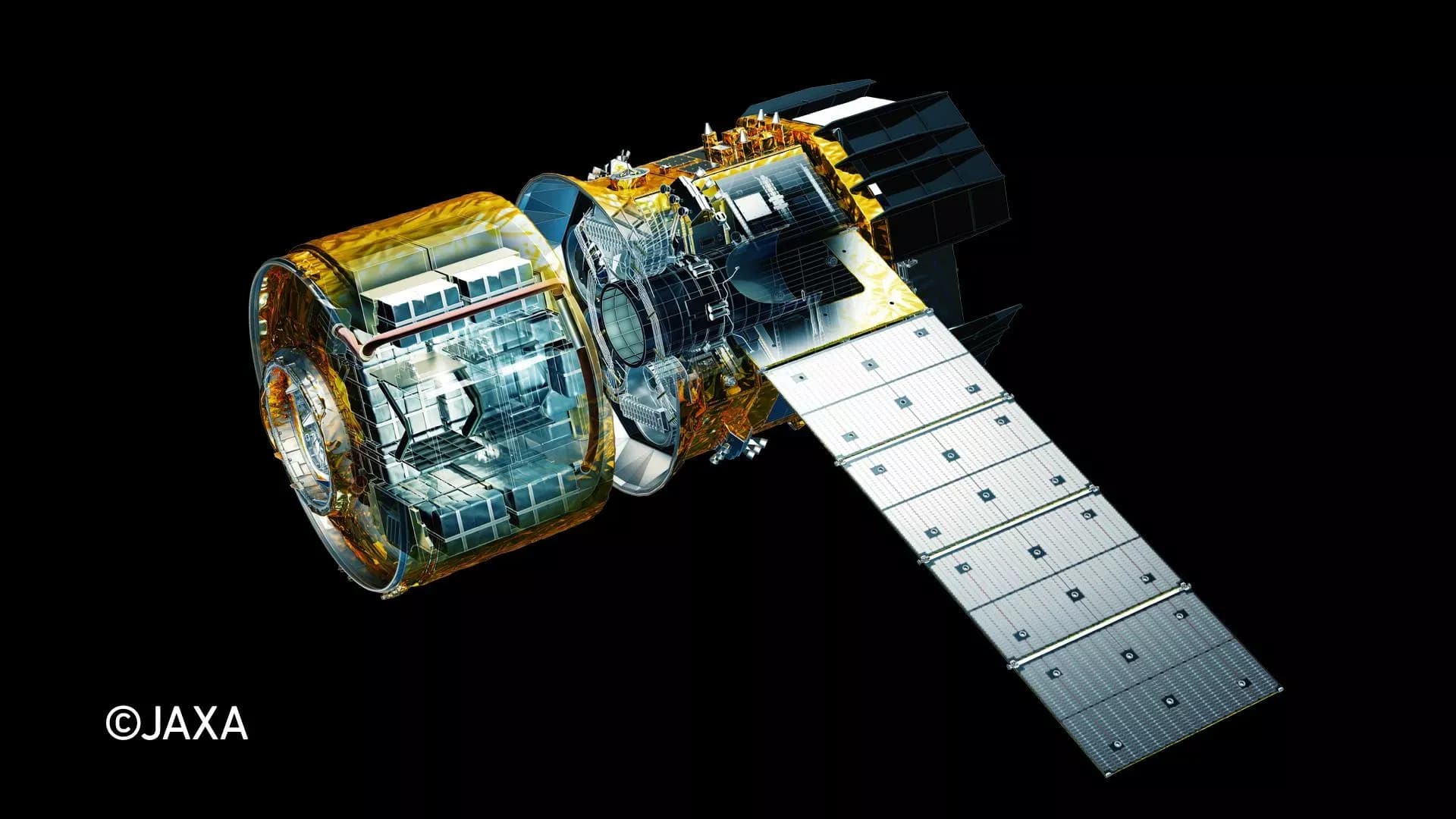
The HTV-X spacecraft, launched by the Japan Aerospace Exploration Agency (JAXA) and developed by Mitsubishi Heavy Industries, symbolizes this transformation. Initially designed as a cargo vehicle for the International Space Station (ISS), it now serves a dual function: logistical support and defense experimentation.
This integration of civil and defense technology underscores Japan’s evolving approach to national security—one that blends scientific innovation with strategic necessity.
Japan’s move comes amid a broader regional trend. China’s DF-17, Russia’s Avangard, and North Korea’s Hwasong-8 and Hwasong-16B have already established operational hypersonic capabilities. As these systems redefine regional threat perceptions, Tokyo faces mounting pressure to modernize its defense systems in both missile interception and situational awareness domains.
Japan’s Space Policy Evolution
Historically, Japan’s space activities were guided by a non-militarization principle, rooted in its pacifist constitution and the Basic Space Law of 2008, which emphasized peaceful use of outer space. However, geopolitical shifts and technological dependencies gradually prompted a re-evaluation of this stance.
Following the North Korean missile launches of the late 1990s and early 2000s, Japan began to reconsider the military utility of space, leading to the establishment of the National Space Policy Secretariat and the Space Operations Squadron (2020) under the Japan Air Self-Defense Force.
The HTV-X thus represents a culmination of two decades of incremental securitization of Japan’s space policy—transitioning from scientific exploration to dual-use strategic functionality. The project also reflects Japan’s growing participation in multilateral defense initiatives, including the U.S.-Japan Security Alliance and the Quad framework, both emphasizing technological interoperability and joint situational awareness.
The HTV-X: Technical Specifications and Capabilities
The HTV-X spacecraft weighs approximately 16 tonnes, with a 6-tonne cargo capacity and an operational lifespan of 18 months in low-Earth orbit. It serves not only as a supply vehicle for the ISS but also as a flying experimental platform for defense applications.
The mission includes infrared (IR) sensors developed by Japan’s Ministry of Defence, designed to detect and track heat signatures from hypersonic vehicles.
The defense ministry allocated 3.8 billion yen (≈US$25 million) in its 2024 budget for this experimental tracking system. The objective is to simulate a hypersonic launch near Japan and assess whether space-based sensors can accurately detect and follow its trajectory in real-time.
If proven successful, Japan intends to deploy a constellation of satellites equipped with similar IR sensors—forming the foundation of a space-based early-warning network independent of U.S. systems.
Strategic Drivers: China, Russia, and North Korea
The regional security environment surrounding Japan has undergone profound transformation.
China has operationalized its DF-17 hypersonic missile, capable of carrying both conventional and nuclear warheads, thereby reinforcing its regional deterrence posture.
Russia’s Avangard has demonstrated the potential for global-range deployment, highlighting the shift from deterrence stability to offense dominance.
North Korea, meanwhile, claims to have tested its Hwasong-8 and Hwasong-16B, indicating its aspiration to join the hypersonic club.
For Japan, these developments translate into reduced response times, higher interception complexity, and greater uncertainty in threat assessment. Traditional radar and terrestrial early-warning systems suffer from “blind zones” due to curvature of the Earth—leaving only space-based observation as a viable alternative for comprehensive coverage.
Japan’s Response: The HVGP and Space-Based Tracking Synergy
Since 2018, Japan has pursued the development of its Hyper-Velocity Gliding Projectile (HVGP)—a hypersonic weapon designed for island defense, particularly in the context of disputed territories such as the Senkaku Islands (Diaoyu).
The HTV-X’s tracking capabilities will directly complement the HVGP project by improving target detection, trajectory prediction, and engagement coordination between space-based sensors and ground-based interceptors.
In essence, Japan’s dual approach—developing both offensive (HVGP) and defensive (HTV-X) technologies—represents an integrated deterrence strategy. This mirrors similar frameworks in the United States’ Next-Generation Overhead Persistent Infrared (NG-OPIR) system and China’s Yaogan reconnaissance satellites, underscoring a regional convergence toward space-centric defense postures.
The Role of Infrared Sensors and Data Fusion
Infrared sensors onboard the HTV-X will detect thermal emissions from hypersonic projectiles, providing early detection and trajectory data. However, the real innovation lies in multi-domain data fusion—the integration of satellite data with radar, maritime, and airborne surveillance platforms.
Such integration enhances missile tracking precision, response coordination, and decision-making timelines, turning space-based observation into a cornerstone of Japan’s multi-layered defense network.
Japan’s collaboration with the United States Space Force (USSF) and the Australian Defence Space Command further amplifies the strategic value of its HTV-X experiment.
The interoperability of early-warning systems ensures not only regional situational awareness but also global data sharing, contributing to a collective deterrence mechanism across the Indo-Pacific.
This integration aligns with the Quad’s technological agenda, which emphasizes critical and emerging technologies, including AI-based threat detection, quantum communication, and resilient satellite networks.
The Militarization of Space: A Double-Edged Sword
Japan’s hypersonic tracking initiative raises fundamental questions about the future of space governance.
While the Outer Space Treaty (1967) prohibits the placement of weapons of mass destruction in orbit, it remains silent on dual-use technologies—systems that serve both civilian and military purposes. The HTV-X experiment thus falls within a legal gray zone, illustrating how technological advancement often outpaces international regulation.
The risk lies in the normalization of military experimentation in orbit, potentially accelerating a space arms race. China and Russia have already criticized U.S. and allied space programs as “covert militarization,” while simultaneously advancing their own counter-space capabilities.
Strategic Stability and Escalation Management
From a global security perspective, Japan’s experiment enhances early-warning reliability but also contributes to strategic ambiguity.
As nations develop independent space-based detection systems, the traditional concept of mutual vulnerability, which underpins nuclear deterrence stability, becomes fragmented.
This fragmentation can either increase crisis stability—by reducing surprise attack risk—or decrease it, by encouraging preemptive escalation during crises.
Thus, the HTV-X program exemplifies the tension between technological security enhancement and strategic destabilization—a paradox central to modern deterrence theory.
Toward a Space Defense Architecture
If Japan’s hypersonic-tracking technology proves effective, it could lead to the establishment of a national missile-tracking constellation, reducing Tokyo’s dependence on U.S. early-warning data.
This autonomy aligns with Japan’s broader Defense Buildup Program (2023–2027), which emphasizes “strategic independence within alliance structures.”
Furthermore, it could stimulate industrial innovation, integrating defense-oriented space technology into Japan’s civilian aerospace sector—strengthening its role as a technological security provider in the Indo-Pacific.
Given the shared threat perceptions in the region, Japan’s success may catalyze cooperative security frameworksinvolving South Korea, Australia, and India.
These partnerships could lay the groundwork for a regional missile-warning network, similar to NATO’s shared air defense systems.
At the multilateral level, Japan could leverage its technological capabilities to advocate for space security norms, transparency mechanisms, and confidence-building measures under the United Nations Committee on the Peaceful Uses of Outer Space (COPUOS).
Innovation Amid Strategic Uncertainty
Japan’s HTV-X hypersonic-tracking mission is more than a technological milestone; it is a strategic statement. It reflects a nation redefining its post-war constraints, leveraging innovation to navigate a security environment increasingly defined by speed, uncertainty, and technological competition.
At the regional level, it represents a response to China’s and North Korea’s growing missile capabilities—anchoring Japan’s deterrence in the space domain.
At the global level, it contributes to the evolution of a new deterrence paradigm, where data, algorithms, and orbital platforms are as decisive as traditional military assets.
Nevertheless, Japan’s experiment also underscores the fragility of space governance and the thin line between defense and militarization.
The challenge ahead lies in balancing national security imperatives with international responsibility—transforming technological innovation into a tool for stability, not escalation.
In doing so, Japan may emerge as a normative actor in space security—pioneering not only advanced defense systems but also ethical frameworks for the peaceful and transparent use of space technologies in the hypersonic era.
Zhansaya Nurlanovna
Contributing writer at EUReflect.
Follow EUReflect
See more of our reporting on Google
Mark EUReflect as a preferred source and our stories are ranked higher for you in Top Stories, Discover and Google News — and carry a “preferred” badge when they are cited in AI results.
Add EUReflect as a preferred source