Midnight Operation in the Caribbean: The Maduro Crisis
A reported U.S. operation to capture Venezuela’s President Nicolás Maduro marks a major break with international norms, challenging sovereignty and presidential immunity. Rooted in long-standing ideological, energy, and geopolitical tensions, the move exposed the fragility of Venezuela’s centralized system and risks regional instability. The muted global response suggests a shift toward raw power politics and spheres of influence over established rules.
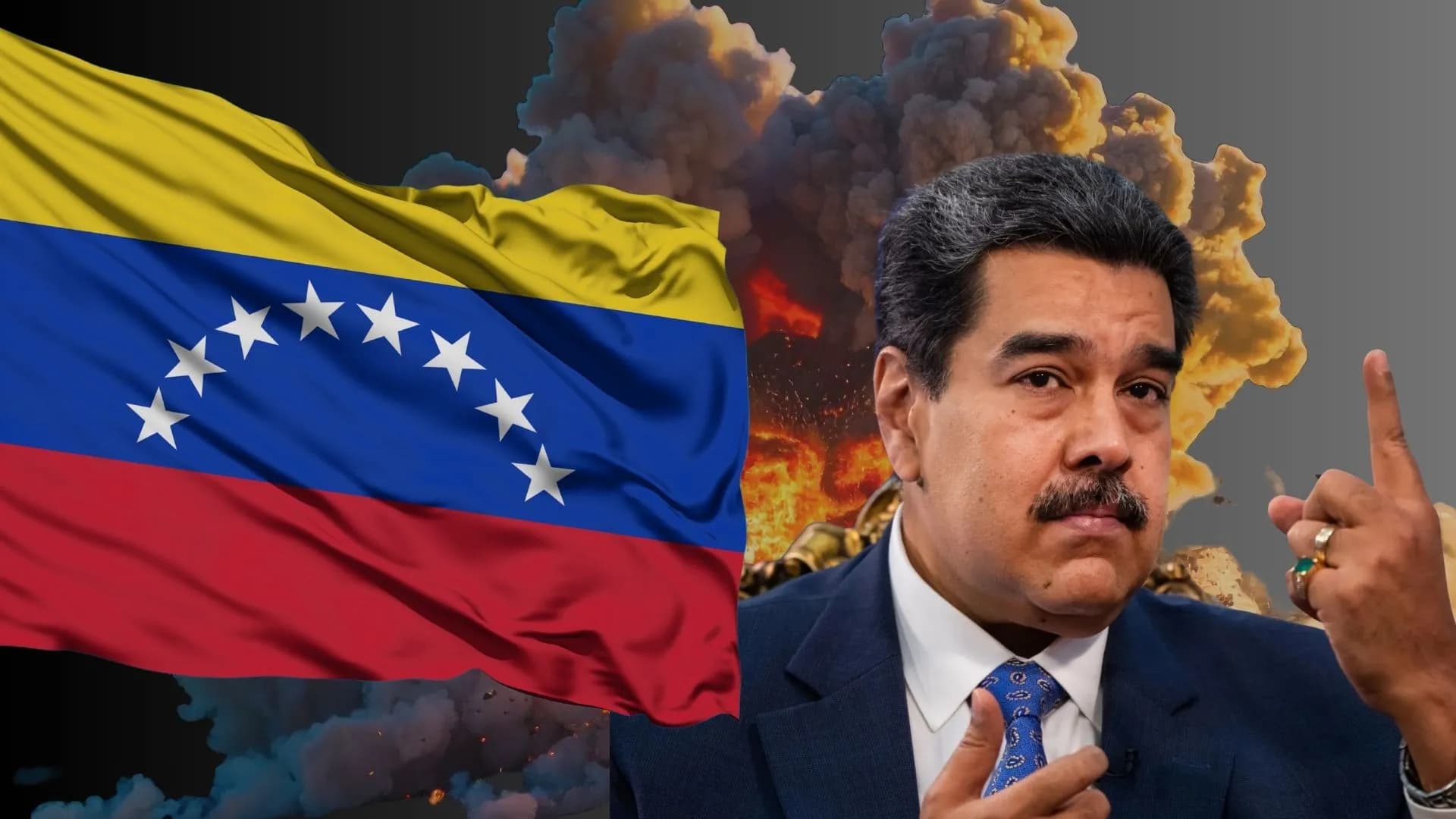
The international stage was shaken in the early morning hours by a tweet from US President Donald Trump, coming immediately after an American operation targeting Venezuela. The tweet announced that Venezuelan President Nicolás Maduro had been captured and would be tried in the United States. This event goes far beyond ordinary diplomatic tension—it represents a strategic turning point that questions the fundamental dynamics of 21st-century power politics and the boundaries of international law. This move, being a direct intervention against the leader of a sovereign state, fundamentally undermines the principle of presidential immunity and established international norms. It raises a critical question in the minds of all actors in global politics: Can a superpower actually abduct another country's leader in this manner, and what are the consequences?
This crisis is not a spontaneous development but rather an accumulation of ideological, economic, and geopolitical tensions spanning decades. To understand the crisis in its full context, we must examine the historical roots of US-Venezuela relations and the processes that brought the parties to this dangerous threshold.
The Road to Crisis
Understanding the current crisis requires knowledge of the historical tension and structural conflict dynamics that have shaped US-Venezuela relations. The cornerstone of US policy in Latin America is the Monroe Doctrine, proclaimed in 1823. In its simplest form, this doctrine represents the US looking at the Western Hemisphere and declaring "this is my territory, no other power can operate here." What began as a defensive reflex evolved into a tool through which the US legitimized aggressive interventions to protect its interests in the region. Indeed, under this doctrine, the US has intervened in Latin America 56 times to date.
The real rupture in relations between the two countries began in 1999 with Hugo Chávez coming to power. Chávez's openly anti-American and socialist stance was unacceptable to Washington. This tension materialized in events such as the failed 2002 coup attempt against Chávez. With Maduro's assumption of office, relations deteriorated irreversibly for four fundamental reasons: ideological conflict, with each side viewing the other as a threat to its own system; the 2014 collapse in oil prices, which devastated Venezuela's petroleum-dependent economy; US energy independence achieved through the fracking revolution, which reduced Washington's historical dependence on Venezuelan oil and gave it more flexibility to pressure Caracas; and Maduro's perceived weakness, as he was not seen as charismatic or legitimate as his predecessor Chávez, creating what the US viewed as an "opportunity window" to overthrow the Maduro regime.
This tension-filled background provides a more understandable framework for the US operation to capture Maduro and the claims behind this action. The alleged abduction of a head of state is more than a diplomatic scandal—it serves as a living laboratory demonstrating how fragile an ultra-centralized, autocratic state structure becomes when the central figure disappears. What unfolded in the first hours after the crisis broke on Venezuelan state television VTV proved this structural collapse, showing how state bureaucracy becomes paralyzed when the leader vanishes.
For the first 1.5 hours after news of the operation broke, old footage of Maduro continued to loop on screen. The state's information mechanism was in a state of complete confusion. The first official text was read with incredible amateurishness, scrolling down a Word document on screen with red-underlined spelling errors uncorrected. This demonstrated the absence of state intelligence and a trained elite bureaucratic class. The text read was disjointed, simultaneously accusing the US of oil theft while defensively claiming "we are not a narco-state." Messages were scattered, confused, and lacking strategic coherence. In the leader's absence, no one could take initiative—for hours, the same text was read repeatedly, first by a presenter, then by an official connected by phone. This was proof of how autocratic systems, where the leader decides everything, become frozen when that leader disappears.
The public first learned of Maduro's abduction when the Vice President demanded Trump "show proof that our president and his wife are alive." This was a moment that deepened Venezuela's communication crisis and proclaimed its own helplessness to the world.
The Legal Dimension
An operation of this kind against the head of a sovereign state directly threatens the principles of sovereignty and immunity upon which the international legal system is built. According to these principles, a head of state is immune from the jurisdiction of another state. However, the US has constructed its own unique legal argument framework to legitimize this action.
Washington's fundamental argument is the classification of drug cartels like Tren de Aragua, which Maduro allegedly controls, as "foreign terrorist organizations." Under US law, when a structure is classified this way, the US president is granted authority to conduct military operations against that organization without congressional approval. By defining Maduro as the leader of a terrorist organization called the "Cartel of the Suns," the US frames the operation against him within the scope of "counter-terrorism."
There is a historical precedent for this situation: the 1989 Panama Invasion. At that time, the US arrested President Manuel Noriega on grounds of drug trafficking and "harming US national security," brought him to the United States, and tried him. The Noriega case provides a legal precedent for trying Maduro in the US. Legal legitimacy debates aside, to understand what strategic calculations the US made in taking such a risky step, we must look at the unseen face of the iceberg.
The Iceberg Analysis: What Does the US Gain or Lose?
The motivations shaping a state's foreign policy generally resemble an iceberg: a small visible face and much larger layers lying beneath the surface. In the Venezuela crisis, it's possible to understand US moves through this three-layered analysis.
The visible face is the war on drugs argument—the US's official justification presented to the public is that Venezuela is a "narco-state" and that Maduro, through structures like the "Cartel of the Suns," is smuggling drugs into the US. However, this argument contradicts the data. Only 8% of drugs entering the US come through the Venezuela route, and according to UN reports, Venezuela is not a producer but a transit country. Therefore, the real purpose of this argument is to provide a "moral justification" and "useful legal cover" for intervention.
The first hidden layer is the power of oil. Venezuela has the world's largest proven oil reserves, and this massive resource is one of the most important factors at the center of the crisis. US Gulf Coast refineries are specially designed to process Venezuela's heavy, sulfurous crude oil, making Venezuelan oil strategically indispensable for the US. CITGO, the US subsidiary of Venezuela's state oil company, is a multi-billion-dollar asset, and control of this company and the massive industry behind it is critically important to the US. Venezuela's threat to bypass the US-controlled Petro-Dollar cycle by conducting oil trade through the Chinese financial system is perceived as a threat to US global financial hegemony.
The deepest part of the iceberg is geopolitical hegemony. The fundamental issue is Venezuela's strategic partnership with China and Russia. The US, according to the Monroe Doctrine, finds it unacceptable for rival global powers to establish influence in Latin America, which it views as its "backyard." As political scientist John Mearsheimer notes, for a superpower to project global power, it must first be an unchallenged hegemon in its own region. The US's global effectiveness extending from the Middle East to Asia-Pacific depends on being secure in its own "home." China and Russia's presence in Venezuela threatens this fundamental security doctrine.
Another important dimension of the crisis is US domestic politics. Cuban and Venezuelan voters in Florida strongly support hardline anti-communist policies. Politicians of Florida origin with great influence over the administration, such as Marco Rubio, exert serious pressure on the administration to pursue an uncompromising policy against the Maduro regime.
International Response and Future Scenarios
Understanding the course of an international crisis requires analyzing the positions of global and regional actors. Likely reactions to Maduro's abduction will be shaped according to the interests and priorities of different power centers worldwide. Latin American countries have historical sensitivity to US intervention, but deep political divisions exist among regional governments, so Latin America is not expected to respond as a unified bloc.
Russia and China are Venezuela's most important strategic partners, but Russia's resources and attention are scattered due to the Ukraine War, limiting its capacity for effective response. China, which generally avoids direct military confrontation, is more likely to retaliate by escalating tension with the US in other areas, such as Taiwan. However, there exists a more cynical scenario that could explain the notably muted response from both powers: the world may be carved up like a pie in a grand bargain between great powers. With Trump hinting that "Colombia is next," there are suggestions of a potential understanding where the US gets a free hand in Latin America while tacitly allowing China to take Taiwan and Russia to consolidate its gains in Ukraine. In this Realpolitik calculation, each superpower secures its own sphere of influence while turning a blind eye to the others' territorial ambitions. This may explain why Russia and China's condemnations have lacked genuine bite—they may be preserving their geopolitical capital for their own expansionist projects rather than expending it on Venezuela. Such a transactional approach to global power would represent a return to 19th-century sphere-of-influence politics, where sovereign states become bargaining chips in great power negotiations.
Europe and international institutions will criticize the US's unilateral action that disregards international law, even though the Western alliance generally views the Maduro regime as illegitimate, but these criticisms are not expected to go beyond harsh condemnations.
Based on current data, several possible scenarios for Venezuela's future stand out. The most ideal scenario for the US is a "perfect transition" where Maduro is overthrown and replaced by US-backed opposition leader Maria Corina Machado, winner of the 2025 Nobel Peace Prize. A less controlled outcome would be Maduro's departure but uncertainty about his successor, beginning an election or transitional government process. A Pyrrhic victory would see Maduro removed through the operation but the US losing prestige and causing long-term regional instability. The worst scenario is a "black hole" where Maduro's death plunges Venezuela into completely uncontrollable civil war and chaos, potentially creating a new massive wave of migration to the region.
This crisis is one of the clearest indicators of a "post-liberal" era where rules and norms are eroding and great powers act recklessly. The fundamental pillars of the international system—the principles of sovereignty and law—are weakening in the face of the naked reality of power politics.
Nicolás Maduro's fate is a turning point that could shape not only Venezuela's future but also what the concepts of sovereignty, law, and power mean in the 21st century. If this operation is as claimed, it may be the clearest declaration that the old rules of international order are no longer valid and that a new era of power politics has begun. The world will feel the consequences of this crisis for many years to come.
Abdullah Yakup Üner
Contributing writer at EUReflect.
Follow EUReflect
See more of our reporting on Google
Mark EUReflect as a preferred source and our stories are ranked higher for you in Top Stories, Discover and Google News — and carry a “preferred” badge when they are cited in AI results.
Add EUReflect as a preferred source