The Makkah Agreement: Forging a Pan Islamic NATO Collective Security Framework
The Makkah Defence Agreement brings Saudi Arabia, Turkey and Pakistan together in a bid to strengthen regional security and strategic autonomy. Its success, however, will depend on whether the three states can build the institutional and operational structures needed for credible collective defence.
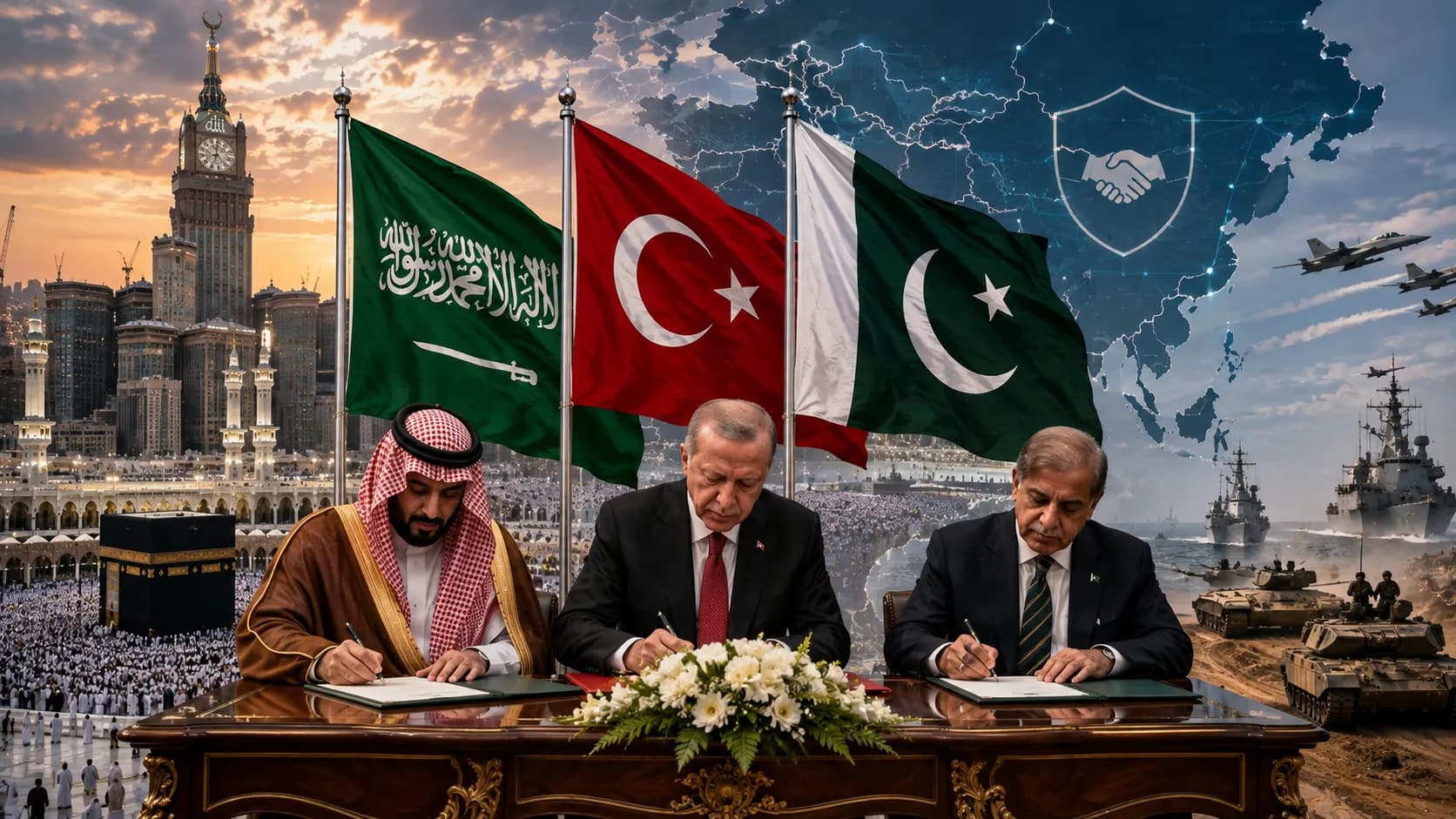
The Makkah Defence Agreement: A New Pillar of Regional Security or a Paper Shield?
The Makkah Joint Defence Agreement, signed on August 7, 2026, represents a pivotal moment in the modern geopolitical history of the Muslim world. While critics are quick to dismiss it as a paper shield or a mere political performance, a deeper analysis reveals that the pact is a pragmatic, necessary, and strategically sound response to a collapsing regional security order. It is not a replica of NATO, nor does it pretend to be; rather, it is a uniquely tailored framework that leverages the complementary strengths of its three founding members to forge a new axis of stability in a region increasingly abandoned by its traditional guarantors.
However, like any ambitious geopolitical endeavor, the Makkah Agreement faces significant hurdles. Its success will depend not on the rhetoric of its architects, but on the concrete steps taken to build the institutional, operational, and political infrastructure required to transform a declaration of intent into a functioning collective security mechanism.
The Makkah Agreement was born out of genuine crisis, not diplomatic vanity. The joint US-Israeli strikes on Iran in February 2026 and the ensuing Iranian retaliation shattered the region's fragile status quo. For Saudi Arabia, the traditional US security guarantee, the bedrock of Gulf stability for decades, proved unreliable as Iranian-backed proxies struck Saudi targets and threatened vital shipping lanes. In this anxious climate, the three signatories have done what responsible states must: they have pooled their resources to create a credible deterrent.
As analysts have noted, the partnership brings together complementary strengths that are remarkably well-suited to address the multifaceted threats of the modern era. Saudi Arabia provides immense financial power, strategic geography, and regional political weight. Turkey contributes a battle-hardened military, being NATO's second-largest army, and a rapidly growing defense industry capable of producing advanced technology like drones and naval systems. Pakistan offers a large, experienced military and, critically, an Islamic nuclear deterrent, a factor that significantly raises the cost of any aggression against the pact's members. This is not a random coalition but a strategic alignment of assets that, when coordinated, can address threats ranging from conventional warfare to asymmetric proxy conflicts.
Furthermore, the agreement is not a rejection of the United States but a prudent hedge against its perceived unreliability. The signatories are not seeking to replace Washington but to supplement its diminishing security umbrella with an indigenous framework. As Allison Minor of the Atlantic Council has pointed out, the agreement bolsters Saudi leverage as it copes with an emboldened Iran and confronts the limits of US deterrence. It provides the three nations with "additional strategic and policy options" in a world where reliance on a single partner has become a liability. The agreement represents a maturation of strategic thinking in the region, moving from dependence to a more resilient and self-reliant posture.
Despite its strategic logic, the Makkah Agreement's path to becoming an effective military alliance is fraught with challenges. The most significant hurdles are institutional, operational, and political.
The most glaring flaw, as highlighted by various analysts, is the absence of the operational infrastructure that makes alliances like NATO functional. NATO rests on integrated command systems, joint military planning, standardized equipment, interoperable communications, decades of shared exercises, and deep intelligence fusion. The Makkah Agreement, as publicly disclosed, contains none of these. There are no provisions for a joint military committee, no unified command structure, no common budget, and no mechanism for rapid decision-making in a crisis. Without these institutional bones, the pact's collective defense clause remains a statement of intent rather than an operational capability. Turkish professor Baris Doster has already expressed skepticism about the pact's operational impact, stating he does not foresee joint military maneuvers or patrols in sensitive areas.
A successful alliance requires a common adversary or a shared strategic vision. The three signatories have radically different primary security concerns. Saudi Arabia views Iran as its existential foe. Turkey maintains complex economic ties with Tehran while its primary focus is on Kurdish militancy and maritime disputes with Greece. Pakistan is overwhelmingly consumed by its rivalry with India. When a real attack occurs, which threat takes precedence? The agreement provides no agreed answer. This lack of a unifying strategic purpose could paralyze the alliance in a moment of crisis, as each member's national interests would inevitably take precedence over the collective commitment.
The agreement's open-door provision, inviting other Muslim nations to join, amplifies these contradictions. The vision of a NATO-style coalition of the entire Ummah is divorced from political reality. The Muslim world is fractured by sectarian animosities, proxy wars, and clashing national ambitions. The Saudi-Iranian schism remains unresolved; Turkey and Egypt are rivals; and the UAE views political Islamist movements with deep suspicion. There is no consensus on who the common enemy is. For Saudi Arabia, it is Iran; for Turkey, Kurdish groups; for Pakistan, India; for Egypt, political Islamists. Inviting these disparate states into the framework without first resolving these fundamental differences would transform the pact from a focused deterrent into a paralyzed debating society.
Turkey's membership in NATO creates a unique and potentially crippling complication for the Makkah Agreement. Article 8 of the Washington Treaty requires that NATO members do not enter into any international engagement that conflicts with their Treaty obligations. If Saudi Arabia or Pakistan faces an attack that does not directly involve a NATO ally, Ankara could find itself caught between its legal obligations to the Makkah pact and its strategic and political ties to the Atlantic Alliance. This dual-umbrella situation could lead to paralysis or a crisis of credibility for the new pact.
However, to overcome these hurdles and realize its potential, the Makkah Agreement must move beyond rhetoric and build the concrete pillars of a functioning alliance. The following recommendations are essential:The signatories must immediately establish the institutional framework that is currently missing. This includes:Creating a Permanent Joint Military Committee comprised of senior officers from all three nations to oversee planning, coordination, and intelligence sharing.Developing a Unified Command Structure for any combined military operations, even if only on paper initially. Establishing a Common Budget to fund joint exercises, intelligence-sharing infrastructure, and the standardization of equipment. Likewise, holding Regular, Large-Scale Joint Military Exercises to build interoperability and demonstrate the pact's credibility as a deterrent.
Given the divergent strategic priorities, the pact should focus initially on areas of clear, shared interest where cooperation can be quickly and effectively demonstrated. This includes:
Counter-Terrorism and Counter-Proxy Operations: The three nations face significant threats from non-state actors like the Houthis, Kurdish militant groups, and various terrorist organizations. Establishing a joint intelligence fusion center and coordinating counter-terrorism efforts would provide immediate, tangible benefits.
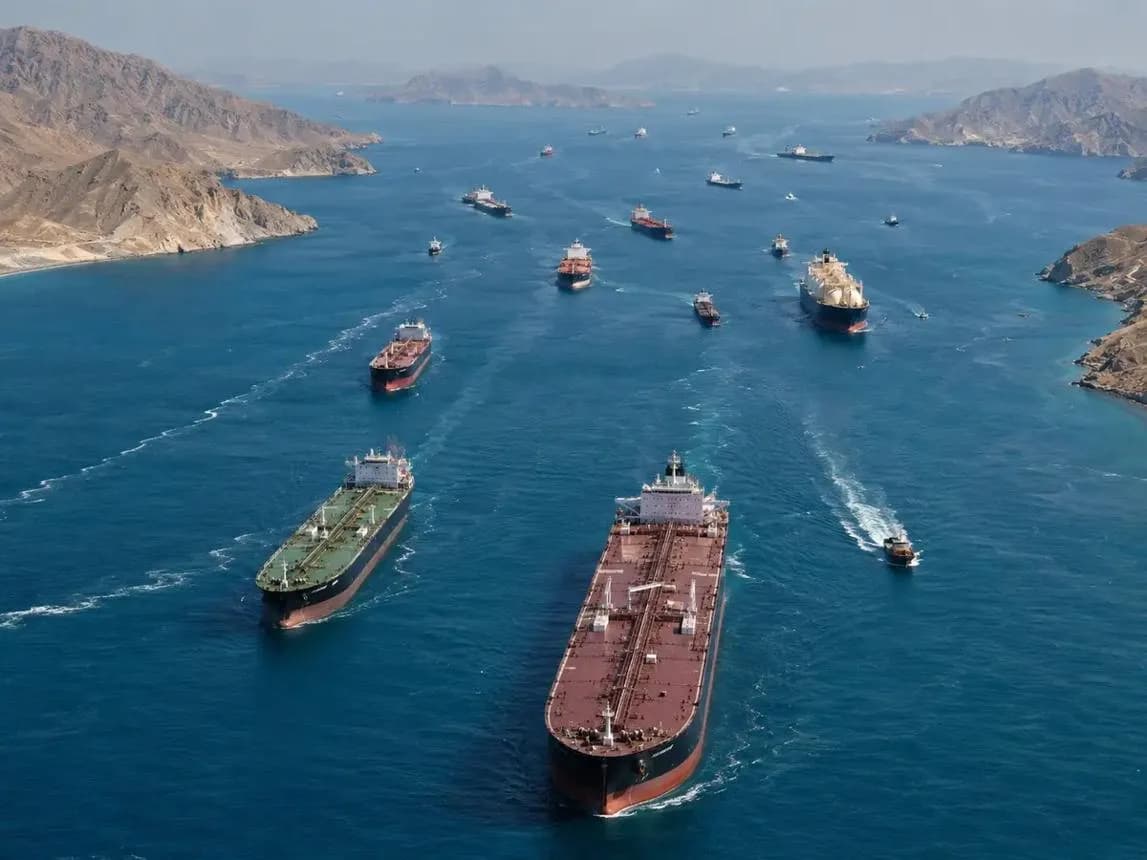
Maritime Security: The security of the Red Sea, the Bab al-Mandeb Strait, and the Gulf of Aden is a vital interest for all three nations. The agreement should formalize and expand upon Saudi Arabia's proposed Multinational Maritime Defence Coalition, making it a core component of the pact's operational mandate.
Defense Industry Integration: Turkey's growing defense industry and Saudi Arabia's financial power can be combined with Pakistan's manufacturing capabilities to create joint ventures for military production, reducing dependence on external suppliers.
Turkey and its partners must proactively address the potential conflict with NATO obligations. This could involve: Issuing a Joint Clarification that the Makkah Agreement is a regional security arrangement that does not supersede Turkey's NATO commitments and is designed to be complementary, not conflicting. Engaging in Dialogue with NATO to ensure the alliance understands the pact's defensive nature and to prevent misunderstandings in a crisis.Defining the Scope of the Agreement to explicitly state that it applies to threats within a specific geographic region, thereby reducing the likelihood of overlap with NATO's Article 5 area of responsibility.
Instead of a grand, unwieldy coalition, the pact should adopt a "hub and spokes" model. The three core members (the "hub") would maintain the primary defense commitment to each other. Other Muslim nations (the "spokes") could be invited to join specific cooperative initiatives, such as the maritime coalition or counter-terrorism efforts, without being required to sign onto the full collective defense clause. This would allow for practical, issue-based cooperation without the paralyzing need for consensus on a common enemy. Egypt, which was reportedly expected to sign the initial agreement but did not, could be a natural first partner for such an approach.
The Makkah Agreement is a landmark achievement, born from a realistic assessment of a changing world order. It is a necessary step toward self-reliance for three major Islamic powers facing an uncertain future. However, its critics are correct in pointing out that its current form is more a statement of ambition than a functioning reality. The pact's future will not be determined by the grandeur of its signing ceremony but by the painstaking, unglamorous work of building the institutional, operational, and political infrastructure required for collective defense. If its architects are willing to move beyond symbolism and invest in the hard mechanics of alliance-building, the Makkah Agreement has the potential to become a genuine pillar of regional stability. If not, it will indeed remain a paper shield, a missed opportunity in a region that can ill afford one.
Uroosa Khan
Contributing writer at EUReflect.
Follow EUReflect
See more of our reporting on Google
Mark EUReflect as a preferred source and our stories are ranked higher for you in Top Stories, Discover and Google News — and carry a “preferred” badge when they are cited in AI results.
Add EUReflect as a preferred source