The Power of Algorithms: A New Global Domination
Artificial intelligence is not a neutral tool but a new global power shaping knowledge and politics. Western-centered algorithms monopolize narratives and values, eroding cognitive sovereignty and deepening digital colonialism.
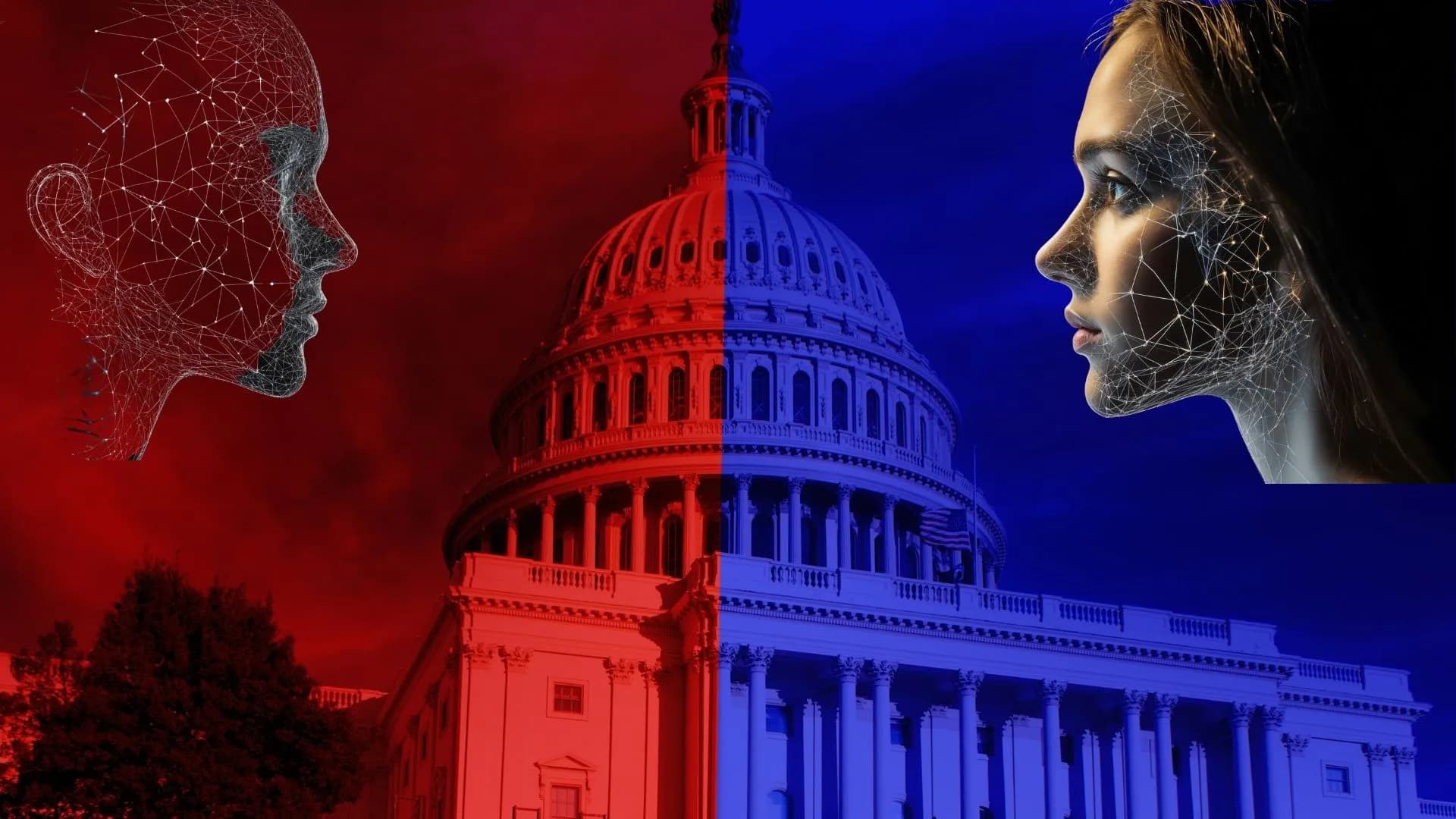
The most critical development of the 21st century is AI, which is not just a technical tool but has transformed into a weapon that shapes international power dynamics. Today, most of the world's population is using AI developed by American companies and internalizing without questioning the knowledge, perspective, and worldview which is currently produced by AI. This situation is creating a knowledge hegemony on a global scale for the first time and is seriously eroding the capacity for knowledge production of diverse political groups.
The danger of returning to medieval Europe, where the church was the monopoly of knowledge, has emerged with AI. The most dangerous illusion created by AI is the claim of neutrality. Most people think that AI has been purified from emotions and biases. On the contrary, every AI carries the values, priorities, and worldviews coded inside. Most of the current systems are trained with English content, which is primarily filtered by Silicon Valley’s liberal cosmopolitan value system. This filtering is done so skillfully that users cannot realize the existence of other perspectives.
For instance, when a journalist in Russia seeks assistance from current AI systems to investigate the origins of the Ukraine conflict, the resulting narrative is almost entirely a perspective that frames NATO expansion as legitimate, while dismissing Russian security concerns as either paranoid or aggressive. The 2014 Maidan events are coded as a "democratic revolution," while the anxieties of the Russian-speaking population in Donbas are labeled "separatist propaganda." A Russia-centric AI, however, could approach the very same events within the context of the collapse of the post-Cold War security architecture, the West's failure to uphold its promises, and the discrimination suffered by Russian-speaking minorities. Both narratives can be supported by historical data, yet the fact that the global population has access to only one of them creates the illusion of "objective reality" and preemptively dismisses the counter-perspective as "disinformation."
That famous adage succinctly summarizes the situation: "History is written by the victors." In the digital age, history is being recoded by those who control the most powerful AI systems. When a student in the Middle East requests information from an AI about the 1953 Iranian coup, they will learn that the event was an intervention backed by the CIA and MI6. This is factual, but it is only half the story. The other half, which the system fails to present, is the profound trauma this coup inflicted upon Iranian society, how democratic development was severely curtailed, and how this event became the cornerstone of today's deep distrust in Iran-Western relations. Had an Iranian political group developed its own artificial intelligence, the 1953 coup would occupy the center of the national memory, yielding entirely different lessons for subsequent generations. Today, Iranian youth are compelled to learn their own history through a fundamentally Western lens.
The homogenization of cultural values is perhaps the most insidious effect. Current AI systems are programmed with ethical frameworks that claim to be universal but are, in fact, reflective of a Western value system. When AI-powered education systems are utilized in a Muslim country, they might propose recommendations regarding family structure, gender roles, or moral issues that clash with the local culture. The system presents the paradigm of "equal individual rights" as a universal norm, while silently coding alternative value systems—such as communal solidarity, family-centric responsibilities, or collective welfare—as "backward." Generations later, young people begin to perceive the core values of their own culture as non-modern or obstacles to "progress." This constitutes a cultural assimilation more effective than military occupation, as it occurs voluntarily, not by force.
The language of political opposition is also falling victim to this hegemony. When an activist from a socialist movement in Latin America requests a draft manifesto from an AI explaining the "structural violence of capitalism" or "imperialist economic exploitation," the system may soften the content or impose a "balanced" perspective on the grounds of "polarizing language." Yet, if the same activist possessed an AI trained with the values of their own political group, it could have utilized mobilizing language appropriate for the movement's ideological framework. Consequently, even opposition movements are confined to the linguistic codes of the very system they criticize. The language of revolution devolves into the language of reform, deemed "safe" by the algorithms.
The situation becomes even more critical in national security and strategic decision-making processes. When a foreign ministry in an African country employs a Western company's AI to develop diplomatic strategy, it may find that the AI's recommendations, even if unintentionally, align closely with Western interests. Proposals presented as "fair" regarding natural resource agreements might, upon closer inspection, be structured to favor international corporations. Had this country developed its own AI, it could have generated alternative strategies prioritizing national interests, accounting for its colonial experiences, and foregrounding local development needs. Now, countries that gained independence decades ago are consulting the algorithms of former colonial powers for their most critical strategic decisions.
Geopolitical Fault Lines: The Anatomy of a New Cold War
The struggle for AI hegemony is shaping the 21st century’s new cold war. The arms race of nuclear proliferation has been superseded by the race for algorithms. The US and China stand as the two superpowers in this contest, while Europe attempts to forge a third, albeit weaker, pole. The rest of the world appears destined to become technological colonies of these titanic powers.
The spiral of technological dependence is the modern rendition of classical colonialism. In the 19th century, Europe invaded Africa and Asia to secure access to raw materials. In the 21st century, access to AI infrastructure creates a parallel dependency. If a nation utilizes foreign AI systems across every domain—from its education and healthcare to agriculture, security, and finance—its "independence" remains merely nominal. The flag may not have changed, but the mechanisms of decision-making are now managed externally.
In modern conflicts, where perception management has become as crucial as military might, powers possessing their own AI gain an immense advantage. The Russia-Ukraine war has demonstrated that narrative control can significantly influence the course of the conflict. The Western world propagates one narrative, Russia another, each disseminated via its own media and digital tools. In the future, rival AI systems will generate disparate narratives, creating "reality wars" where each society believes only the version presented by its own AI. This could lead to the complete collapse of a shared objective reality, rendering diplomacy and dialogue impossible.
The failure of local powers in regions like the Middle East, Africa, and Latin America to develop their own AI systems further deepens their exclusion from global decision-making mechanisms. At a G20 summit, while American and Chinese leaders speak based on economic forecasts and strategic analyses generated by their respective AI systems, other heads of state are forced either to use the same systems or rely on mere intuition. The deficiency in technological capability translates into a diminished diplomatic and economic bargaining power. To be heard at the table, one must now possess not only economic or military might but also algorithmic power.
Redefining Sovereignty: Cognitive Borders
The traditional concept of sovereignty, established since the Peace of Westphalia, rests on territorial integrity and political independence. A state having absolute authority within its borders and being protected against external interference is the fundamental principle of international law. However, a new dimension of sovereignty has emerged in the 21st century: cognitive sovereignty. Borders still exist on the map, flags still fly, but minds are now being governed from other geographies.
If a country's citizens rely on recommendations from foreign AI systems for everything—from what to eat for breakfast to which political party to support, how to raise their children, or which career path to choose—that nation's collective decision-making capacity is being shaped by external forces. This loss of sovereignty is more insidious than a military occupation because it is invisible, provokes no resistance, and is even accepted voluntarily. People perceive their chains as technological convenience.
Cultural autonomy is the area facing the deepest erosion. The increasing use of AI in cultural production fields like language, art, literature, and philosophy risks annihilating the local traditions accumulated over millennia. When an African poet uses AI for assistance in writing a poem, the poem's linguistic structure, choice of metaphor, and aesthetic approach will reflect the Western literary tradition upon which the system was trained. Over time, local narrative forms, musical styles, and visual art approaches are forgotten. Generations later, the people of that culture will be unable to hear the voice of their ancestors because that voice has been lost within the universally accepted algorithmic sound.
Economic sovereignty shares the same fate. As the patents, infrastructure, and development capacity for AI technologies concentrate in the hands of a few companies, other countries are relegated to the status of "technology consumers." This means that even economic decisions become externally dependent. When a country's central bank consults AI analyses to determine monetary policy, these analyses may fail to fully reflect that nation's unique conditions, historical experiences, or social structure. Consequently, policies fail, crises deepen, yet the root problem is never seen: the tools being used are the problem itself.
Moving Forward: Is a Pluralistic AI World Possible?
Is there a way out of this dark picture? What is the alternative to a single global AI hegemony? The answer lies in constructing a multipolar AI ecosystem. This is not an easy goal, as it would shake existing power structures, run counter to the interests of major tech corporations, and require colossal investments. But humanity has no other option.
A multipolar AI ecosystem means the coexistence of AI systems that reflect diverse cultural, ideological, and political perspectives, competing yet simultaneously engaging in dialogue. Does this carry the risk of "fragmentation of reality"? Yes. But this risk is far more acceptable than the imposition of a single reality narrative upon all of humanity.
Regional AI initiatives could be the first steps toward this vision. Joint AI projects developed by regional organizations like the African Union, the Arab League, ASEAN, or MERCOSUR could enable investments that small countries cannot make alone. Structures such as the "Global South AI Consortium" could be established under the leadership of middle-power countries like Brazil, India, Indonesia, and South Africa. This consortium should not only develop technology but also build alternative ethical frameworks, culturally sensitive educational methodologies, and pluralistic knowledge systems.
Finally, in establishing global standards for AI ethics and regulation, not only Western countries but all cultural and political perspectives must be represented. Platforms like the United Nations can develop more inclusive and democratic processes in this regard. Who will define "harmful content," what will be the limit of "disinformation," and what will be the standard for "ethical AI"? These questions should not be answered solely by Silicon Valley engineers.
Conclusion: At the Crossroads of Civilization
The concentration of artificial intelligence in a few centers and the failure of diverse political groups to possess their own AI are creating one of the most serious geopolitical and epistemological crises of the 21st century. This is not merely a technical inequality, just an economic dependence, or simply a cultural erosion. It is the threat of obliterating the diversity of human civilization, the variety of thinking patterns, and the existence of alternative worldviews.
The imposition of a single "version of reality" upon the entire world will turn humanity's rich cultural mosaic, developed over thousands of years, into a grey uniformity. Future generations will not know how their ancestors thought, what they valued, or how they understood the world, because all that knowledge will have been filtered and erased by the universal algorithm.
The most crucial lesson history teaches us is this: a monopoly on knowledge has always led to tyranny. In the digital age, this monopoly is more dangerous because it operates through invisible algorithms. Chains forged in silicon are no less binding than those forged in iron.
Abdullah Yakup Üner
Contributing writer at EUReflect.
Follow EUReflect
See more of our reporting on Google
Mark EUReflect as a preferred source and our stories are ranked higher for you in Top Stories, Discover and Google News — and carry a “preferred” badge when they are cited in AI results.
Add EUReflect as a preferred source