The Strategic Nature of Export Restrictions: A Repeated-Game Analysis of the Japan–South Korea Case
Introduction
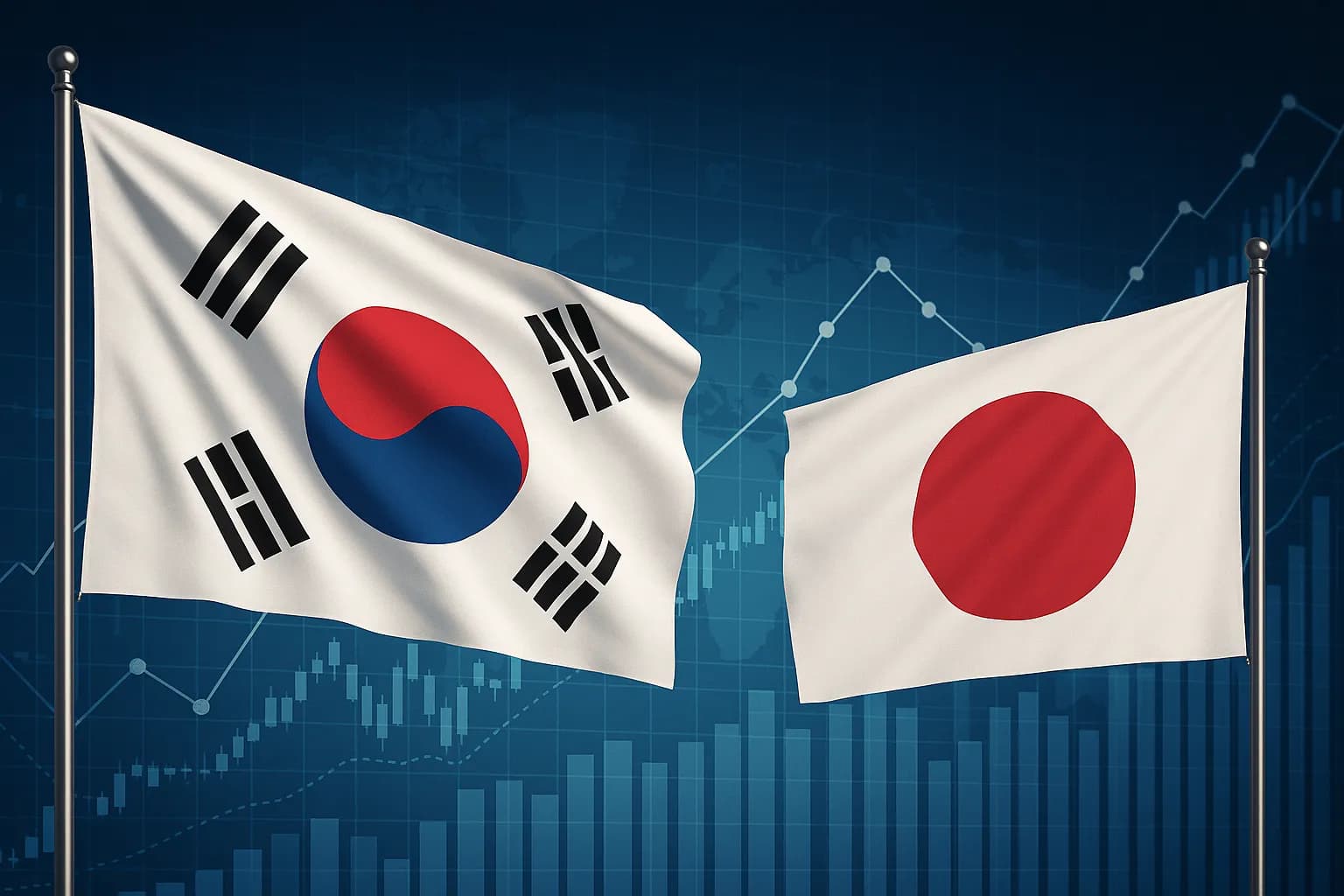
Although the export restrictions that escalated between Japan and South Korea beginning in 2019 created significant instability in their economic cooperation, this dispute was not merely a short-term trade conflict. Rather, it represents a complex form of long-term strategic interaction. The restrictions initially appeared in the form of tightened licensing requirements on key chemical materials essential for the semiconductor industry. However, these measures were shaped not only by economic interests but also by historical–political factors and deep mutual distrust.
Analyzing this situation through the lens of “repeated-game theory” is particularly relevant, because this approach explains how each decision made by states affects future outcomes and how strategies evolve over successive interactions. In conditions where long-term economic ties increase mutual dependency, both sides must consider how their current actions influence future negotiations and opportunities for cooperation. In this sense, repeated-game theory provides a core methodological framework for analyzing the formation of trust, reputation, and strategic signaling (Keohane 1984). This study employs precisely this theoretical foundation to examine the dynamics of the Japan–South Korea trade dispute.
Main Analysis
Players and Interests
The trade dispute between Japan and South Korea involves two primary actors: on one side, the Japanese government and its export-control authorities, and on the other, the South Korean government and its high-tech industrial firms. Japan’s official stance frames the tightening of export controls as a measure grounded in national security principles. However, research shows that domestic political considerations and unresolved historical tensions also played a significant role in shaping this decision (Makioka & Zhang 2023). Japan’s strategic objectives included maintaining control over key materials used in the semiconductor industry, preserving its technological advantage, and reinforcing its political leverage.
South Korea’s interests, by contrast, are predominantly economic. As one of the leading global players in the microchip market, the country’s dependence on three critical Japanese materials directly affects the stability of its production chains. Consequently, the Korean government interpreted the export restrictions as an economic threat and sought to respond by increasing pressure through international institutions, diversifying domestic production, and developing alternative supply sources beyond Japan. In Keohane’s framework, this situation illustrates that while the two states’ interests are in tension, their mutual economic interdependence limits the extent to which they can adopt aggressive strategies (Keohane 1984). This configuration of strategic incentives laid the groundwork for the emergence of “tit-for-tat dynamics” and negotiation-based approaches that unfolded in subsequent stages.
Dynamics of the Repeated Game
Following the introduction of Japan’s export restrictions in 2019, the behavior of both Japan and South Korea evolved not as single, isolated responses but as a sequence of interlinked moves forming a repeated strategic interaction. This dynamic encompassed several stages from the escalation of the trade dispute to the gradual return to negotiations.
In the initial stage, Japan introduced an individual licensing system for the export of three critical chemical materials and proceeded to remove South Korea from its “white list” of trusted trade partners. This decision significantly weakened the long-term institutional mechanisms that had previously sustained mutual trust in their economic cooperation (Makioka & Zhang 2023). South Korea responded with official protests, filed a complaint with the WTO, and saw the rise of domestic social boycotts targeting Japanese products. This phase exhibited a clear “tit-for-tat” pattern, as each move was met with an almost symmetrical counter-move.
In the subsequent stage, escalation became more pronounced: heightened political tensions spilled over into concerns regarding the GSOMIA intelligence-sharing agreement. At the same time, the strong economic interdependence between the two countries, especially in the semiconductor sector, made the costs of extreme measures increasingly evident. As a result, both sides gradually reintroduced elements of negotiation. While South Korea intensified investments to diversify its domestic producers, Japan slowed certain licensing procedures but stopped short of complete supply disruption. Here, it becomes evident that neither state adopted a “grim-trigger” strategy; that is, no single defection led to a permanent breakdown in cooperation.
The 2020–2022 Negotiation Phase
The negotiation phases between 2020 and 2022 represent one of the most important components of the repeated-game dynamic, demonstrating the active use of “future-oriented strategies”. Both states recognized that every new decision would influence future economic stability and diplomatic standing, which pushed them to soften escalatory measures and maintain channels of dialogue. By 2023, South Korea’s decision to return Japan to its “white list” followed by Japan’s removal of export restrictions, produced a near-compromise equilibrium. This outcome can be viewed as a real-world example of the cyclical pattern often observed in repeated games: “limited escalation, negotiation, and partial cooperation”. The strategies adopted during this period indicate that both parties increasingly took future opportunities into account in each round, helping restore a degree of mutual trust.
Strategies and Trust
The strategic behavior observed in the later stages of the Japan–South Korea trade dispute was shaped primarily by the accumulated experience of previous interactions and the historical context of bilateral relations. Longstanding issues such as disputes over historical compensation and persistent political tensions affected how each new move was interpreted. This aligns with a central principle of repeated-game theory: “actions taken in each stage shape strategies in subsequent stages” (Axelrod 1984).
Japan’s 2019 export controls were perceived by South Korea not merely as an economic measure but also as a political signal. South Korea’s response similarly developed into a tit-for-tat pattern. In turn, this iterative exchange pushed both sides to develop a clearer understanding of each other’s reaction mechanisms, an essential condition for achieving long-term strategic stability.
Moreover, throughout the dispute, a balance between limited escalation and negotiation prevailed rather than a strategy of full confrontation. As is typical in repeated games, neither state adopted a grim-trigger strategy, which would involve permanently punishing the opponent after a single defection. Instead, both Japan and South Korea kept the door open for future cooperation, recognizing their long-term economic interdependence. From 2020 onward, the gradual issuance of certain export licenses, the reactivation of diplomatic channels, and the relaxation measures implemented in 2023 all indicate that both sides recognized the need for cooperative elements within the repeated-game framework. Even partial adjustments played an important role as signals that helped foster the gradual restoration of trust.
Trust Formation and Erosion
The formation and erosion of trust constitute central elements of this dispute. In the initial stage, trust deteriorated sharply due to the sudden introduction of restrictions, the uncertainty surrounding the process, and the heavy political framing of the measures, all of which heightened caution on both sides. Over time, however, strategic calculations began to shift. The fact that exports were never entirely halted, the partial restoration of technical licensing procedures, and the revival of diplomatic exchanges contributed to a gradual recovery of trust.
From the perspective of repeated-game theory, trust develops incrementally through signals, consistent patterns of behavior, and observed reliability of the counterpart. The eventual de-escalation observed in the later phase of the dispute demonstrates that long-term interests and strategic foresight encouraged both states to move away from a model of sharp confrontation and toward one of renewed stability.
Conclusion
The repeated-game dynamics observed in the export restrictions between Japan and South Korea demonstrate that both sides were compelled to adopt “future-oriented strategies” rather than one-shot approaches. Despite the sharp measures taken in the early stages, neither Japan nor South Korea shifted to a maximal punishment strategy that would jeopardize long-term cooperation. Instead, both actors limited escalation and kept open the possibility of returning to negotiation. This outcome confirms that in repeated interactions, “reputation, mutual interdependence, and future strategic opportunities” play decisive roles.
Throughout the dispute, the predominance of tit-for-tat responses, the gradual strengthening of cooperative elements, and the reactivation of diplomatic channels revealed that economic policymaking relies more on consistent strategic calculations than on abrupt, confrontational decisions.
The conditions that may reshape the actors’ strategies in the future depend on several factors. First, deeper economic interdependence and shared interests within global supply chains increase the cost of drastic measures, making cooperative strategies more attractive. Second, the revitalization of international institutions, particularly mechanisms within the WTO can provide clearer rules of engagement and help institutionalize trust. Third, broader regional security factors, such as the United States’ alliance politics in East Asia or the dynamics of global technological competition, may prompt both countries to recalibrate their strategic positions toward each other.
In sum, although the dispute has formally de-escalated, strategic calculations will continue, and the future behavior of both states will depend heavily on how these underlying conditions evolve.
References
Axelrod, R. (1984). The Evolution of Cooperation. New York: Basic Books.
Keohane, R. O. (1984). After Hegemony: Cooperation and Discord in the World Political Economy. Princeton: Princeton University Press.
Makioka, R., & Zhang, H. (2023). The Impact of Export Controls on Japan–South Korea Semiconductor Trade. Working Paper, Kyoto University.
WTO – World Trade Organization. (2019). Republic of Korea files complaint against Japan over export controls. WTO Dispute Settlement Register. https://www.wto.org
Doniyor Abdullayev
Contributing writer at EUReflect.
Follow EUReflect
See more of our reporting on Google
Mark EUReflect as a preferred source and our stories are ranked higher for you in Top Stories, Discover and Google News — and carry a “preferred” badge when they are cited in AI results.
Add EUReflect as a preferred source