From Transit Hub to Economic Engine: Testing Kazakhstan’s Aviation Ambitions
New terminals in Almaty, Kyzylorda, and Shymkent have boosted combined annual capacity from 3.5 million to 23 million passengers, while three airports are under construction in tourist areas.
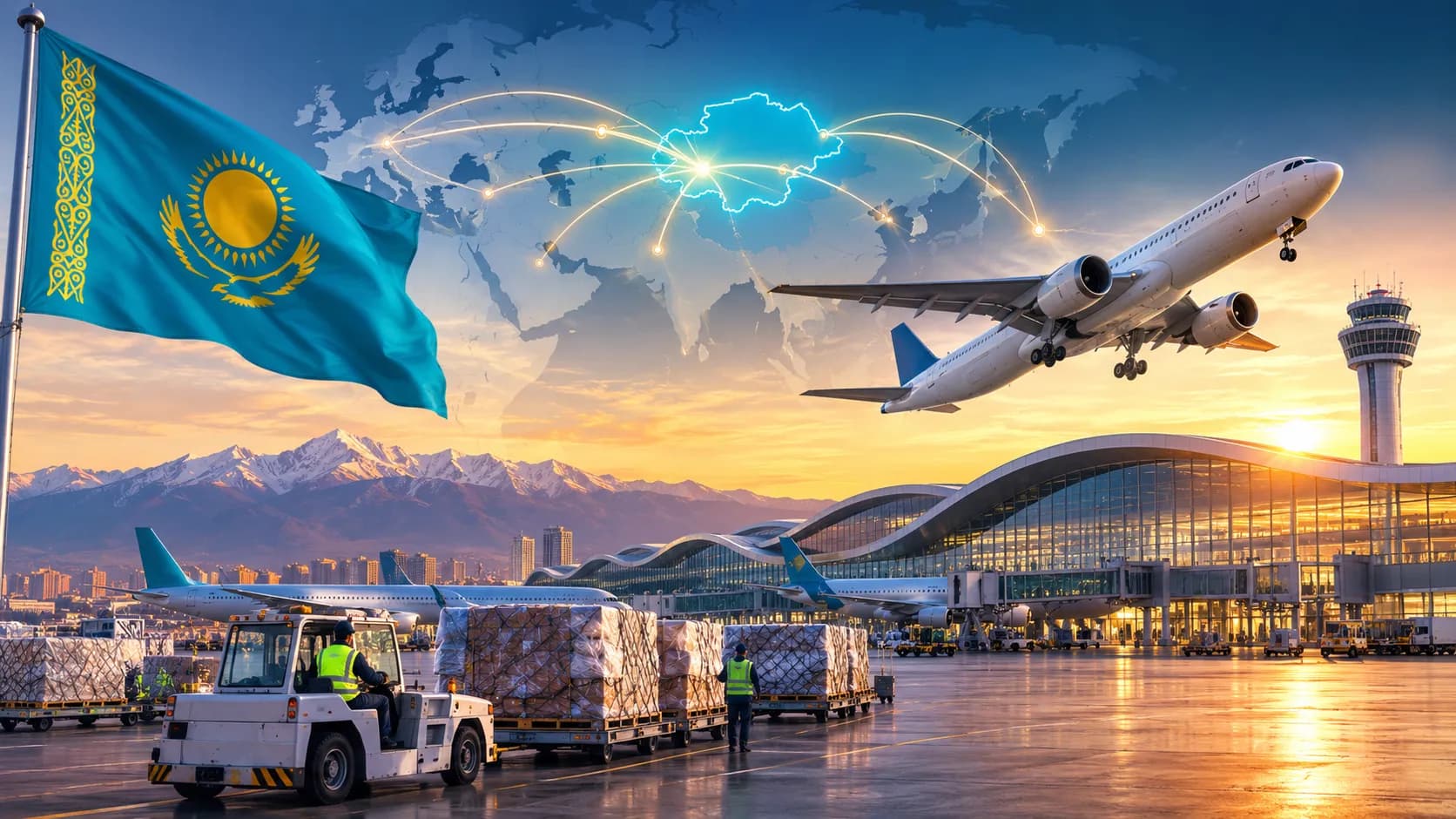
Kazakhstan is investing heavily in its airports, cargo infrastructure and international connectivity. Its geographic position between Europe and Asia makes these investments appear logical. Yet the more important question goes beyond the scale of spending and the number of flights: Can the country transform its growing aviation network into a genuine economic platform that generates local value, or will air traffic remain largely transit-oriented, generating limited value for the domestic economy?
Cargo and passenger figures
The early figures present a relatively positive picture. From January to July, the country’s airports handled 102,500 tons of cargo, a 10 percent increase compared with the same period the previous year. Almaty alone accounted for 66,100 tons, or more than 64 percent of the total, underscoring its continued dominance as the main gateway.
Meanwhile, Kazakh airlines carried 7.4 million passengers in the first half of the year, a modest rise of 2.6 percent. For the full year 2025, airports handled more than 31.8 million passengers, while air cargo volume reached approximately 173,000 tons.
These figures point to steady growth, but not yet to a transformative leap.
Expanding capacity and connectivity
The government is clearly moving to expand capacity. New terminals in Almaty, Kyzylorda and Shymkent have raised combined annual capacity from 3.5 million to 23 million passengers. Three new airports are currently under construction in tourist areas — Katon-Karagay, Zaisan and Kenderli — as part of efforts to connect remote regions and support domestic tourism.
On the international connectivity front, Kazakhstan now operates 135 international routes linking it to 30 countries under an open skies regime. Global cargo carriers such as Cargolux and Cathay Pacific Cargo have expanded their operations through Astana, while other companies have begun strengthening their presence in Almaty. Together, these measures are creating a substantial physical foundation for a broader aviation hub.
Infrastructure alone, however, does not create a successful aviation hub. As Civil Aviation Committee Chairwoman Saltanat Tompiyeva has noted, the long-term sustainability of any hub depends on trust in the system: trust in safety, regulation and predictable rules. International audits show that the effective implementation rate of aviation safety oversight standards has reached 82 percent, while compliance with aviation security standards stands at 95.7 percent. These figures place Kazakhstan in a relatively advanced position and reflect notable institutional progress compared with previous years. Yet trust is not built overnight; it requires continuity in application and oversight, and this will remain under test in the years ahead.
Building a broader economic system
The real challenge begins after the infrastructure is built. A successful aviation hub is not merely runways, warehouses and transit cargo operators. It is a broader economic system that links the airport to roads, railways, industrial zones and warehouses capable of adding genuine value to goods before they are exported.
Simply moving cargo through the country, with little more than refueling and handling along the way, may generate revenue. But that revenue remains relatively limited compared with what could be achieved if agricultural, food or industrial products were processed near the airports, or if these airports became aggregation and distribution points for higher-value logistics services. This idea is not new, yet it requires practical coordination among the transport, industry and trade sectors — something that demands time and sustained political and administrative commitment.
The greatest challenge now is not completing the projects, but converting physical assets into economic engines. If the main hubs in Almaty, Astana and Shymkent succeed in attracting logistics companies, manufacturers and exporters, then aviation and cargo traffic will gradually become a source of added value within the Kazakh economy. If, however, the figures remain limited to passenger numbers and cargo tons without sufficient linkage to local production and exports, the gains will stay modest. Previous experiences in the region show that success in this field requires more than investment in concrete; it requires clear and simple policies that attract investors and reduce administrative complexity.
Turning assets into economic engines
Kazakhstan possesses important elements: a distinctive geographic location, ongoing investments, progress in safety standards, and declared political will to develop its role within the Middle Corridor. These elements together give it a real opportunity. But opportunity alone is not enough. The true test will be the ability to link aviation to the real economy, so that airports do not remain mere transit points but become active parts of regional value chains — generating local production, exports and jobs.
In the end, Kazakhstan’s ambitions in the aviation sector deserve serious attention. Success will not be measured by the number of new routes or the volume of announced investments, but by the extent to which these projects generate jobs, exports and tangible economic value inside the country. The path is open, yet it requires patience, coordination and a focus on results rather than announcements. This is precisely what will distinguish an ambitious project from one that delivers real impact.
Abdul Hamid Hamid Al-Kba
Contributing writer at EUReflect.
Follow EUReflect
See more of our reporting on Google
Mark EUReflect as a preferred source and our stories are ranked higher for you in Top Stories, Discover and Google News — and carry a “preferred” badge when they are cited in AI results.
Add EUReflect as a preferred source