Trump's NATO Bill: America Is Paying Too Much
Days before the 2026 NATO Summit in Ankara, President Trump publicly itemised allied defence spending, labelling US contributions "ridiculous" and warning that Washington's unconditional support for the alliance cannot continue without fairer burden-sharing from European partners.
Introduction
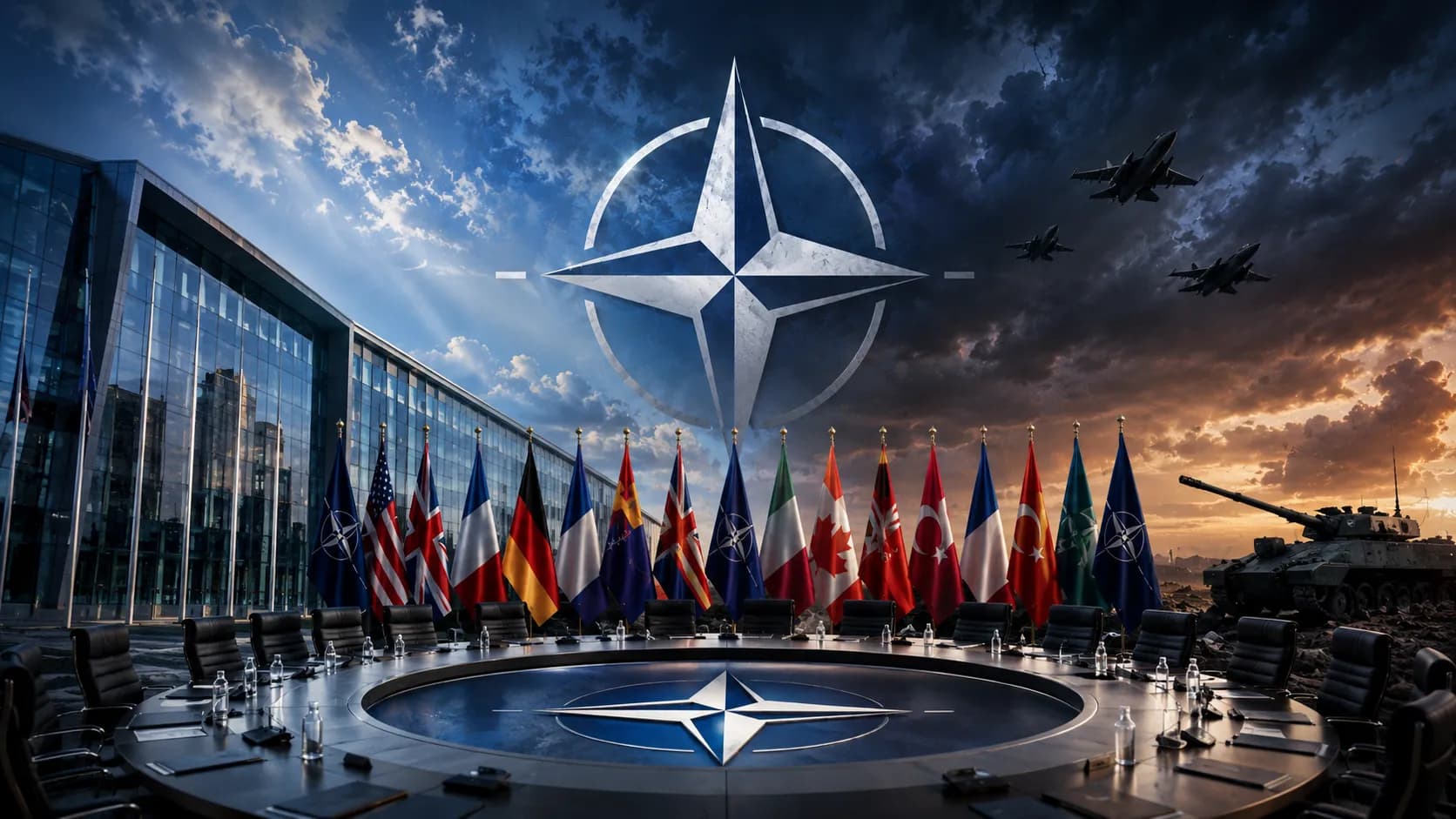
Just days before NATO leaders gather in Ankara for the alliance's 36th summit, US President Donald Trump reignited one of the most combustible debates in transatlantic relations. In a series of posts on his Truth Social platform, Trump declared that the United States "spends more money on NATO than any other country, by far, to protect them, without getting any benefit from so doing." He then laid out a point-by-point comparison of national defence expenditures, characterising the disparity with a single word: "Ridiculous." The intervention, reported by TIME and Outlook Indiaalike, has set an already fractious summit on an even more turbulent course.
The Numbers Behind the Complaint
In his posts, Trump cited US defence expenditure at roughly $999 billion for the period between 2014 and 2025, contrasting it with figures for the United Kingdom at $90.5 billion, France at $66.5 billion, Italy at $48.8 billion and Poland at $44.3 billion, adding that Germany and others were "MUCH LOWER." Those figures come directly from NATO's own annual expenditure report, lending the complaint a degree of factual grounding. However, as Newsweeknoted, only a fraction of that US total — under $1 billion, representing roughly 15 percent of NATO's shared common-funded budget of $6.3 billion — actually flows to the alliance's central coffers. The bulk of what Trump labels NATO spending finances the US Pacific fleet, Middle East operations and the American nuclear triad: commitments that would remain regardless of whether NATO existed at all. The framing of US spending as charity toward ungrateful allies, Newsweek argues, misrepresents an arrangement built on American strategic self-interest as much as collective defence.
Iran, Troop Reviews and the Widening Rift
Trump's spending complaint does not exist in a vacuum. It is compounded by a deeper political grievance: several European allies refused to allow the United States access to shared military bases for offensive operations during the Iran war earlier this year. Trump has repeatedly returned to this rebuke, arguing that allies "were not there for us" when it mattered. US Defence Secretary Pete Hegseth labelled the refusals shameless and argued they endangered American service members. In response, Hegseth announced a review of the US military footprint in Europe, a process that could last up to six months and is explicitly designed, in his words, to ensure "Europe leads and steps up to take primary responsibility for the defence of Europe." The US ambassador to NATO, Matthew Whitaker, reinforced the message this week, warning that some allies — singling out Spain in particular — were not moving credibly toward the five percent of GDP commitment that leaders agreed at the 2025 Hague Summit. NATO Secretary General Mark Rutte visited the White House last week in an attempt to ease tensions, presenting charts illustrating the scale of allied spending increases since 2017, but Trump's public posts in the days that followed suggested the diplomatic outreach had done little to soften his position.
What the Ankara Summit Must Resolve
The gathering in Ankara now carries the weight of a fractured alliance relationship that goes well beyond a spreadsheet dispute. Experts are watching closely to see how far Trump is willing to push his dissatisfaction in a public forum. King's College London defence studies professor Michael Clarke told TIME that the transatlantic element of NATO is "in deep, deep trouble," and that the summit's tone will largely depend on how angry Trump chooses to be. Allied spending has, by any measure, risen sharply since Trump first raised these criticisms: European members and Canada have collectively added hundreds of billions of dollars in annual defence investment since 2014, according to the US Mission to NATO. Yet Trump's argument has shifted: it is no longer purely about reaching a two or even five percent GDP threshold, but about whether allies are willing to stand alongside the United States when Washington chooses to act — a question the Iran crisis has left uncomfortably open.
Conclusion
Trump's pre-summit offensive has done what it was arguably designed to do: place burden-sharing at the very top of the Ankara agenda before a single session has begun. Whether European leaders respond with firmer financial commitments, concessions on troop hosting arrangements, or a coordinated counter-argument, the coming days will test whether NATO's unity is, as Secretary General Rutte insists, genuinely intact — or whether the alliance's most disruptive member is edging closer to making good on his most serious threats.
Alvara Merrick
Contributing writer at EUReflect.
Follow EUReflect
See more of our reporting on Google
Mark EUReflect as a preferred source and our stories are ranked higher for you in Top Stories, Discover and Google News — and carry a “preferred” badge when they are cited in AI results.
Add EUReflect as a preferred source