Ukraine War Tests International Law
As the conflict enters its fifth year, international law faces a stress test. A recent strike on a Kryvyi Rih shopping centre killed 16, highlighting challenges in protecting civilians.
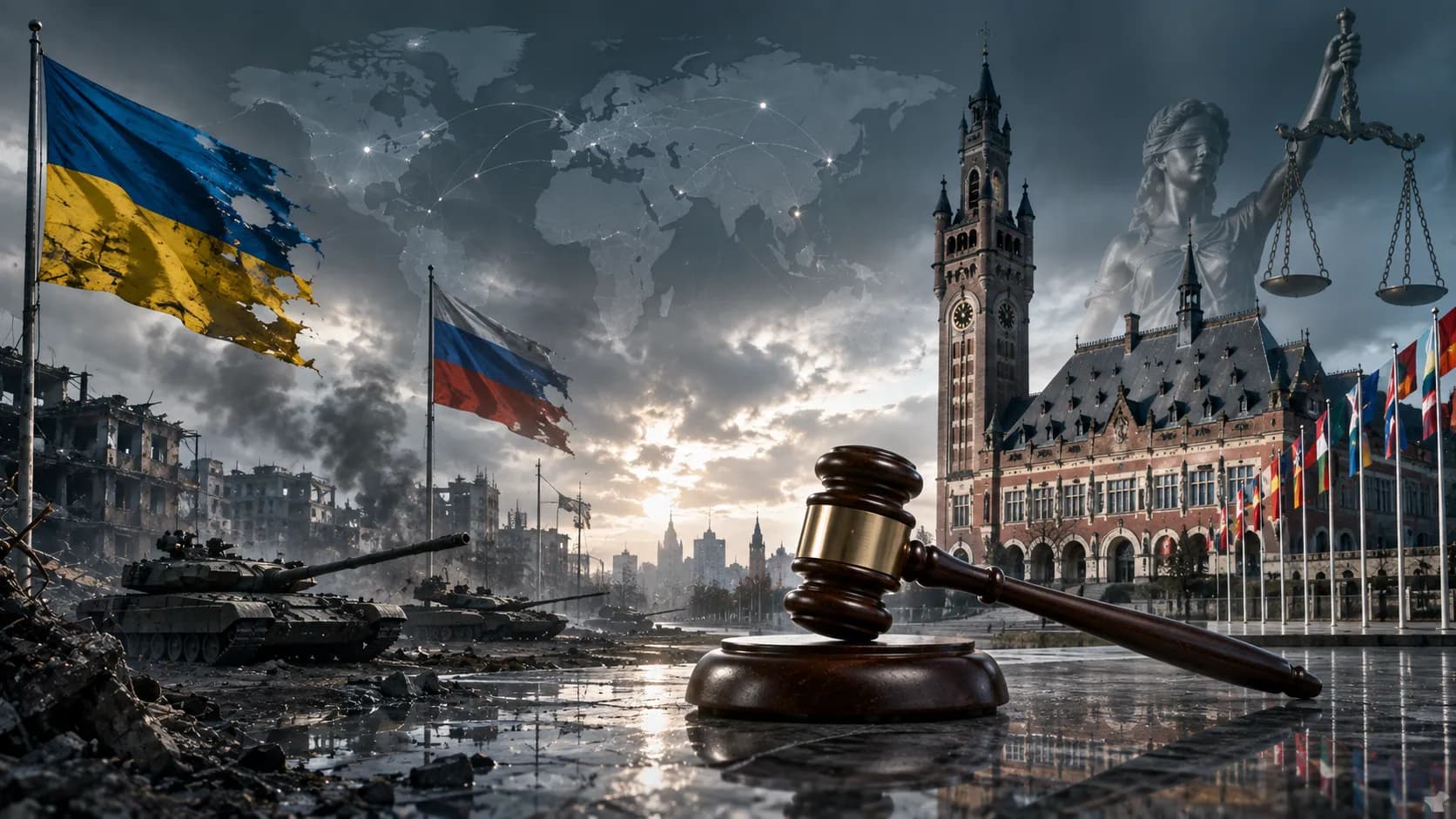
More than four years after Russia launched its full-scale invasion of Ukraine, the conflict has become one of the most consequential tests of international law since the end of the Cold War.
The legal questions extend far beyond responsibility for individual battlefield incidents. The war touches the foundations of the international system: the prohibition on the use of force, territorial integrity, occupation law, protection of civilians, treatment of prisoners of war and individual criminal responsibility.
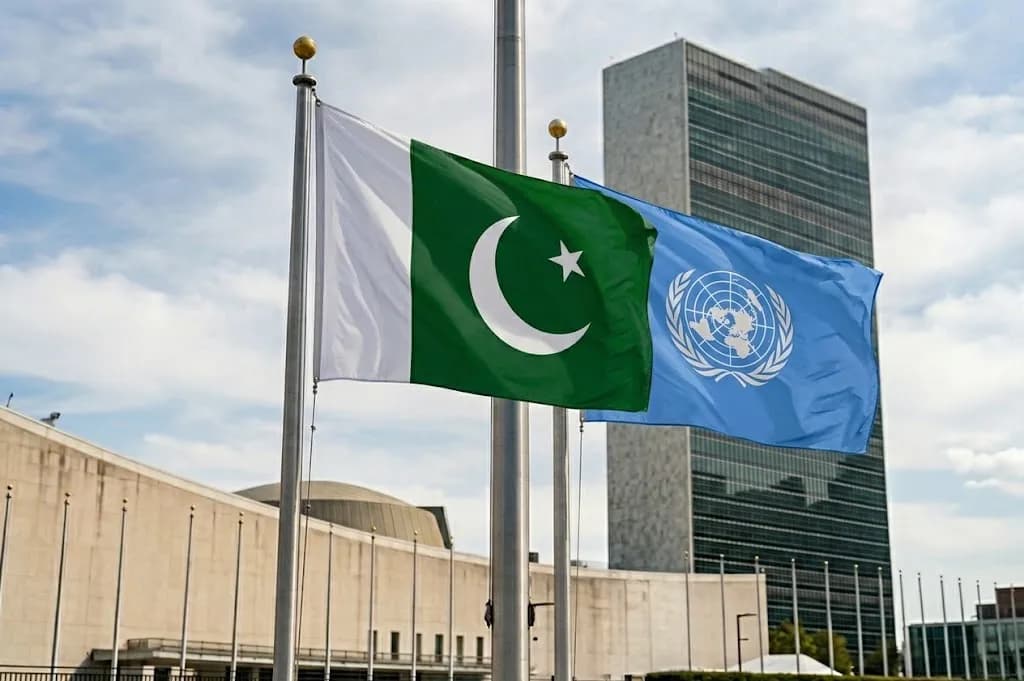
On August 24, UN Under-Secretary-General Rosemary DiCarlo again described Russia's full-scale invasion as a violation of the UN Charter and international law, while warning that civilian casualties are continuing to rise.
The First Question Is Aggression
The central legal issue begins with Article 2(4) of the UN Charter, which prohibits states from using force against the territorial integrity or political independence of another state except in narrowly defined circumstances, principally self-defence or action authorized by the UN Security Council.
Russia has presented several legal and political arguments for its military operation, including self-defence and the protection of Donetsk and Luhansk.
These arguments have not been accepted by the majority of the international community. UN bodies have repeatedly treated Russia's actions as aggression against Ukraine and demanded respect for Ukraine's sovereignty and internationally recognized borders.
This distinction is important because international law separates two questions: whether a state was legally entitled to begin a war, and how all parties conduct themselves once fighting has begun.
Even a state acting in lawful self-defence remains bound by international humanitarian law.
Civilian Protection Is Under Pressure
The second major issue concerns the conduct of hostilities.
The Geneva Conventions and customary international humanitarian law require parties to distinguish between military targets and civilians and civilian objects. Attacks must also comply with the principles of proportionality and precautions in attack.
Recent casualty figures show why these rules remain central.
The UN Human Rights Monitoring Mission recorded at least 437 civilians killed and 2,610 injured in Ukraine during July 2026, making it the deadliest month for civilians since May 2022. Civilian casualties were 70 percent higher than in July 2025.
A Russian attack on a shopping centre in Kryvyi Rih on August 21 killed at least 16 people and wounded more than 130, according to Ukrainian authorities. UN human-rights monitors subsequently investigated the incident as part of their continuing documentation of civilian harm.
Determining whether a particular strike constitutes a war crime, however, requires evidence concerning the intended target, military necessity, proportionality, precautions and the information available to commanders at the time.
Civilian casualties alone do not automatically establish a war crime.
Occupation Creates Legal Obligations
International law also imposes extensive obligations on an occupying power.
Under the law of occupation, control over foreign territory does not itself transfer sovereignty. The occupying power must protect civilians and is restricted in areas including deportation, forced displacement, property seizure and changes to the legal and administrative system of occupied territory.
UN human-rights officials reported in July that Russian authorities continued practices in occupied Ukrainian territories including forcible transfers and deportations, pressure on residents to accept Russian allegiance and measures affecting private property.
These allegations are particularly significant because annexation declarations do not eliminate the application of occupation law if territory is considered occupied under international humanitarian law.
Prisoners of War Remain a Major Issue
The treatment of prisoners has become another major international-law question.
The Third Geneva Convention requires prisoners of war to be treated humanely and prohibits torture, cruel treatment and humiliating or degrading treatment.
Former Ukrainian prisoners recently presented allegations of systematic torture, sexual violence and other abuse in Russian detention. UN findings cited during the discussions have documented serious violations involving Ukrainian prisoners.
Russia rejects allegations of systematic abuse and has accused Ukraine of mistreating Russian prisoners. UN monitoring has also documented violations involving Russian POWs held by Ukraine, although UN findings indicate substantial differences in scale and patterns between the documented abuses.
International humanitarian law applies equally to all parties: alleged violations by one side do not legally justify violations by the other.
The ICC Changes the Accountability Debate
The International Criminal Court has transformed the legal dimension of the conflict from an abstract debate into active criminal proceedings.
The ICC has issued arrest warrants connected with the Ukraine situation for six Russian officials, including President Vladimir Putin, children's commissioner Maria Lvova-Belova, Sergei Shoigu and Valery Gerasimov.
The allegations include unlawful deportation and transfer of Ukrainian children as well as alleged attacks against civilian objects and other crimes.
The warrants do not constitute convictions. Under international criminal law, suspects remain presumed innocent unless guilt is established before the Court.
Their significance is nevertheless substantial: international criminal responsibility attaches to individuals, meaning senior political and military office does not automatically remove potential responsibility for international crimes.
Ukraine's position has also changed institutionally. After previously accepting ICC jurisdiction through special declarations, Ukraine ratified the Rome Statute, which entered into force for the country on January 1, 2025.
The Enforcement Problem
The Ukraine war exposes perhaps the greatest weakness of international law: law and enforcement are not the same thing.
International courts generally do not possess independent police forces capable of arresting suspects. The UN Security Council can also be constrained when a permanent member involved in a conflict possesses veto power.
This creates a difficult situation in which legal rules may be relatively clear while their enforcement remains politically complicated.
The war therefore represents more than a dispute between Russia and Ukraine.
It is testing whether territorial integrity can be effectively protected, whether violations of humanitarian law can produce meaningful accountability and whether international institutions can enforce rules when major powers are directly involved.
The ultimate legal legacy of the Russia-Ukraine war may consequently depend not only on what international law says, but on whether the international system can make those rules matter.
Ahmet Balakan
Contributing writer at EUReflect.
Follow EUReflect
See more of our reporting on Google
Mark EUReflect as a preferred source and our stories are ranked higher for you in Top Stories, Discover and Google News — and carry a “preferred” badge when they are cited in AI results.
Add EUReflect as a preferred source