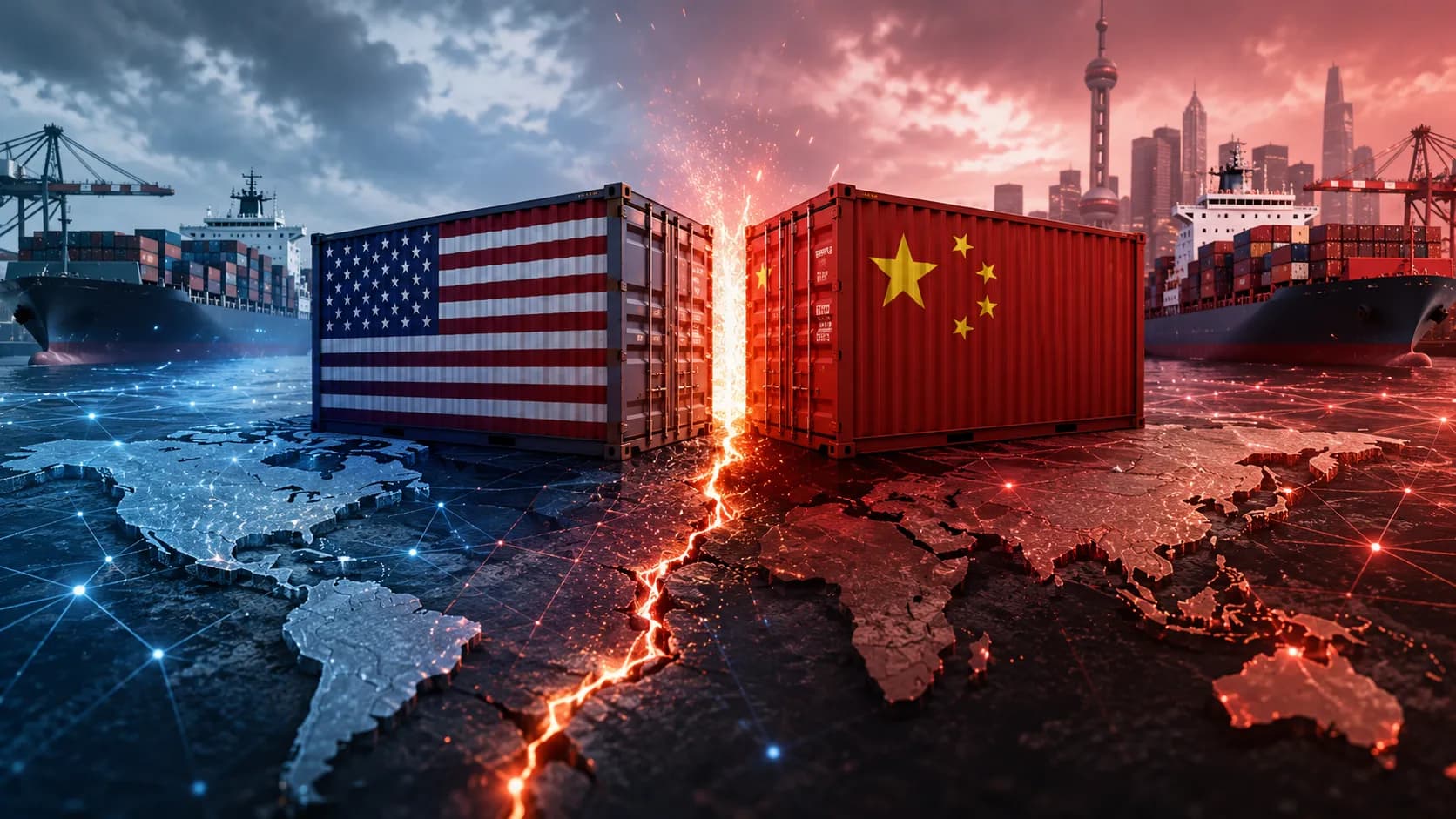
Washington Targets Iran's Economic Lifelines
The first wave targets nearly 60 individuals, companies, and vessels linked to oil revenues, military procurement, and sanctions evasion.
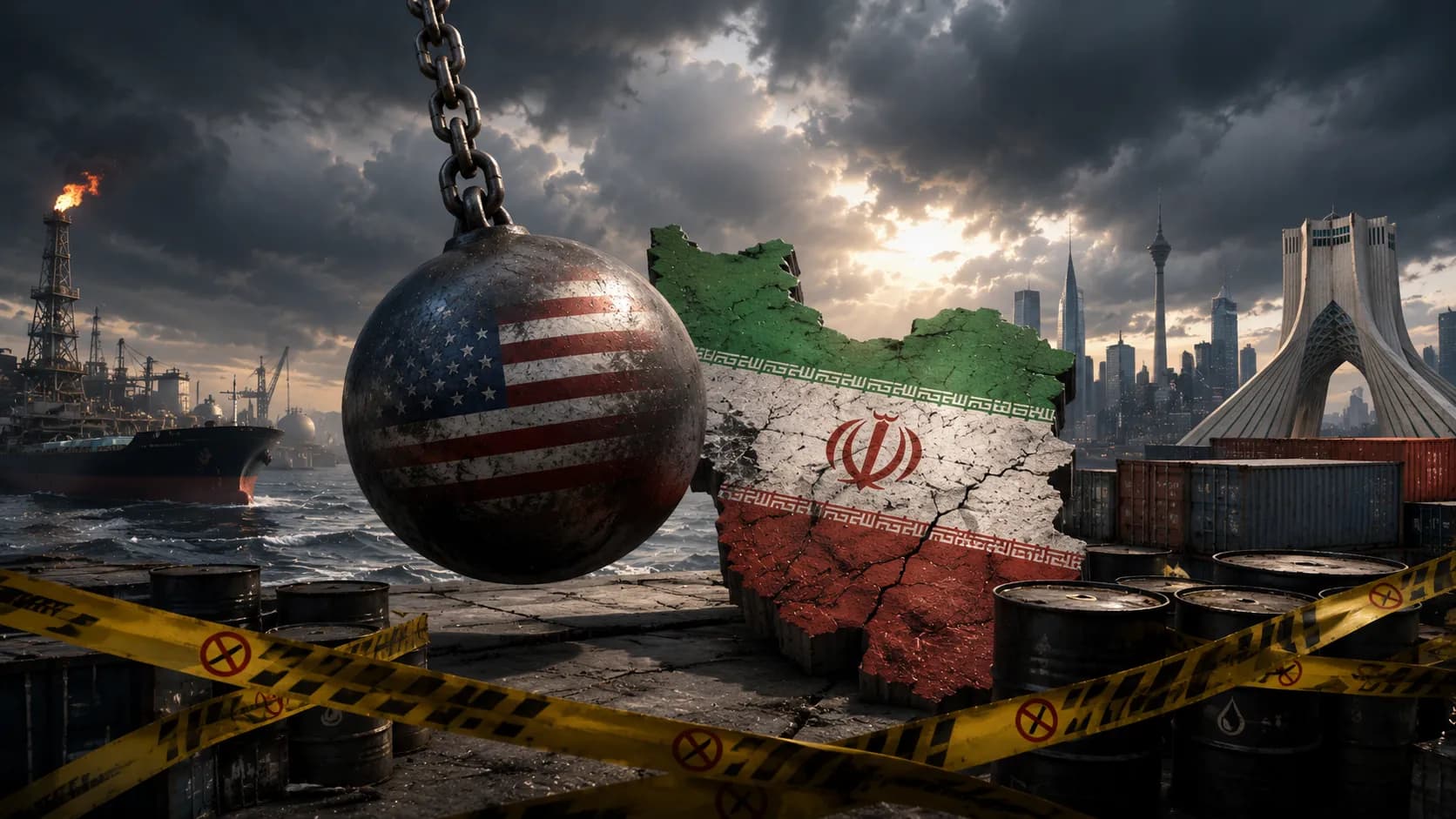
U.S. Tightens the Economic Siege on Iran
The United States has opened a new phase in its confrontation with Iran, shifting the center of pressure from the battlefield toward an attempt to isolate Tehran from the global economy.
On August 24, the Trump administration formally launched Operation Economic Outcast, a sweeping sanctions campaign that the U.S. Treasury describes as an effort to cut the financial networks supporting the Iranian government and the Islamic Revolutionary Guard Corps. (home.treasury.gov, whitehouse.gov)
The strategy represents an expanded version of Washington's long-running “maximum pressure” approach. But the latest campaign is different in one important respect: the United States is increasingly targeting not only Iran, but also foreign companies, financial intermediaries, vessels and potentially countries that continue enabling Iranian trade.
The first wave of Operation Economic Outcast targets Iran's oil revenues, military procurement, shipping networks, cyber activities and sanctions-evasion mechanisms.
Nearly 60 individuals, companies and vessels were targeted in the initial measures. Washington says these networks have helped Iran sell petroleum, obtain military-related technology and maintain access to international financial channels.
The U.S. Treasury says it has mapped networks and financial channels used by Iran to move oil and circumvent existing restrictions.
Treasury Secretary Scott Bessent described the objective in unusually ambitious terms: Washington wants to sever Iran's remaining international economic connections and confront Tehran with a choice between continued isolation and eventual reintegration into the global economy.
Oil Is the Principal Target
Oil remains the central battlefield.
Energy exports provide Iran with one of its most important sources of foreign currency. Restricting those revenues therefore gives Washington a way to pressure Tehran without immediately launching another large military operation.
The United States has already spent much of 2026 expanding action against Iran's so-called shadow fleet.
In April, for example, Washington sanctioned a Chinese independent refinery and roughly 40 shipping companies and vessels associated with Iranian petroleum trade.
Other measures have targeted foreign refineries, port operators and intermediaries accused of facilitating Iranian oil exports.
The new campaign attempts to connect these individual sanctions into a much broader strategy.
The Real Pressure Falls on Third Countries
This is where Operation Economic Outcast could have global consequences.
Secondary sanctions allow Washington to penalize foreign entities conducting certain transactions with Iran even when those companies are not American.
Bessent has warned foreign governments and businesses that continued economic relationships with Tehran could expose them to U.S. restrictions. President Trump has also been contacting foreign leaders seeking reductions in their economic interaction with Iran.
That potentially places several countries in a difficult position.
China remains particularly important because of its role in purchasing Iranian petroleum. The UAE, Türkiye, Iraq and other economies also maintain varying forms of commercial interaction with Iran.
Washington's ability to isolate Tehran will therefore depend heavily on whether it can persuade — or economically pressure — these third countries into cooperation.
China Is the Biggest Test
China may ultimately determine how effective the American strategy becomes.
Previous U.S. measures have already targeted Chinese companies involved in Iranian petroleum transactions. Washington sanctioned the Hengli refinery in April, accusing it of purchasing billions of dollars' worth of Iranian petroleum.
But applying maximum pressure to China creates a strategic dilemma.
Aggressive secondary sanctions could reduce Iranian revenues, but they could also damage Washington's broader economic relationship with Beijing.
Recent reporting suggests that the Trump administration is therefore attempting to balance sanctions enforcement with diplomacy toward China.
If Beijing continues providing Tehran with access to major export markets, complete economic isolation of Iran will be extremely difficult.
Finance and Digital Assets Are Also Targets
Washington is simultaneously attempting to close alternative financial channels.
In June, the Treasury sanctioned Iran's largest digital-asset exchange, Nobitex, together with three other Iranian exchanges, as part of its broader pressure campaign.
This illustrates how sanctions policy has changed.
Traditional restrictions focused heavily on banks, oil companies and international transfers. Modern sanctions must also account for cryptocurrency, digital payment systems, front companies and complex cross-border networks.
The objective is to make it increasingly difficult for Iran to move money even when conventional banking channels are unavailable.
Economic Pressure Instead of Another War?
The timing of the sanctions is particularly important.
Bessent signaled before the announcement that extremely severe economic measures could reduce the need for another major military campaign against Iran. Reuters reported that the administration was preparing what he described as the toughest sanctions imposed on Tehran.
This suggests that Washington is attempting to turn economic pressure into an alternative instrument of coercion.
The logic is straightforward:
If Iran can be deprived of oil revenues, international financing, shipping services, technology and access to foreign markets, the economic cost of continued confrontation could eventually become greater than the political cost of negotiation.
Whether that calculation works is much less certain.
Iran Has Survived Sanctions Before
Iran has lived under varying degrees of American sanctions for decades.
It has developed informal financial networks, alternative shipping practices, intermediaries and commercial relationships with countries less willing to follow U.S. policy.
That means the central question is not whether the new sanctions will hurt Iran economically.
They almost certainly increase the cost and complexity of international trade.
The more important question is whether they can change Tehran's political behavior.
Previous maximum-pressure campaigns demonstrated that economic damage does not automatically produce strategic concessions.
A Global Test of American Financial Power
Operation Economic Outcast is therefore about more than Iran.
It is also a test of American economic power.
The United States possesses extraordinary influence because of the dollar, its financial system and the importance of access to American markets. Secondary sanctions attempt to convert that structural advantage into geopolitical leverage.
But aggressive use of that power also carries risks.
Countries repeatedly threatened with secondary sanctions have incentives to develop alternative payment systems, local-currency trade and financial mechanisms less dependent on the dollar.
The strategy could therefore strengthen American pressure in the short term while encouraging competitors to search for alternatives over the longer term.
Washington's new Iran policy consequently represents a major experiment in economic statecraft.
The United States is attempting to demonstrate that it can impose costs comparable to military pressure without returning immediately to large-scale warfare.
The success of that strategy will depend not only on how much economic pressure Iran can withstand, but on a much larger question:
How many countries are prepared to isolate Tehran when doing so also carries economic and geopolitical costs of their own?
Ahmet Balakan
Contributing writer at EUReflect.
Follow EUReflect
See more of our reporting on Google
Mark EUReflect as a preferred source and our stories are ranked higher for you in Top Stories, Discover and Google News — and carry a “preferred” badge when they are cited in AI results.
Add EUReflect as a preferred source