China Launches Advanced ‘Fujian’ Aircraft Carrier
China has officially commissioned its third and most advanced aircraft carrier, the Fujian, marking a milestone in its military modernization. As the first carrier fully designed and built domestically, the Fujian introduces advanced electromagnetic catapult technology (EMALS), significantly boosting China’s naval capabilities. The new vessel symbolizes Beijing’s growing ability to challenge U.S. naval dominance in the Pacific and underscores President Xi Jinping’s ambition to build a world-class military by 2049.
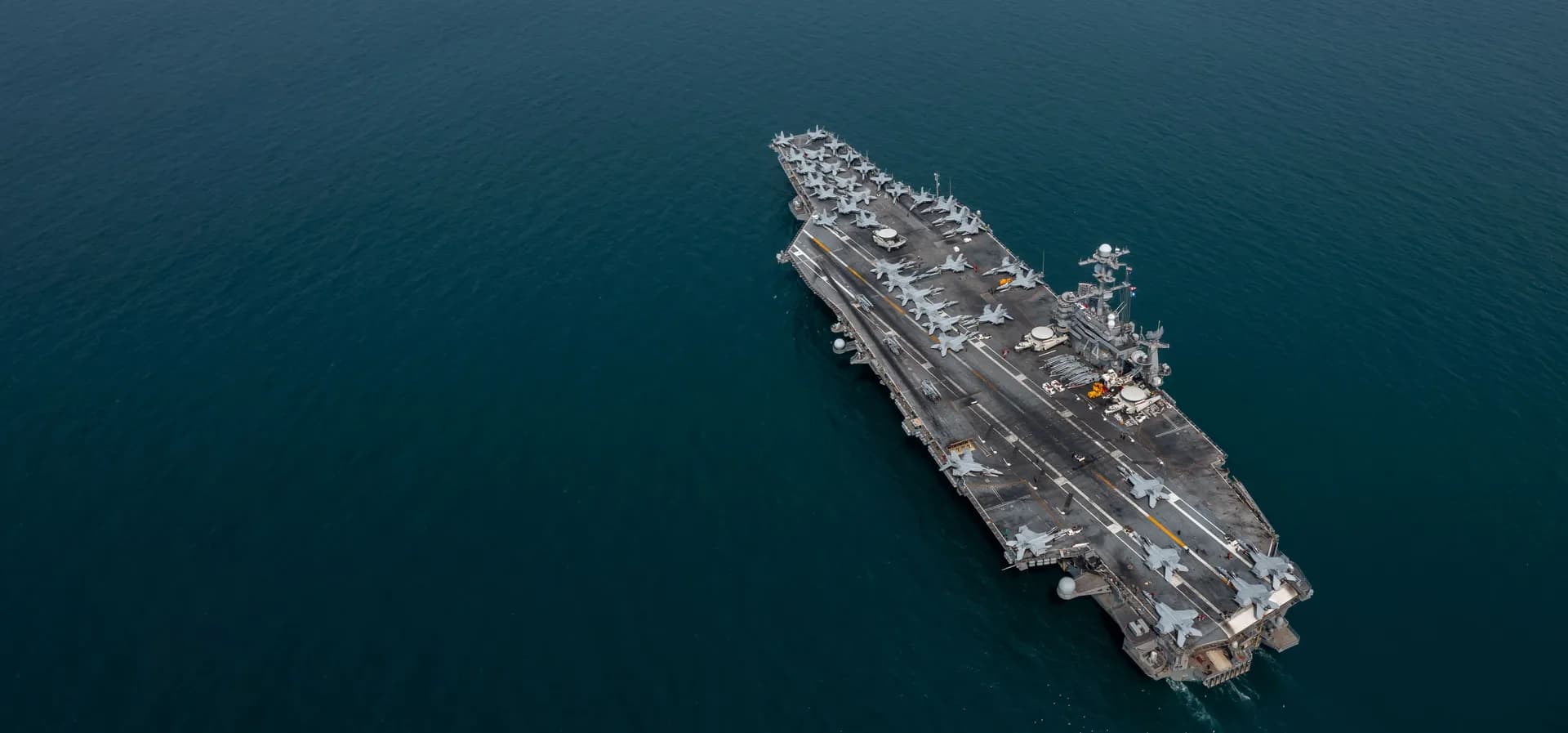
The People's Republic of China has officially commissioned its third and most technologically advanced aircraft carrier, the "Fujian," marking a major milestone in Beijing's ambitious military modernization drive. The vessel, the first of its type to be entirely designed and built in China, was formally inducted into the People's Liberation Army Navy (PLAN) during a flag-raising ceremony held in the naval port of Sanya on Hainan Island.
The ceremony was presided over by Chinese leader Xi Jinping.
A Quantum Leap in Naval Power
The Fujian represents a significant qualitative leap for the Chinese Navy, primarily because it is the country's first carrier to be equipped with an electromagnetic catapult system (EMALS) for launching deck-based fighter jets. This technology, previously confined primarily to the US Navy's most advanced carriers, offers substantial advantages over traditional steam catapults or the ski-jump ramps used on China's two previous carriers, the Liaoning and the Shandong.
Higher Sortie Rate: EMALS allows for faster and more frequent launches of heavier aircraft.
Greater Versatility: It can launch a wider variety of aircraft, including larger support planes.
Reduced Stress: It places less stress on the aircraft, extending their operational life.
Weighing in at approximately 80,000 tons, the Fujian is set to dramatically enhance China's naval projection capabilities across the Western Pacific.
Challenging US Dominance
The commissioning of the Fujian is widely viewed as the most tangible evidence yet of President Xi Jinping's massive military renewal and expansion. Xi has set a goal to fully modernize the PLA by 2035 and transform it into a "world-class" military force by 2049.
Beijing views aircraft carriers as a key symbol of national power and a critical instrument for countering the long-standing dominance of the US Navy and its fleet of carriers in the Pacific.
Analysts suggest that the new carrier effectively closes the technological gap between the PLAN and the US Navy, elevating the maritime competition between the two global powers to an entirely new level. The move is seen as a direct step toward enabling China to project power far beyond its coastal waters, effectively challenging the US-led network of alliances and bases that has underpinned security in the region for decades.
Botakoz Unbayeva
Contributing writer at EUReflect.
Follow EUReflect
See more of our reporting on Google
Mark EUReflect as a preferred source and our stories are ranked higher for you in Top Stories, Discover and Google News — and carry a “preferred” badge when they are cited in AI results.
Add EUReflect as a preferred source