Euractiv Event Explores Fine Line Between Subsidising Industry and Safeguarding EU Competitiveness
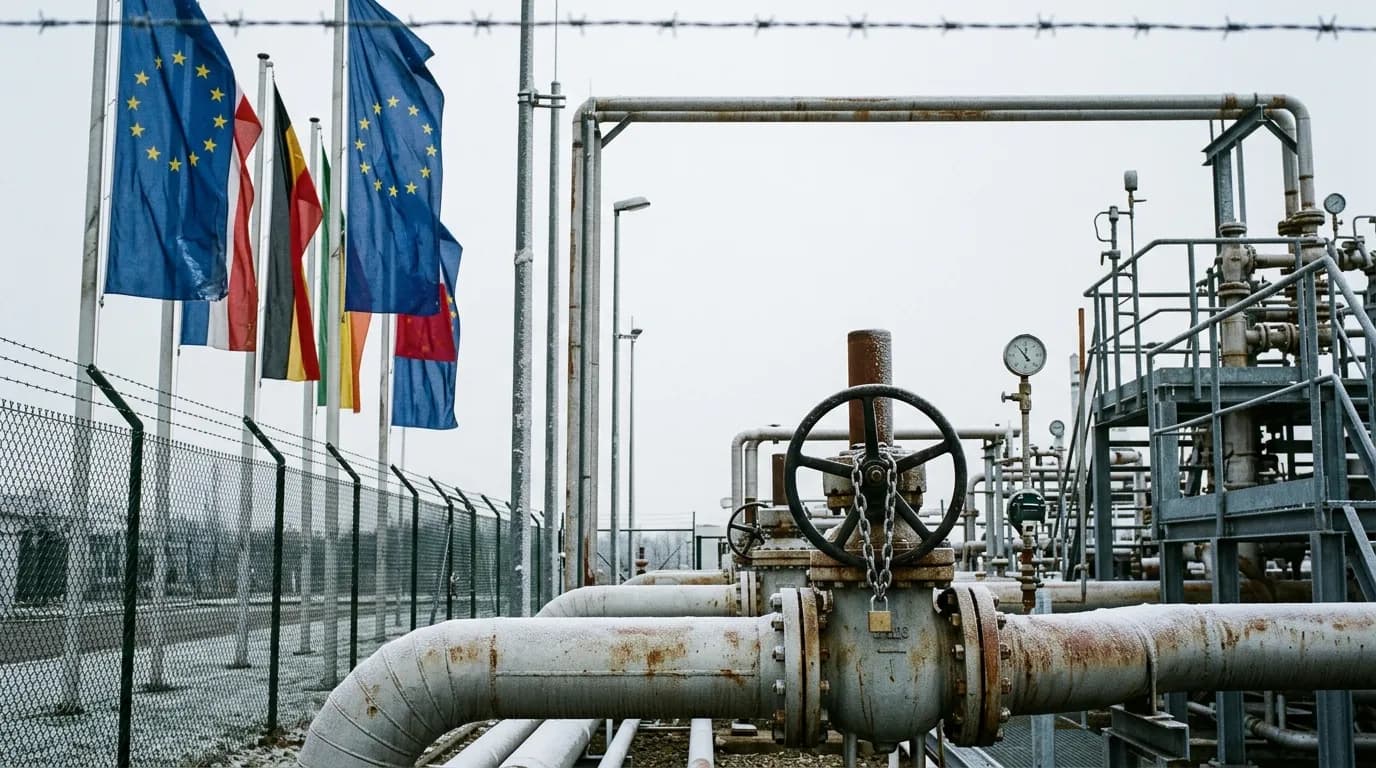
BRUSSELS — Against the backdrop of persistent high energy costs that continue to weigh on Europe’s industrial base, policymakers and industry leaders gathered at the Euractiv Network Office on 31 March 2026 to dissect a critical question: how can state support for electricity prices be designed to bolster competitiveness without distorting the market?
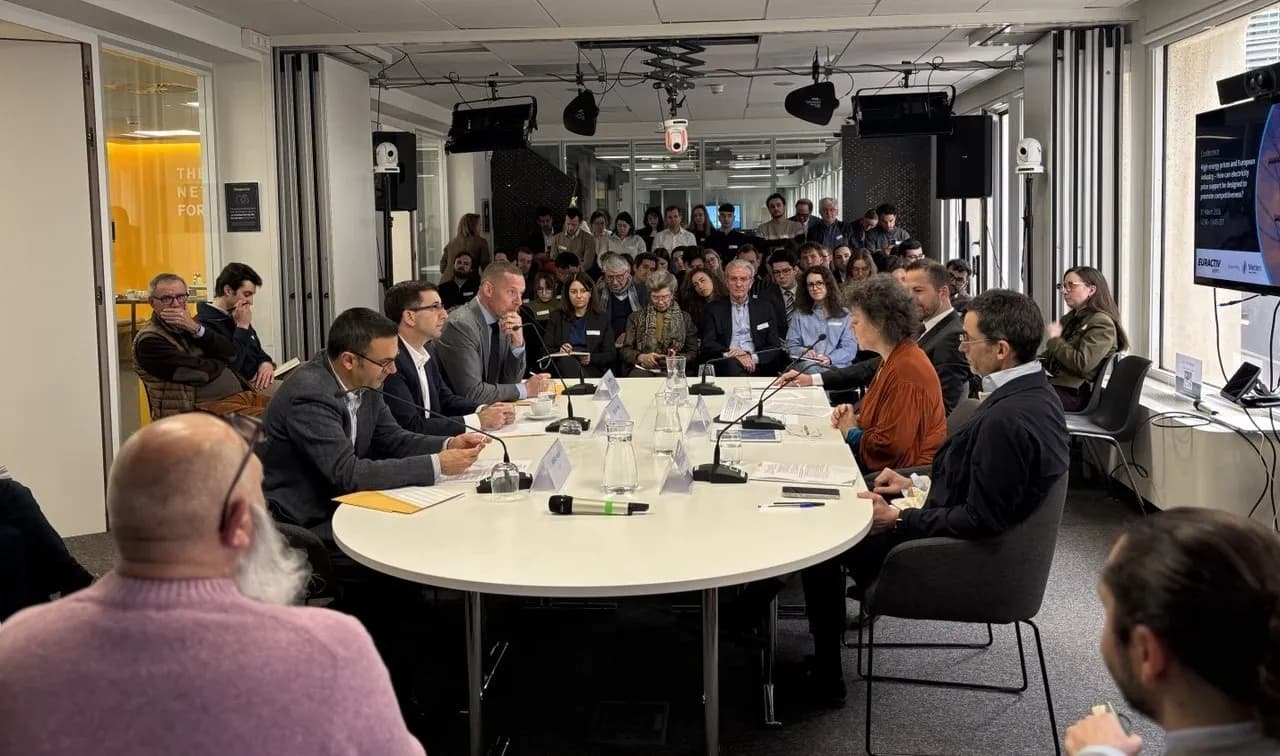
The high-level stakeholder event, titled “High energy prices and European industry – How can electricity price support be designed to promote competitiveness?”, convened just weeks after the Antwerp European Industry Summit, where industrial stakeholders voiced alarm that energy prices are forcing existing installations to cease operations and chilling future investment decisions.
Tamsin Rose of Euractiv moderated the discussion, which brought together a panel of European Commission officials and representatives from some of the continent’s most energy-intensive sectors.
The CISAF Framework Under Scrutiny
At the heart of the debate was the European Commission’s Clean Industrial State Aid Framework (CISAF), adopted in June 2025. Its Section 4.5 allows Member States to grant targeted compensation to industrial consumers grappling with high electricity costs. Conceived as a temporary tool to address a short-term emergency, the framework is now facing calls for revision from both national capitals and industry.
Christof Lessenich, Head of Unit for the Internal Energy Market at the European Commission’s DG ENER, outlined the rationale behind the framework. He noted that while long-term structural solutions—expanding renewables, reinforcing grids, and improving market integration—remain the EU’s core strategy, they do not relieve the immediate strain on energy-intensive industries. Mr. Lessenich acknowledged that the Commission is closely monitoring the implementation of Section 4.5, particularly regarding whether the conditions attached are proving too restrictive for effective uptake by Member States.
Industry Voices Call for Flexibility and a Common Approach
The response from industry representatives was clear: the current framework, while a step in the right direction, is not yet fit for purpose.
Paul Voss, Director General of European Aluminium, stressed the urgency of the situation, pointing to the irreversible decisions being made due to energy costs. He argued that the conditionalities attached to state aid approvals are often so stringent that they undermine the very competitiveness they aim to protect. Mr. Voss called for a more flexible approach that allows Member States to act swiftly without lengthy Commission procedures, framing it as a matter of industrial survival.
This sentiment was echoed by Adolfo Aiello, Deputy Director-General of Eurofer, the European Steel Association. Mr. Aiello emphasised that for sectors like steel, which face both global overcapacity and the immense cost of decarbonisation, electricity price support is not a luxury but a prerequisite for the transition. He suggested that the CISAF framework’s temporary nature creates investment uncertainty, urging policymakers to consider a more stable, long-term instrument.
Nicola Rega, Executive Director for Climate Change and Energy at CEFIC, the European Chemical Industry Council, highlighted the competitive disadvantage European producers face compared to regions with significantly lower energy costs. While supporting the goal of a common European approach, Mr. Rega cautioned that “one size does not fit all” and that any future instrument must recognise the diverse realities of different industrial sub-sectors.
A Glimpse at National Innovations: Italy’s “Energy Release 2.0”
A significant portion of the discussion focused on whether innovative national schemes could serve as a blueprint for a future EU-wide instrument. The panellists pointed to Italy’s “Energy Release 2.0” scheme as a notable example.
Nick Keramidas, General Manager of European Affairs & Regulatory Advocacy at Metlen Group, provided insights into such national initiatives, arguing that they demonstrate the potential for creative, targeted support that goes beyond simple bill subsidies. He suggested that a European-level instrument, inspired by these models, could help level the playing field while respecting the principles of the single market.
The panel’s consensus pointed toward a growing conviction that while the long-term goal of a fully integrated, renewables-based energy market remains valid, the immediate competitiveness crisis requires a more agile and common European response. The debate underscored the delicate balancing act the European Commission faces: designing state aid rules that are robust enough to prevent a subsidy race between Member States, yet flexible enough to allow them to shield their most critical industries from an existential threat.
As the event concluded, it was evident that the question is no longerif the CISAF framework needs to be adjusted, but how and how quickly it can be adapted to meet the pressing realities of Europe’s industrial landscape.
Olha Pashchenko
Contributing writer at EUReflect.
Follow EUReflect
See more of our reporting on Google
Mark EUReflect as a preferred source and our stories are ranked higher for you in Top Stories, Discover and Google News — and carry a “preferred” badge when they are cited in AI results.
Add EUReflect as a preferred source