Exclusive Interview with H.E. Karamoko Jean Marie Traoré
Burkina Faso’s Foreign Minister on Sovereignty
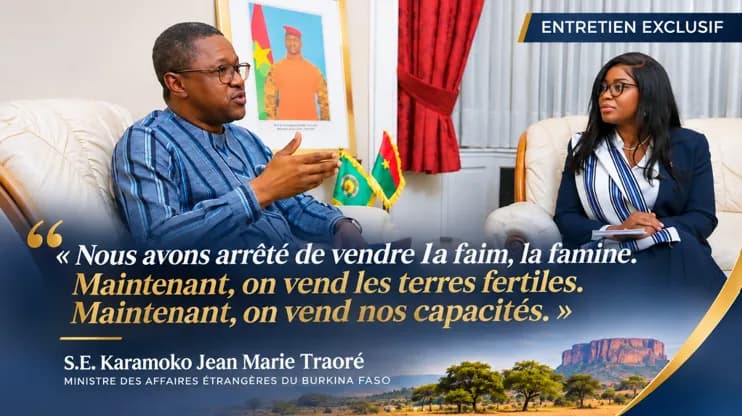
In an exclusive interview in Brussels, Burkina Faso’s Foreign Minister discusses the country’s evolving diplomatic relations, the Alliance of Sahel States, economic sovereignty, youth empowerment and the need to reshape international perceptions of the Sahel.
Long associated with security challenges and humanitarian crises, Burkina Faso is seeking to bring greater international attention to its resources, capabilities and ambitions.
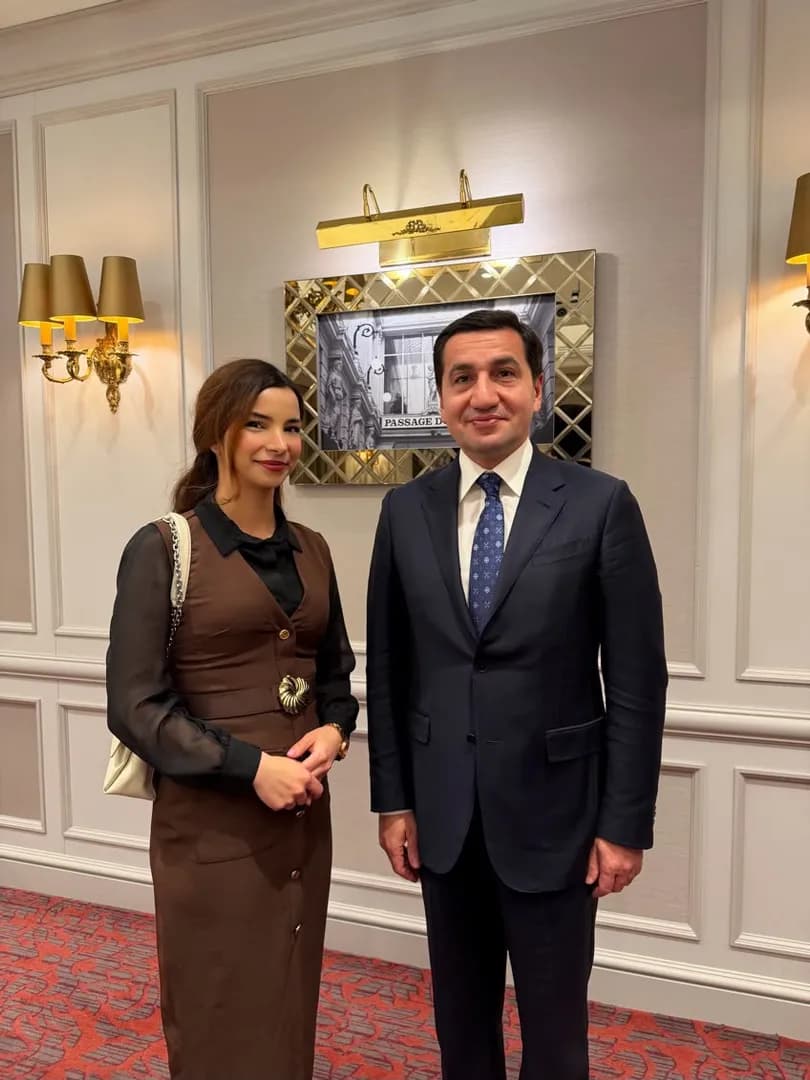
During his visit to Brussels, H.E. Karamoko Jean Marie Traoré, Minister of Foreign Affairs of Burkina Faso, sat down for an exclusive interview with Haya Mvita, Founder of Nation & Influence
From relations with Belgium and the European Union to the Confederation of Sahel States, the conversation explored national sovereignty, citizen mobilisation, homegrown development, youth opportunities and the role of the African diaspora.
At the heart of the minister’s message is a conviction: a country’s international influence must be grounded in its own capacities, priorities and achievements.
1. Following the visit to Ouagadougou by Maxime Prévot, Belgium’s Deputy Prime Minister and Minister of Foreign Affairs, how do you envision the future of relations with Belgium and the European Union?
H.E. Karamoko Jean Marie Traoré:
The visit of Belgium’s Deputy Prime Minister and Minister of Foreign Affairs, Maxime Prévot, to Ouagadougou reflected a willingness to reassess our cooperation frameworks and build a more balanced partnership, one in which we can engage on an equal footing.
We are working to move away from a model of cooperation based on donors and recipients towards a partnership in which we think together, build together, implement together and evaluate together.
For us, this visit was more than a diplomatic engagement. It sent a message: a willingness to move beyond preconceived ideas and better understand realities on the ground, rather than judging a partner before truly knowing them.
My visit to Brussels is part of that same approach.
With the European Union, we want to build a partnership based on sincerity, openness and respect. We want our concerns to be genuinely heard and our partners to take greater account of our national priorities.
We have more than fifty years of cooperation behind us, marked by successes, mixed results and failures. That experience should help us draw lessons and build a new relationship.
Contrary to what is sometimes suggested, Burkina Faso, Mali and Niger are not pursuing a policy of withdrawal or isolation.
We fully understand, particularly as landlocked countries, that international cooperation is essential to our development.
We therefore want to continue the dialogue, but on a more sincere, respectful and mutually beneficial basis.
2. Together with Mali and Niger, Burkina Faso is building the Confederation of Sahel States. What should it deliver for its people, and what opportunities does it create for cooperation with international partners?
H.E. Karamoko Jean Marie Traoré — The Alliance of Sahel States must provide our populations with something they have not sufficiently found within other regional organisations: genuine solidarity.
Our three countries have faced extremely difficult security situations. We raised the alarm and requested assistance, but the responses did not always match the scale of the challenges we were confronting.
How can we pursue common agendas, particularly within the framework of the African Union’s Agenda 2063, if some countries face major crises without receiving sufficient solidarity?
We therefore decided to come together, pool our resources and rebuild our capacities.
This solidarity must enable our populations to regain hope, peace and security.
We have undertaken reforms of our armed forces, alongside economic, industrial and agricultural transformations.
In Burkina Faso, we estimate that we have regained control of more than 75% of our territory. We are recording economic growth of 5.6% and have revived several sectors of our economy.
For us, the Confederation represents a growing awareness of our own capabilities and our ability to build our future using our own resources.
This does not mean that we want to isolate ourselves from the rest of the world. Quite the opposite. We recognise that our development requires relationships with our neighbours, regional organisations and international partners.
Our approach is to strengthen our collective capacities so that we can engage in these relationships while defending our own priorities and interests.
We want to be active participants in our own development and build partnerships founded on mutual respect.
3. Under the leadership of Captain Ibrahim Traoré, citizen mobilisation, sovereignty and homegrown development have become central priorities. How can these transformations strengthen Burkina Faso and its international influence?
H.E. Karamoko Jean Marie Traoré — To understand the transformations taking place in Burkina Faso, we must first understand what our people have experienced.
For more than a decade, we have faced terrorist violence, population displacement and considerable loss of life. This situation has created profound anxiety across the country.
When the unconstitutional changes of government occurred, international attention focused primarily on those events, without always sufficiently considering the circumstances that had preceded them.
Our armed forces were facing major difficulties. At one point, we had four soldiers for every weapon. We also encountered obstacles in acquiring equipment, including materials needed for intelligence operations.
Faced with these challenges and the suspension of certain external funding arrangements, we realised that we needed to rebuild our capacities through our own means.
This led us to restructure our armed forces, strengthen citizen mobilisation and develop new national financing mechanisms.
The Patriotic Support Fund is one example. In its first year, it mobilised 175 billion CFA francs, against an initial target of 150 billion. In the second year, we mobilised the equivalent of €300 million.
These are resources mobilised by the Burkinabè people themselves.
This is also at the heart of Captain Ibrahim Traoré’s vision: we must develop the capacity to build our country ourselves.
Today, we are seeking to finance more of our economy through what we produce and process, while placing our own priorities at the centre of our policies.
From a diplomatic perspective, the question is straightforward: how can you influence the outside world if you do not have a sufficiently strong foundation at home?
“To be seen from afar, you must first shine brightly from within.”
We want to rebuild an environment of dignity and peace, develop stronger economies and enhance our ability to make our voices heard internationally.
We must also adopt a more confident and self-assured approach to international relations. When you become accustomed to receiving assistance, you can sometimes forget that you also have a say.
I often hear people say that the French have left and that the Russians have now taken their place. I find this interpretation particularly frustrating because it diminishes the capacities of our people and our national actors.
And where does that leave us, the Burkinabè?
We are reclaiming our own place.
Our reforms, particularly in the mining sector, are intended first and foremost to defend the interests of the Burkinabè people, not those of Russia or any other partner.
This is not simply about replacing one external partner with another. It is about enabling national actors to assert themselves within their own country.
This reflection concerns all African countries and should encourage us to rethink the way we cooperate.
4. How does Burkina Faso intend to restore confidence among its own young people, create opportunities that can inspire African youth more broadly, and mobilise the expertise of its diaspora?
H.E. Karamoko Jean Marie Traoré — I believe the question of African youth is, first and foremost, a question of perception.
For too long, we have presented our countries through their problems while overlooking their capabilities and potential.
Take food security, for example. We often speak about poverty, food shortages and famine, but we forget to highlight our fertile land, water resources and agricultural potential.
The way we present ourselves ultimately shapes how we see ourselves.
We have also spent too much time treating our young people as a potential problem rather than as part of the solution.
When young people constantly hear that opportunities exist elsewhere, they eventually begin to believe that they cannot build a future in their own country.
We need to change this mindset and restore their confidence in their own abilities.
That also means challenging the negative perceptions surrounding certain professions.
In many of our countries, when a child performs poorly at school, they are told they will end up working in the fields or becoming a mechanic. But what message does that send about farmers and mechanics?
We are devaluing professions that are essential to our economies.
Today, in Burkina Faso, students are working on agricultural training farms, participating in crop production, including rice cultivation, and discovering the economic opportunities these activities can offer.
We need to show them that they can become economic actors, generate wealth and build their futures at home.
I am always surprised to see foreigners arrive in our countries and immediately identify opportunities, while those who live there sometimes tend to look for them only elsewhere.
As for the diaspora, I consider it a tremendous opportunity.
Its contribution should not be viewed solely in financial terms. The diaspora possesses skills, experience and expertise that can contribute to national development.
You do not necessarily have to return permanently to your country to make a contribution. You can share knowledge, support projects or contribute remotely.
Burkinabè living in Japan, Canada and China are already participating in initiatives related to education, polytechnic universities and technological development.
We must also learn to create greater value from what we produce.
Take Faso Danfani, our traditional woven fabric. For a long time, we produced cotton, but much of its processing took place elsewhere. We exported the raw material only to purchase finished products from abroad.
Today, semi-mechanised and industrial processing facilities are being developed, including initiatives such as the Texforce factory, to create more added value locally.
Promoting our agricultural products, traditional expertise and industries helps strengthen our economies and create opportunities for young people.
Our ambition is for young people to be able to travel tomorrow as tourists or professionals, by choice, rather than being forced to leave their countries under difficult circumstances.
By developing opportunities at home, we can also inspire other young Africans and encourage a new perception of our continent.
5. The Sahel is often associated with crises and insecurity. How does Burkina Faso intend to change this narrative and strengthen its international attractiveness?
H.E. Karamoko Jean Marie Traoré — The Sahel is a clear example of a region that has long been portrayed as a concentration of problems, when it is also a land of opportunities.
There is considerable discussion about the desert, famine and insecurity, but far less about fertile land, water resources, mineral wealth and the capabilities of our people.
Niger possesses significant uranium resources, while some communities still live without electricity. Northern Niger, like certain parts of Burkina Faso, also has substantial underground water resources.
We have inherited a particular image that sometimes seems destined to remain unchanged.
“We have stopped selling hunger and famine. Now we are showcasing our fertile land. Now we are showcasing our capabilities.”
We can no longer present our young people solely through the lens of unemployment. We must highlight their expertise and the hope they represent.
This shift must guide our new policies.
Cultural events must also go beyond folklore. They should enable visitors to discover other opportunities and untapped potential.
Events such as FESPACO, the SIAO International Arts and Crafts Fair and the Tour du Faso cycling race play an important role.
When you search online for Burkina Faso, you will often find more references to insecurity than to these events.
Yet the Tour du Faso brings cyclists through different parts of the country, while FESPACO welcomes delegations and film productions from around the world.
These events allow visitors to discover another side of Burkina Faso.
I remember an African female minister who was visiting our country for the first time. From the aircraft, she could see trees, rivers and reservoirs.
She was waiting to see Burkina Faso, without realising that we were already flying over it.
When she understood that we had arrived, she told me, “I did not expect to see so much greenery in your country.”
Her reaction illustrates the image many people have of the Sahel.
But how could we produce thousands of tonnes of cotton on nothing but bare sand?
Burkina Faso has agricultural land and is currently working to revive and expand several forms of production, including rice cultivation.
I also remember a conversation with an African head of state who was surprised to learn that Burkina Faso produces rice.
Yet according to our figures, we now produce more rice than we need.
These reactions demonstrate how important it is to challenge stereotypes.
And this effort must also begin among Africans themselves.
Sometimes, we know more about countries outside our continent than about our own neighbours. We therefore need to get to know one another better, discover each other’s cultures and capabilities, and recognise the opportunities that exist across our continent.
Africa is like a mosaic.
It is up to every country to make the necessary efforts so that, in fifteen or twenty years, we can present the best possible image of Africa.
We want to welcome more visitors, whether they come to do business, discover our culture or simply leave with a different perception of our country.
But we must also go out and engage with others.
By challenging prejudices and strengthening mutual understanding, we can move towards greater cohesion, solidarity and mutual acceptance.
Interview conducted in Brussels on 6 November 2026.
Related Topics
EUReflect News
Site Administrator
Follow EUReflect
See more of our reporting on Google
Mark EUReflect as a preferred source and our stories are ranked higher for you in Top Stories, Discover and Google News — and carry a “preferred” badge when they are cited in AI results.
Add EUReflect as a preferred source