Global Counter-Terrorism Enters a New Phase
NATO's counter-terrorism strategy now prioritizes counter-drone defense, with recent tests in Latvia focusing on interoperable systems.
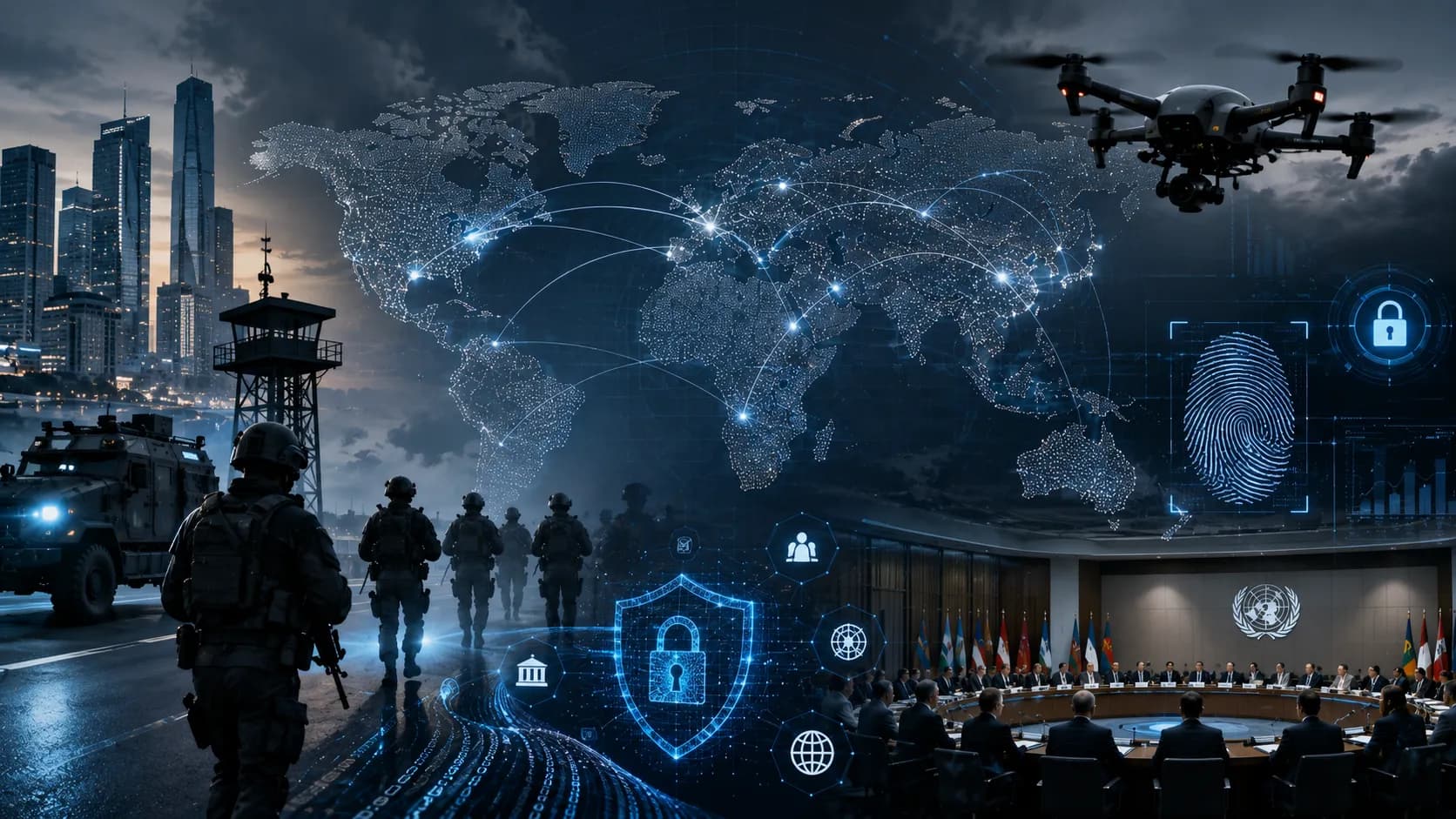
International organizations are redesigning their counter-terrorism policies as terrorist networks become more decentralized, technologically capable and difficult to detect.
The challenge in 2026 is no longer limited to large organizations controlling territory. The United Nations warned again in August that the threat posed by ISIS remains significant, while European security authorities say online radicalization is creating increasingly fragmented and unpredictable forms of terrorism.
As the threat changes, international organizations are moving toward a broader model based on intelligence sharing, border security, financial disruption, counter-drone technology, digital monitoring and international judicial cooperation.
ISIS Remains a Global Threat
The territorial defeat of ISIS in Iraq and Syria did not eliminate the organization.
At an August 5 UN Security Council briefing, officials presented the latest assessment of the threat posed by ISIS and international efforts to counter it. The continued Security Council focus reflects the transformation of the organization from a territorial entity into a dispersed transnational security threat.
International counter-terrorism policy has consequently shifted.
Preventing terrorist organizations from rebuilding territorial control remains important, but governments must simultaneously monitor decentralized cells, foreign fighters, financing networks and digitally radicalized individuals.
The battlefield has expanded from physical territory into financial systems, borders, social networks and digital platforms.
NATO Focuses on Technology
NATO is increasingly approaching terrorism as an asymmetric security challenge requiring advanced technological capabilities.
Its current counter-terrorism framework concentrates on three areas: improving awareness of terrorist threats, developing capabilities to prevent and respond to attacks, and strengthening cooperation with partner countries and international organizations.
One rapidly expanding priority is counter-drone defense.
On August 13, NATO completed another stage of its Layered Counter-UAS Initiative in Latvia, bringing military forces, technology developers and industry together to test interoperable systems against unmanned aerial threats.
NATO's broader Defence Against Terrorism Programme also covers improvised explosive devices, biometrics, battlefield evidence and chemical, biological, radiological and nuclear threats.
Artificial intelligence, autonomous systems and data analysis are increasingly being incorporated into this framework.
The objective is clear: international security institutions want defensive technology to evolve faster than terrorist organizations can adapt commercially available technologies for attacks.
Europe Turns Toward Digital Prevention
The European Union is confronting another transformation.
Europol's 2026 terrorism assessment warns that online ecosystems are reshaping radicalization. Traditional ideological terrorism remains important, with jihadist terrorism still the most widespread category, but authorities are increasingly encountering individuals whose motivations cross ideological boundaries.
This makes traditional profiling considerably less effective.
The EU's new ProtectEU Agenda to Prevent and Counter Terrorism therefore emphasizes cooperation between member states and international partners against threats operating simultaneously in physical and digital environments.
Brussels plans to continue working with INTERPOL, NATO, the Financial Action Task Force and the Global Counterterrorism Forum while strengthening cooperation against terrorist financing, recruitment and propaganda, particularly on social media.
Counter-terrorism is consequently becoming increasingly dependent on data and international information exchange.
Borders Become Intelligence Networks
Border security is also changing.
Modern counter-terrorism systems increasingly analyze passenger information before individuals arrive at borders.
The UN is helping countries develop Passenger Information Units capable of examining travel data for potential security risks. Mongolia's system, for example, has been used in 2026 to identify suspected activities including smuggling, money laundering and terrorist financing.
Such systems can become particularly important when dealing with foreign terrorist fighters.
Instead of relying exclusively on physical searches at airports, authorities can compare passenger information against databases and intelligence indicators before a traveler reaches immigration control.
The modern border is therefore increasingly becoming a data-screening system as much as a physical checkpoint.
Terrorist Financing Is a Major Battlefield
International organizations are also concentrating on money.
Terrorist organizations require financing to recruit members, purchase equipment, move personnel and maintain operational networks.
But financial methods are evolving.
Digital assets, informal transfer mechanisms and new technologies can create additional difficulties for governments attempting to identify suspicious transactions.
During the UN Counter-Terrorism Week in June, officials from the UN, France and India focused specifically on strengthening international cooperation against terrorist financing in the context of emerging technologies.
The EU similarly identifies cooperation with the Financial Action Task Force as an important part of its strategy against terrorist financing.
Financial intelligence is therefore becoming one of the principal defensive instruments of international counter-terrorism.
Africa and Central Asia Gain Attention
The geographical focus is also widening.
The UN has been strengthening counter-terrorism capabilities in Africa and Central Asia, including programs dealing with improvised explosive devices, border security and the possibility that terrorist organizations could acquire increasingly sophisticated weapons.
Between late 2025 and February 2026, UN counter-terrorism bodies conducted consultations across all five Central Asian countries aimed at strengthening prevention and responses to terrorist acquisition and use of weapons.
In Uganda, an EU-UN initiative has also been helping authorities improve national coordination and their ability to investigate and prosecute terrorism-related cases.
These initiatives demonstrate that international organizations increasingly see prevention in vulnerable regions as preferable to responding after terrorist networks become established.
Cooperation Becomes the Main Defense
No international organization can independently defeat global terrorism.
The UN provides international legal frameworks and capacity-building programs.
NATO contributes military expertise, intelligence cooperation and defensive technology.
The EU concentrates heavily on law enforcement, borders, digital threats and internal security.
INTERPOL connects national police systems, while financial institutions and mechanisms help governments identify suspicious money flows.
The UN Office of Counter-Terrorism reported that it engaged more than 13,000 practitioners across 170 member states during 2025, illustrating the scale of the international network now being developed around counter-terrorism.
But the changing threat creates a difficult strategic race.
Terrorist networks can exploit drones, encrypted communications, online propaganda, digital finance and increasingly accessible technologies. International organizations must therefore adapt without undermining human rights or turning preventive security into indiscriminate surveillance.
The global counter-terrorism strategy of 2026 is consequently moving beyond the traditional idea of destroying terrorist organizations militarily.
The new objective is to identify networks earlier, cut their financing, restrict their movement, prevent technological attacks and connect national intelligence systems before a threat crosses borders.
The next phase of the fight against terrorism may therefore be determined less by who controls the battlefield — and more by who controls information, technology, finance and international cooperation.
Ahmet Balakan
Contributing writer at EUReflect.
Follow EUReflect
See more of our reporting on Google
Mark EUReflect as a preferred source and our stories are ranked higher for you in Top Stories, Discover and Google News — and carry a “preferred” badge when they are cited in AI results.
Add EUReflect as a preferred source