How Kazakhstan’s CEC Prepared for the Kurultai Elections
Seven parties are contesting 145 seats in the new unicameral Kurultai, with 545 candidates on party lists and women, youth, and disabled persons making up 43.9% of candidates.

Kazakhstan’s CEC Outlines Election Readiness Ahead of Kurultai Vote
ASTANA — Kazakhstan’s Central Election Commission (CEC) has presented the country’s preparations for the August 23 Kurultai elections, highlighting the scale of the electoral infrastructure, voter information measures, international observation and steps aimed at ensuring accessibility for persons with disabilities.
During a briefing for participants of an international press tour in Astana, CEC Deputy Chair Mukhtar Yerman provided foreign media representatives with an overview of the electoral process and the institutional preparations underway ahead of voting day.
The briefing comes as Kazakhstan prepares to elect the newly established unicameral Kurultai under a proportional representation system following the adoption of the country’s new Constitution. Yerman stressed that the vote is being conducted according to the electoral timetable established after the constitutional changes.
More than 12.6 million registered voters
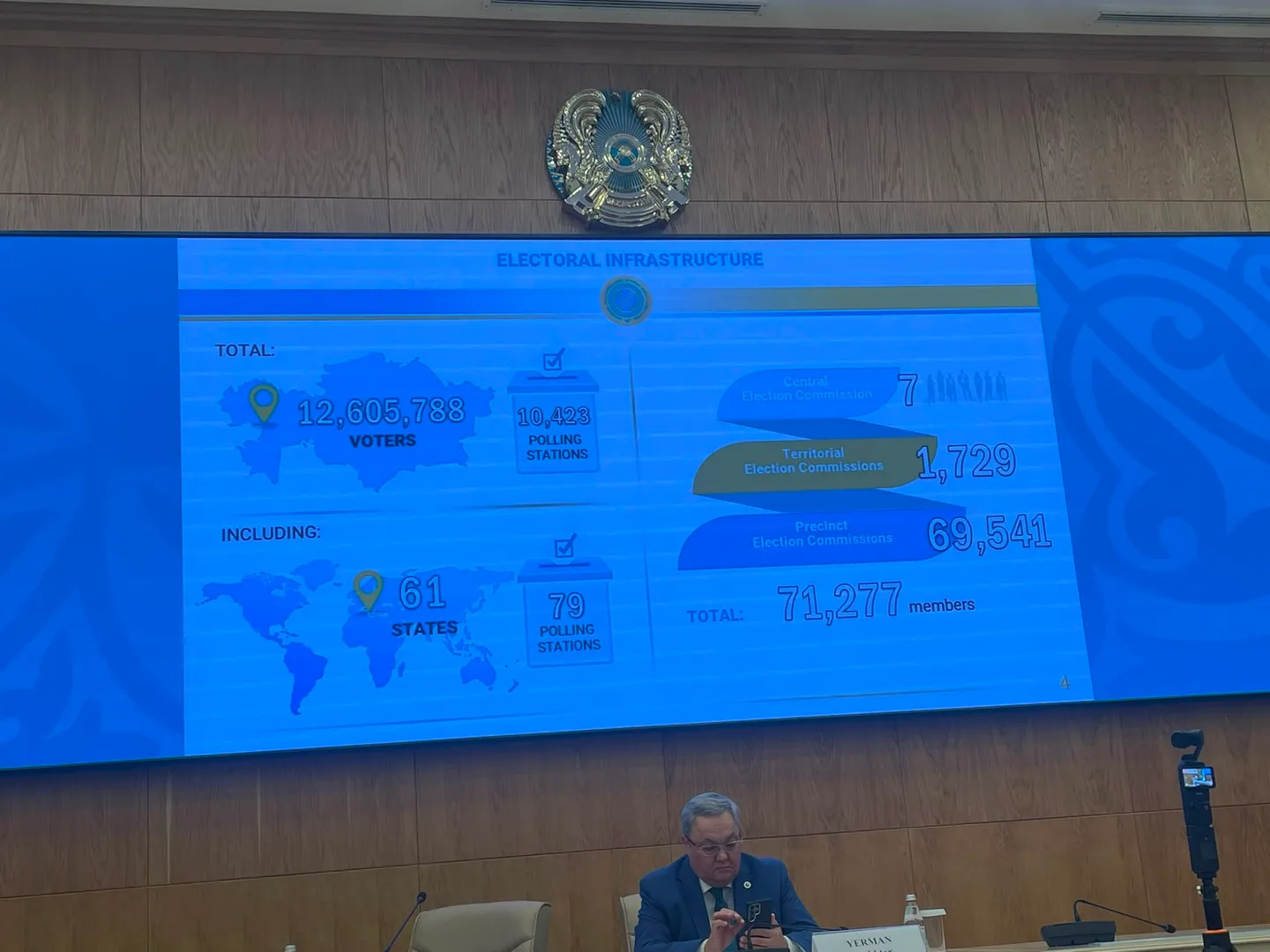
According to figures presented by the CEC, 12,605,788 citizens are registered to vote in the election.
A total of 10,423 polling stations have been prepared. Kazakhstan is also organizing voting abroad, with 79 polling stations operating across 61 countries, allowing citizens outside the country to participate in the election.
The electoral administration itself operates on several levels. The presentation showed:
7 members of the Central Election Commission;
1,729 members of territorial election commissions;
69,541 members of precinct election commissions.
In total, 71,277 election commission members are involved in the system presented to international media.
Seven political parties competing for 145 seats
The new Kurultai will consist of 145 deputies elected for five-year terms through party lists in a single nationwide electoral district. Seven political parties are participating: Adilet, the Nationwide Social Democratic Party, Baitak, the People’s Party of Kazakhstan, Auyl, Ak Zhol and Respublica.
CEC figures presented during the briefing showed 545 candidates included on party lists competing for the 145 mandates.
The presentation also drew attention to representation within the candidate lists. According to the CEC data displayed during the briefing, the combined share of women, young people and persons with disabilities stands at 43.9%.
CEC puts strong emphasis on voter information
A significant part of the briefing focused on how the commission communicates with voters and the media.
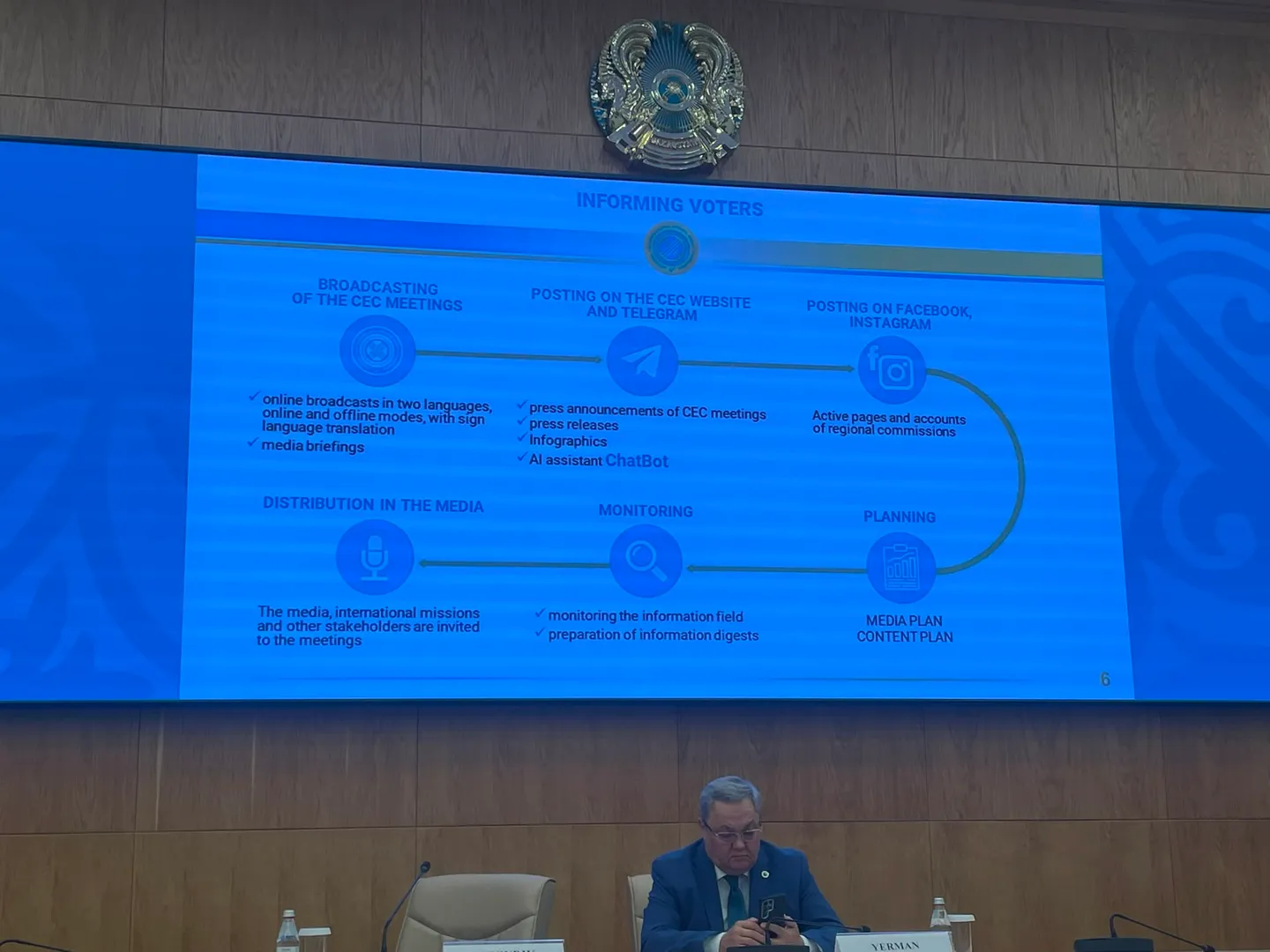
The CEC outlined a multi-platform information strategy combining traditional media, digital communication and social networks. Meetings of the commission are broadcast online in two languages, with sign-language interpretation, while media briefings form another part of the public information process.
Election-related materials are also distributed through the CEC website and Telegram, including press announcements, press releases and infographics. The presentation additionally highlighted the use of an AI-assisted chatbot.
Regional election commissions maintain active social media accounts, including on Facebook and Instagram.
The CEC said its communications process also includes systematic monitoring of the information environment and the preparation of information digests, supported by media and content planning.
For the election information campaign, the commission presented eight video and audio materials, seven infographic banners and seven modules for print media. Outdoor information campaigns are also being conducted through billboards, banners, light boxes and LED screens in the regions.
Accessibility measures for 88,100 voters with disabilities
Another major focus of the briefing was the participation of persons with disabilities.
According to CEC figures presented to the press tour, Kazakhstan had 88,100 registered voters with disabilities as of August 1, 2026.
The commission outlined measures including sign-language interpretation, opportunities for home voting, accessible transportation, ramps and railings, tactile signs, wider voting booths, computer stations with headphones and Braille ballot stencils.
The CEC also maintains a dedicated section on the electoral rights of persons with disabilities and an interactive “Accessible Environment” portal.
These measures form part of Kazakhstan’s broader effort to implement the electoral rights of persons with disabilities following the country’s ratification of the UN Convention on the Rights of Persons with Disabilities. Independent reporting on the CEC's preparations also notes the provision of audio voting instructions and Braille ballot templates at polling stations.
The presentation further emphasized cooperation with experts and civil society organizations and continuous monitoring of the accessibility of electoral infrastructure across Kazakhstan’s regions.
International scrutiny of the vote
The election is also drawing substantial international attention. According to figures announced ahead of the vote, 777 international observers from 42 countries have been registered, alongside representatives of 13 international organizations, including the OSCE, CICA and TurkPA.
The OSCE Office for Democratic Institutions and Human Rights has deployed an Election Observation Mission for the August 23 vote following an official invitation from Kazakhstan.
The CEC briefing for international press tour participants formed part of the broader effort to explain the mechanics of the election and provide foreign journalists with direct access to information about preparations.
With more than 12.6 million voters, 10,423 polling stations, 545 candidates and 71,000 election commission members, the August 23 vote represents a major organizational undertaking and an important test of Kazakhstan’s newly configured political system.
The polls are scheduled to operate from 07:00 to 20:00 local time on August 23.
EUReflect News
Site Administrator
Follow EUReflect
See more of our reporting on Google
Mark EUReflect as a preferred source and our stories are ranked higher for you in Top Stories, Discover and Google News — and carry a “preferred” badge when they are cited in AI results.
Add EUReflect as a preferred source