Kazakhs Will Vote the Qurultay
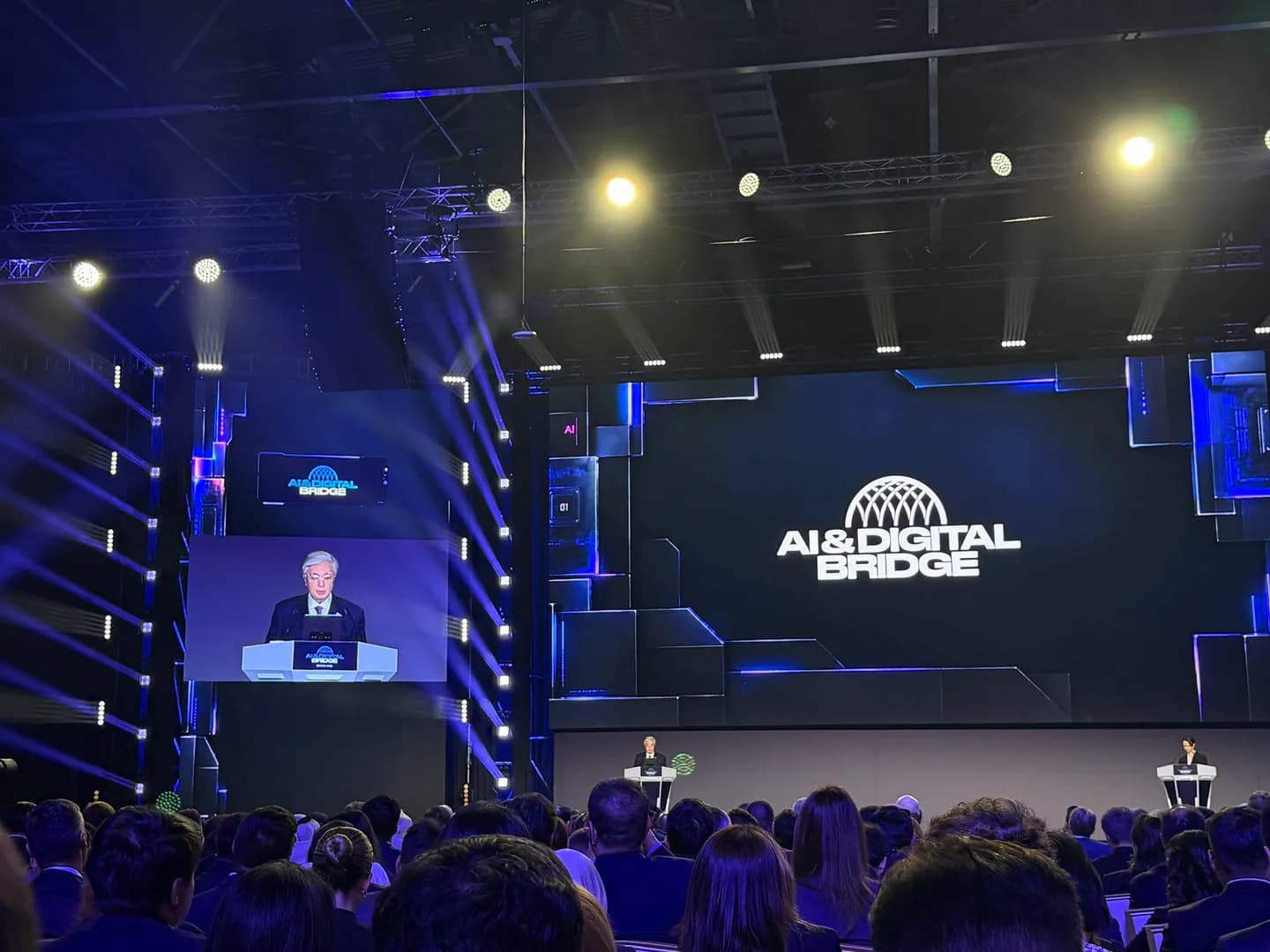
This Sunday, 23 August 2026, millions of Kazakhstanis will walk into polling stations to take part in one of the most consequential moments in their nation’s modern history: the first-ever election to the Qurultay (Құрылтай), Kazakhstan’s newly established single-chamber parliament.
From Ancient Assembly to Modern Legislature
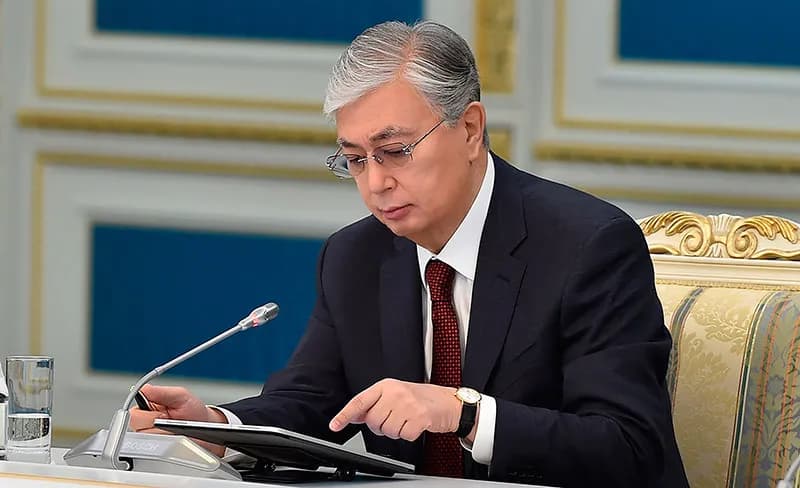
The word qurultay carries centuries of meaning. Derived from the Turkic root meaning “gathering” or “assembly,” the kurultai was the great council of the nomadic Turkic and Mongol worlds — the forum where leaders were chosen, disputes were settled, and the collective will of the people was expressed. In reviving this name for its new legislature, Kazakhstan is doing something profound: it is grounding its modern democratic institutions in an authentically national heritage rather than a borrowed template. President Kassym-Jomart Tokayev has long spoken of “modernising the traditions of steppe democracy,” and the birth of the Qurultay is perhaps the fullest expression of that vision.
This continuity is no accident. Since 2022, Tokayev’s National Kurultai — a consultative body that met annually in historically significant regions such as Ulytau, Turkistan, Atyrau, and Burabay — served as a living platform for dialogue between the state and its citizens, generating reforms on women’s and children’s rights, civic identity, and national symbols. Now, that spirit of inclusive national conversation graduates into a full legislative chamber elected directly by the people.
The Reform
The road to Sunday’s vote began with President Tokayev’s September 2025 Address to the Nation, in which he proposed transforming Kazakhstan’s bicameral Parliament — the Senate and the Mazhilis — into a streamlined, unicameral body. The reforms proved so far-reaching that Tokayev described them as, in effect, a new Constitution. On 15 March 2026, Kazakhstanis endorsed the changes in a nationwide referendum, with roughly 87 percent voting in favour on a turnout of about 73 percent — a resounding popular mandate for renewal.
The new Constitution entered into force on 1 July 2026, and that same day President Tokayev signed the decree calling elections for 23 August. The 145 deputies of the Qurultay will be elected through a nationwide proportional party-list system for five-year terms, with a 5 percent threshold and an “against all” option preserved on the ballot as a genuine gesture toward voter choice. It is a system designed for clarity, national cohesion, and the strengthening of programmatic, country-wide political parties.
A Vibrant, Competitive Campaign
Far from a formality, the campaign has been energetic and genuinely plural. Seven political parties registered for the vote, and campaigning officially ran from 23 July until midnight on 22 August. The field spans the political spectrum: the reform-minded Adilet (successor to the long-dominant governing bloc), the Nationwide Social Democratic Party (OSDP), the environmentalist Baytaq Green Party, the People’s Party of Kazakhstan, the rural-focused Auyl, the business-oriented Ak Zhol, and the newer Respublica.
The creativity on display speaks to a maturing civic culture. Adilet opened its campaign with a first-of-its-kind digital format featuring an AI moderator, mobilising some 30,000 representatives and planning more than 21,000 campaign events. OSDP launched innovative citizen-engagement tools including a “People’s Hotline” and a “Letter to the Future Qurultay” project. Auyl set out to reach over 2.2 million voters across the country. This is a campaign that has reached into every region, city, and district of the nation.
Ahead of the Qurultay elections, the Kazakhstan Institute for Strategic Studies (KazISS) analyzed the results of seven sociological surveys conducted between June 13 and August 17, 2026, by DATAMetrics (commissioned by KazISS), the Kazakhstan Institute of Public Development (KIPD), the Institute of Eurasian Integration, the Institute of Democracy, and the Institute of Public Policy. According to DATAMetrics, 75.6% of respondents said they intended to vote. Two surveys by the Institute of Eurasian Integration showed 72.1% and 73.2%, and polls by KIPD recorded 75.1% and 70.3%. The Institute of Public Policy reported 72.3%, and the Institute of Democracy recorded 73.1% according to Qazinform.
The World Is Watching — and Welcomed
Kazakhstan has thrown open its doors to international scrutiny, a mark of genuine confidence. The Central Election Commission has accredited 777 international observers from 42 countries and 13 international organisations, including 138 parliamentarians from 41 countries according to Qazinform. Among them are missions from the OSCE Office for Democratic Institutions and Human Rights, the CIS, the Shanghai Cooperation Organisation, and the Turkic Academy, alongside observers from China, the United States, the United Kingdom, Turkey, Japan, India, France, Belgium, and many others. To serve citizens abroad, 79 polling stations will open at Kazakhstan’s diplomatic missions in 61 countries.
The international media are present in force as well. Journalists from Belgium, Poland, the United Kingdom, Lebanon and numerous other countries have travelled to Kazakhstan to cover the vote first-hand — a vivid testament to the global interest this landmark election has generated and to Astana’s commitment to transparency and open coverage.
International experts have already framed the vote as a stabilising, confidence-building milestone. Analysts from the United States, Japan, and beyond have described the election as a practical step in implementing the new Constitution and launching Kazakhstan’s unicameral parliamentary model — a vote that, in the words of one commentator, marks “a new stage of political development” rather than merely another electoral cycle.
Rooted in the Turkic World, Celebrating 35 Years of Independence
This vote arrives in a year of deep symbolic resonance. In December 2026, Kazakhstan marks the 35th anniversary of its independence, proclaimed on 16 December 1991. The choice to name the new parliament the Qurultay is itself a proud return to Turkic roots: the very institution that once bound the Kazakh Khanate and the wider Turkic-nomadic world now anchors the nation’s modern statehood. Across three and a half decades, Kazakhstan has transformed itself from a newly independent republic into the political and economic heart of Central Asia — accounting for some 60 percent of the region’s GDP — while championing the unity of the Turkic peoples through the Organization of Turkic States and the Turkic Academy, whose observers are present for this very election.
The Qurultay embodies a confident synthesis: an ancient steppe institution reborn as a modern democratic legislature. In celebrating 35 years of sovereignty, Kazakhstan honours the heritage of its ancestors while affirming its place as a leading voice of the contemporary Turkic world.
The Most European-Facing Nation of the Steppe
Uniquely among its neighbours, Kazakhstan is not only a Central Asian power but a genuinely European country as well. The territory west of the Ural River — the conventional boundary between Europe and Asia — places roughly 148,000 square kilometres of Kazakhstan firmly within Europe. That European portion alone makes Kazakhstan the 14th-largest country in Europe, slightly larger than Greece and greater in area than around 70 percent of European states. In other words, Kazakhstan’s European territory is bigger than that of many long-established European nations.
This is far more than a cartographic curiosity. Kazakhstan has consistently positioned itself as the most European-facing state of the region, and its landmark “multi-vector” foreign policy — a strategy of balanced, pragmatic partnership with Russia, China, the United States, the European Union, Turkey and others without dependence on any single power — has made it an indispensable bridge between continents. The European Union is Kazakhstan’s single largest trading partner, accounting for around 30 percent of its total trade and receiving some 41 percent of its exports. Sunday’s election, rooted in a European-inspired parliamentary model yet grounded in Turkic tradition, perfectly captures this dual identity: a nation that stands, quite literally, with one foot in Europe and one in the heart of Asia, and that turns its crossroads geography into a source of strength.
CONCLUSION
For Kazakhstan, 23 August is about more than filling 145 seats. It is the centrepiece of the “New Kazakhstan” reform programme — a comprehensive effort to modernise the political system, strengthen national parties, decentralise power, and deepen the dialogue between the state and its citizens. President Tokayev has consistently stressed that political and economic reform must advance hand in hand with positive change in public consciousness — a holistic vision of national development that places the citizen at its centre.
As dawn breaks over the steppe on Sunday, Kazakhstan will honour an ancient tradition in a thoroughly modern form. The Qurultay — once the council of khans and elders — becomes, for the first time, the elected voice of a united and forward-looking people. It is a proud moment for a nation that has chosen the path of steady, homegrown reform, and a compelling demonstration that the traditions of the steppe and the institutions of a modern democracy can flourish together.
Sources
Akorda / Qazinform, The Astana Times,
Tengrinews.kz, Kazakhstan Today,
Central Election Commission of the Republic of Kazakhstan; geographic and foreign-policy data per Wikipedia (European Kazakhstan) and academic analyses of Kazakhstan’s multi-vector diplomacy.
Zhexenbekov, A. (2026, 17 août). Over 70% of Kazakhstanis ready to vote in Qurultay elections – poll review. Qazinform. https://qazinform.com/news/over-70-of-kazakhstanis-ready-to-vote-in-qurultay-elections-poll-review-a340b4 [qazinform.com]
Related Topics
Derya Soysal
Contributing writer at EUReflect.
Follow EUReflect
See more of our reporting on Google
Mark EUReflect as a preferred source and our stories are ranked higher for you in Top Stories, Discover and Google News — and carry a “preferred” badge when they are cited in AI results.
Add EUReflect as a preferred source