Xi, Putin and Trump in Shenzhen: the confirmed facts and the trade stakes
Xi Jinping hosts Vladimir Putin and Donald Trump in Shenzhen on Thursday with no published agenda. This analysis separates what the three governments have confirmed from what is still open, and sets out the signals that matter for sanctions, tariffs and energy.
Analysis
Russian energy sanctions, the US-China tariff truce and oil buyers all have something riding on a meeting in Shenzhen on Thursday 19 November. Chinese President Xi Jinping hosts the US and Russian presidents, Donald Trump and Vladimir Putin, in what Beijing calls the first in-person meeting ever between the three countries' leaders. Facts are as of 15:35 Brussels time on 18 November; for Wednesday's Putin–Xi talks, see our report.
What is confirmed, and what is not
White House spokeswoman Olivia Wales announced the meeting on Friday 13 November and said Trump would raise reducing the number of nuclear weapons in the world, CBS News and AFP reported. The Kremlin confirmed it on Saturday, according to AP, and its announcement of Putin's trip says "a trilateral meeting is planned". On 16 November China's foreign ministry gave the event its formal name, the China-Russia-U.S. Summit.
Trump's published schedule puts the three-way meeting at 14:30 Shenzhen time (07:30 Brussels) at the Kylin Villa compound, according to Fox News and Russian state news agency TASS. EUReflect has not seen the schedule; Beijing and Moscow have given no time. Trump also has a separate meeting and working lunch with Xi on Thursday, AFP reported on 14 November.
There is no published agenda. Foreign ministry spokeswoman Mao Ning said the three would exchange views on "safeguarding world peace and enabling strategic stability in major-country relations" (transcript). Asked on Wednesday about Ukraine and about the outcome China wanted, spokesman Guo Jiakun answered neither question (transcript).
Still open at 15:35 Brussels time:
A Putin–Trump meeting. The Kremlin says a bilateral "is slated", and Kremlin aide Yury Ushakov told TASS the two would "definitely meet" at Thursday's APEC plenary and straight afterwards. At 14:44 Brussels time a US official told ABC News a one-on-one would take place on Thursday, without giving a time. EUReflect found no White House statement on it.
A joint statement. Moscow assumes there will be a joint communique, and without one each president would give his own assessment, Ushakov said on 16 November (TASS). Washington and Beijing have not said whether one is planned.
Any agreement. US officials describe the meeting as the start of a conversation on disarmament, not a venue for announcing deals, according to AP.
Three capitals, three briefs
Washington has led with nuclear arms and the war with Iran, while playing down results: a senior Trump administration official said "we do not expect to get to any kind of agreement" on nuclear issues, Reuters reported. On Ukraine, an official said at the weekend it was not expected to come up, but on Monday Trump named it alongside Iran, CBS News reported.
Moscow casts the summit as a talk about how the largest powers treat one another, with Ushakov citing the foundations of relations between major powers as a topic (TASS). Putin told business leaders on Wednesday that he saw "substantial potential benefit" in the three-way format (Kremlin transcript).
Beijing has said the least. It pushed back on putting Ukraine on the agenda while Moscow wanted it there, Reuters reported, citing two anonymous sources, one of them a European diplomat. Melanie Hart, who leads the Global China Hub at the Atlantic Council, argues that Xi is after "demonstrating his convening power and avoiding surprises".
Signals for business
Russian energy sanctions. In October Trump used the Graham Act's waiver clause to set aside duties tied to Russian energy, Bloomberg reported; the law would have hit goods from the largest buyers of Russian oil and gas with levies of up to 100 per cent, according to Fox Business. That came alongside a diesel arrangement with Moscow. Any sanctions language in Thursday's readouts matters for exporters in Kazakhstan, Kyrgyzstan and Türkiye: the EU's 21st package in July put entities in all three on its dual-use restrictions list (EEAS copy).
US-China tariffs. The truce runs to 10 January 2027. Until then the US fentanyl-related tariff on Chinese goods stays at 10 per cent and China's 24 per cent tariff on US goods remains suspended, though an extra 10 per cent Chinese levy still applies, Supply Chain Dive reported. The Trump–Xi session is where any extension would surface. Chips are off Washington's list: "We do not negotiate American export controls," a US official told CBS News. On Tuesday Beijing called a new US licensing rule for advanced chip exports to five countries "economic coercion" (transcript).
Energy and payments. Putin and Xi announced no gas contract on Wednesday. The war with Iran has run into a ninth month and continues to affect global energy prices, CNBC noted, so any Iran wording is relevant to oil buyers. Putin told his Shenzhen audience that the dollar and euro now settle 9 per cent of Russia's export payments, against 85 per cent in 2021, a figure EUReflect could not check. In China's account of their meeting, Xi said both sides should offer a "more stable and predictable" business environment (readout).
Ukraine and Europe. No European leader takes part. Ukrainian President Volodymyr Zelensky said in October that Kyiv did not want a "Yalta 2, 3, 4" redistribution of influence, according to Reuters. Kremlin spokesman Dmitry Peskov has rejected the Yalta comparison, saying deals reached in Shenzhen could not be enforced on others, AP reported.
Central Asia. Putin goes on to Tajikistan for a 19–20 November working visit, the Kremlin said. Background: our analysis of the nuclear arms race.
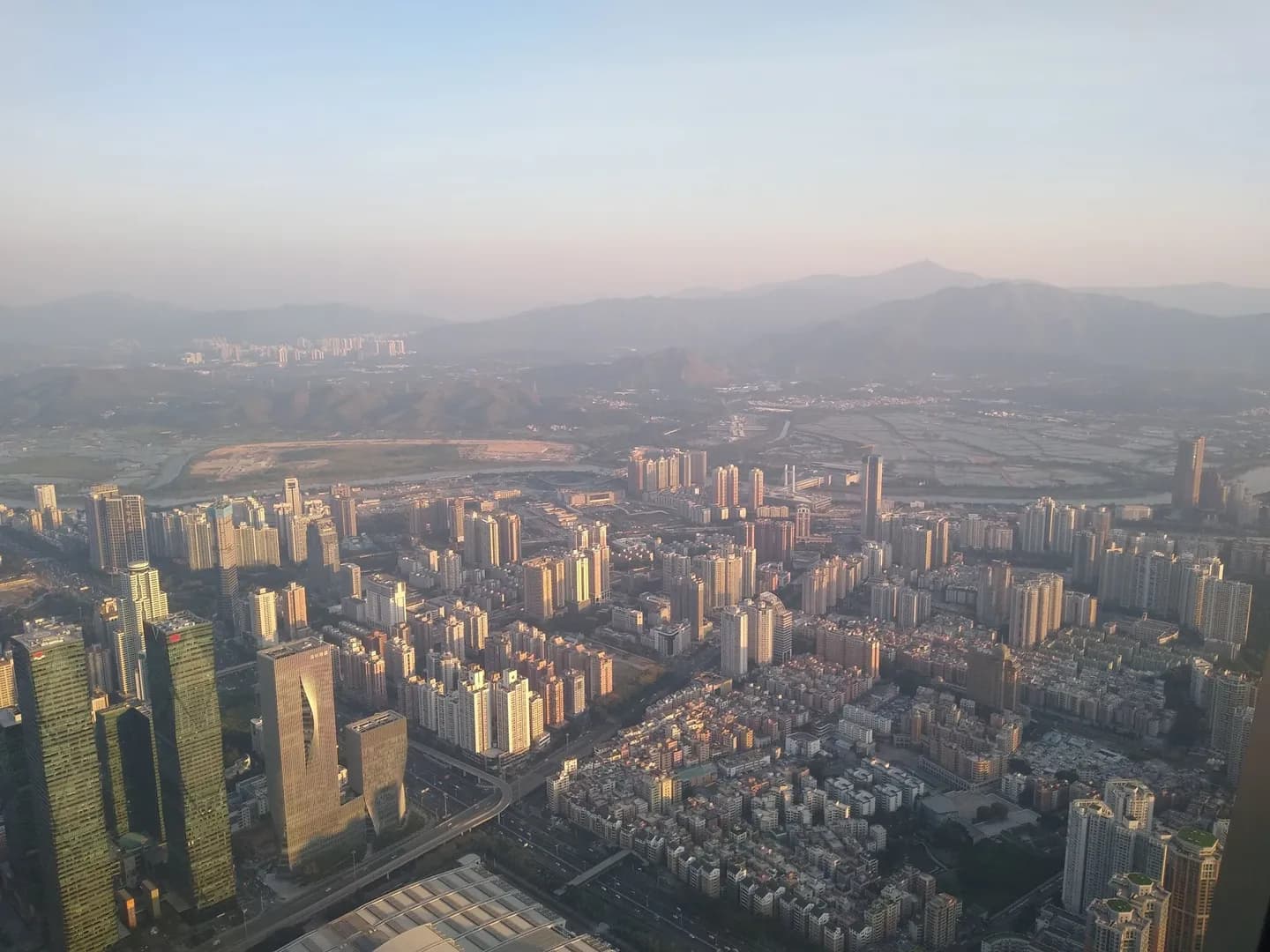
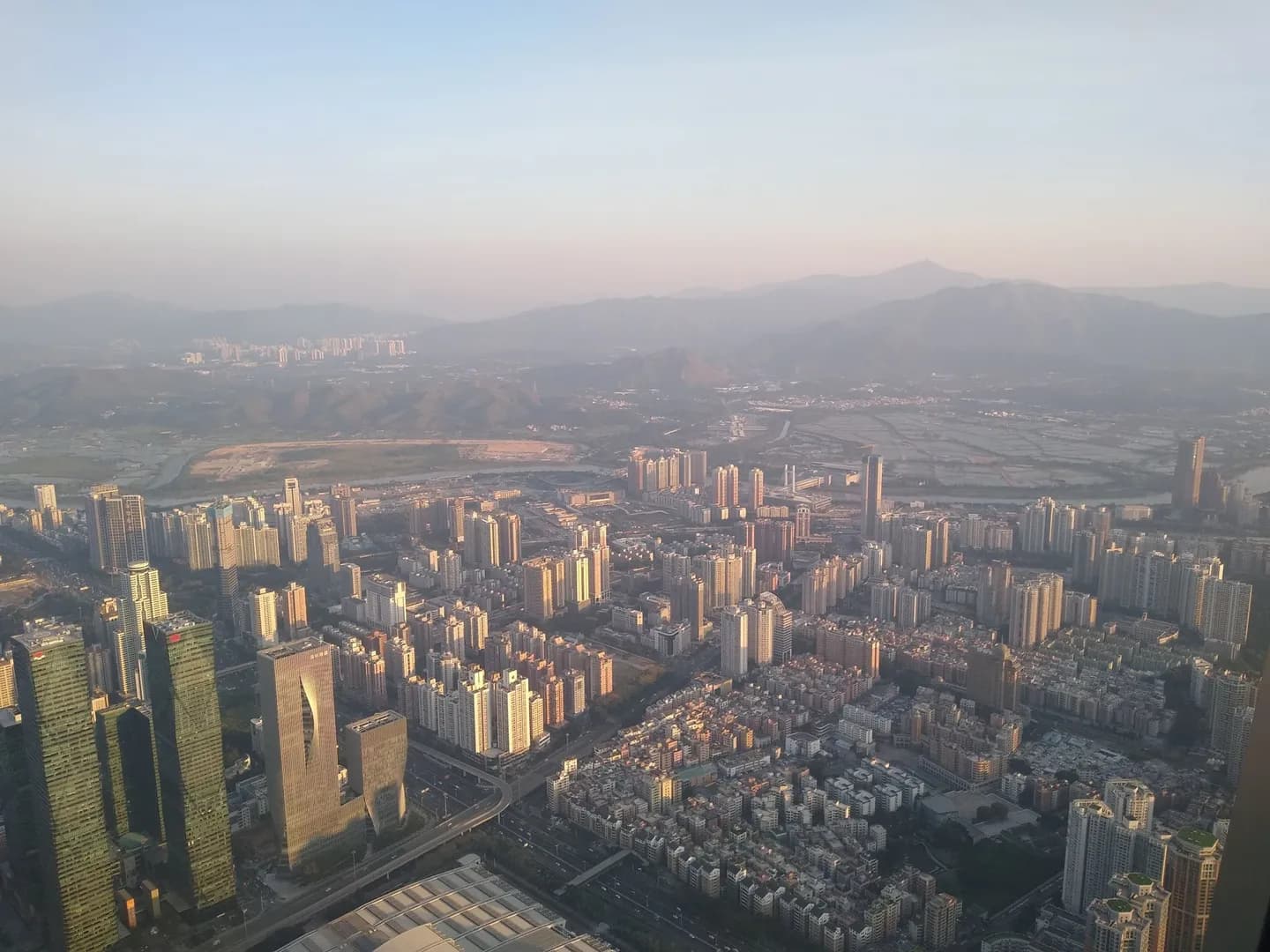
Main image: Shenzhen, the host city, seen from the Ping An Finance Centre observation deck (file photo, 2019). It does not show the summit. Photo: Mx. Granger / Wikimedia Commons, CC0.
Related Topics
EUReflect News
Site Administrator
Follow EUReflect
See more of our reporting on Google
Mark EUReflect as a preferred source and our stories are ranked higher for you in Top Stories, Discover and Google News — and carry a “preferred” badge when they are cited in AI results.
Add EUReflect as a preferred source