How Politics Broke Britain's Economy: How to Fix It?
UK’s crisis stems from austerity, Brexit disruption, market turmoil under Truss, and weak long-term planning. Years of short-term politics hurt growth, trade, and public services. Recovery requires stable investment, smarter EU ties, tax discipline, and a long-term economic strategy.
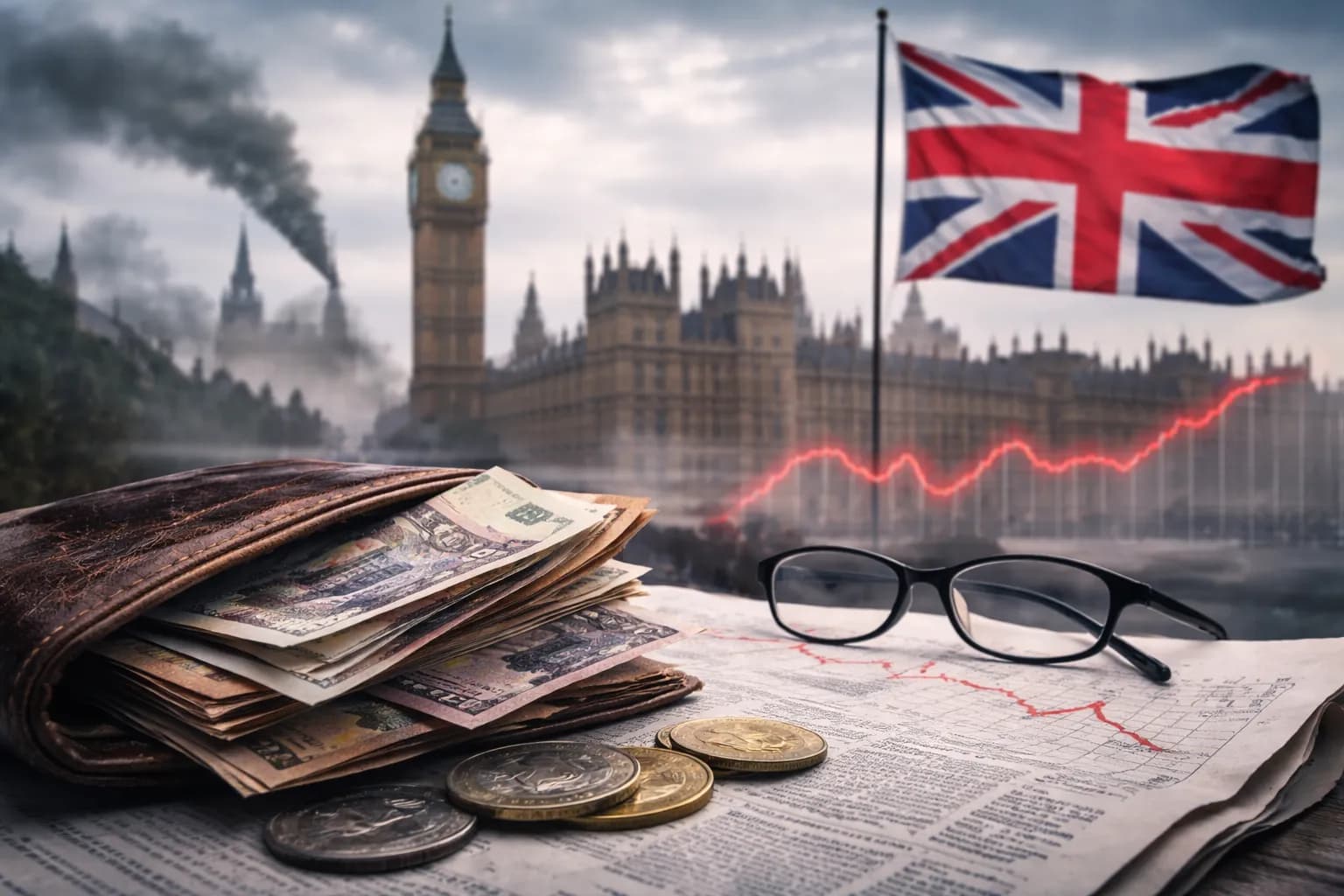
The United Kingdom finds itself in an economic crisis. Prices are high, wages are stagnant, and growth is weak. While global events played a part, this situation is largely the result of a series of poor political decisions. For over fifteen years, successive governments have chosen short-term political wins or rigid ideology over smart, long-term economic planning. Each decision has piled on the last, leaving the country poorer and less secure. The story of how we got here is a clear timeline of failure.
It began after the 2008 financial crash. Prime Minister David Cameron and Chancellor George Osborne chose a path of deep austerity, cutting public spending sharply to reduce debt. While it helped the government’s budget, it badly hurt the economy’s foundations. Investment in the NHS, schools, roads, and housing fell. This meant less economic activity, lower wages, and a slower recovery. The policy fixed the spreadsheet but broke the engine of growth.
The next major failure was Brexit. The 2016 referendum, called by Cameron, created years of instability. Theresa May’s government spent three years in chaotic negotiations, creating painful uncertainty. Businesses froze investment, not knowing what the future rules would be, and many began moving jobs and money to Europe. This political paralysis damaged confidence long before the UK even left the European Union.
Boris Johnson then promised to "Get Brexit Done." He succeeded in delivering a hard Brexit, a complete break from the EU's single market. This was a political victory but an economic setback. It created new trade barriers and red tape for exporters, from farmers to financial services. The UK’s valuable finance industry lost easy access to its biggest market. Johnson’s government also mismanaged the COVID-19 response, with costly delays and a wasteful test-and-trace system. The focus was on headlines, not careful governance.
This pattern of reckless politics reached a peak in 2022 under Liz Truss. Her government announced a "mini-budget" of huge, unfunded tax cuts. This ideological move, made without independent checking, spooked the financial markets. The Pound crashed, mortgage costs soared, and the Bank of England had to step in to prevent a wider collapse. It proved that a policy designed for political headlines could destroy economic stability in just days.
Rishi Sunak followed, aiming for calm. However, his government failed to address the deep problems. He was distracted by party divisions and offered no new vision for growth. Public services like the NHS and railways declined further. The economy simply stagnated, and living standards kept falling.
Today, theLabour government under Keir Starmerfaces this difficult legacy. Their approach has been cautious, raising taxes and trimming spending to repair public finances. While perhaps necessary, the risk is that without a bold plan to stimulate growth, they are merely managing a decline. If they do not break the cycle of short-term thinking with major investments, they will repeat the failures of the past.
The common thread through all these governments is the sacrifice of long-term prosperity for short-term political goals. Austerity saved money but cost growth. Brexit delivered sovereignty but damaged trade and investment. The mini-budget aimed for popularity but wrecked confidence. Each time, theeconomy was left weaker.
This cycle can be broken, but it requires a completely different approach. The solution lies in committing to stability, investment, and evidence-based policy.
First, the country needs a locked-in, long-term plan. Governments, businesses, and unions should agree on a core ten-year strategy for the most critical areas:energy, transport, and housing. Major political parties should promise to honor this plan, regardless of who wins elections. This would give businesses the confidence to invest in the UK, knowing the rules won’t suddenly change.
Second, the government must consistently reinvest in the foundations. Years of cuts have left public services and infrastructure weak. Strategic spending is not a cost; it is an investment in a more productive future. This means:
Revolutionizing skills and further education to train people for jobs in modern sectors like technology and green energy is important. At the same time, upgrading the outdated technology in the NHS and government to improve services and save money. Similarly, building reliable transport and accelerating green energy projects to create jobs and lower bills for everyone.
Third, the post-Brexit systems need to be fixed. The decision has been made, but its damaging effects can be softened. The government must work to remove the most pointless trade barriers with the EU, helping British exporters. It also needs a smart immigration system that allows the workers our economy desperately needs,from healthcare staff to engineers,instead of sticking to rigid targets that hurt both public services and private companies.
Fourth, the tax system needs stability and fairness. The chaos of the mini-budget showed the danger of sudden, unfunded changes. A new rule should require all major tax and spending policies to be independently checked first. The goal should be a system that encourages companies to invest their profits in new equipment and researchwithin the UK.
Finally, the nature of politics itself needs reform. The system currently rewards quick headlines over careful planning. To change this, key economic decisions should require advice from independent experts. A public review should find ways to reduce constant policy U-turns and force governments to focus on long-term goals.
Thus, the UK’s economic crisis was built by political choices. It can only be solved by better ones. The path forward requires patience, cooperation, and a firm commitment to evidence over ideology. It means governments must stop governing for the next news cycle and start building for the next generation. The lesson of the last fifteen years is clear: short-term politics leads to long-term decline. The future now depends on finally choosing a different course.
Uroosa Khan
Contributing writer at EUReflect.
Follow EUReflect
See more of our reporting on Google
Mark EUReflect as a preferred source and our stories are ranked higher for you in Top Stories, Discover and Google News — and carry a “preferred” badge when they are cited in AI results.
Add EUReflect as a preferred source