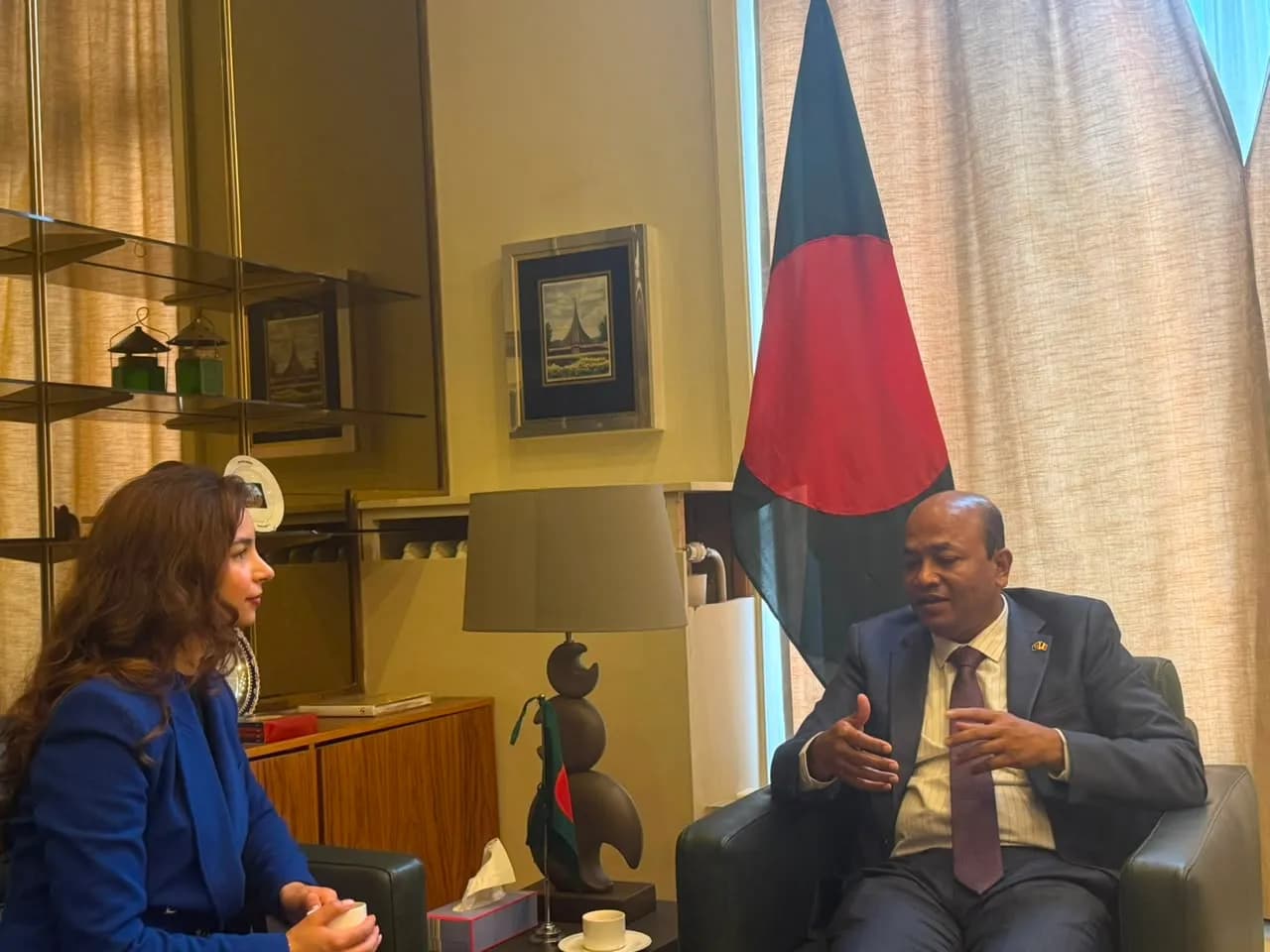
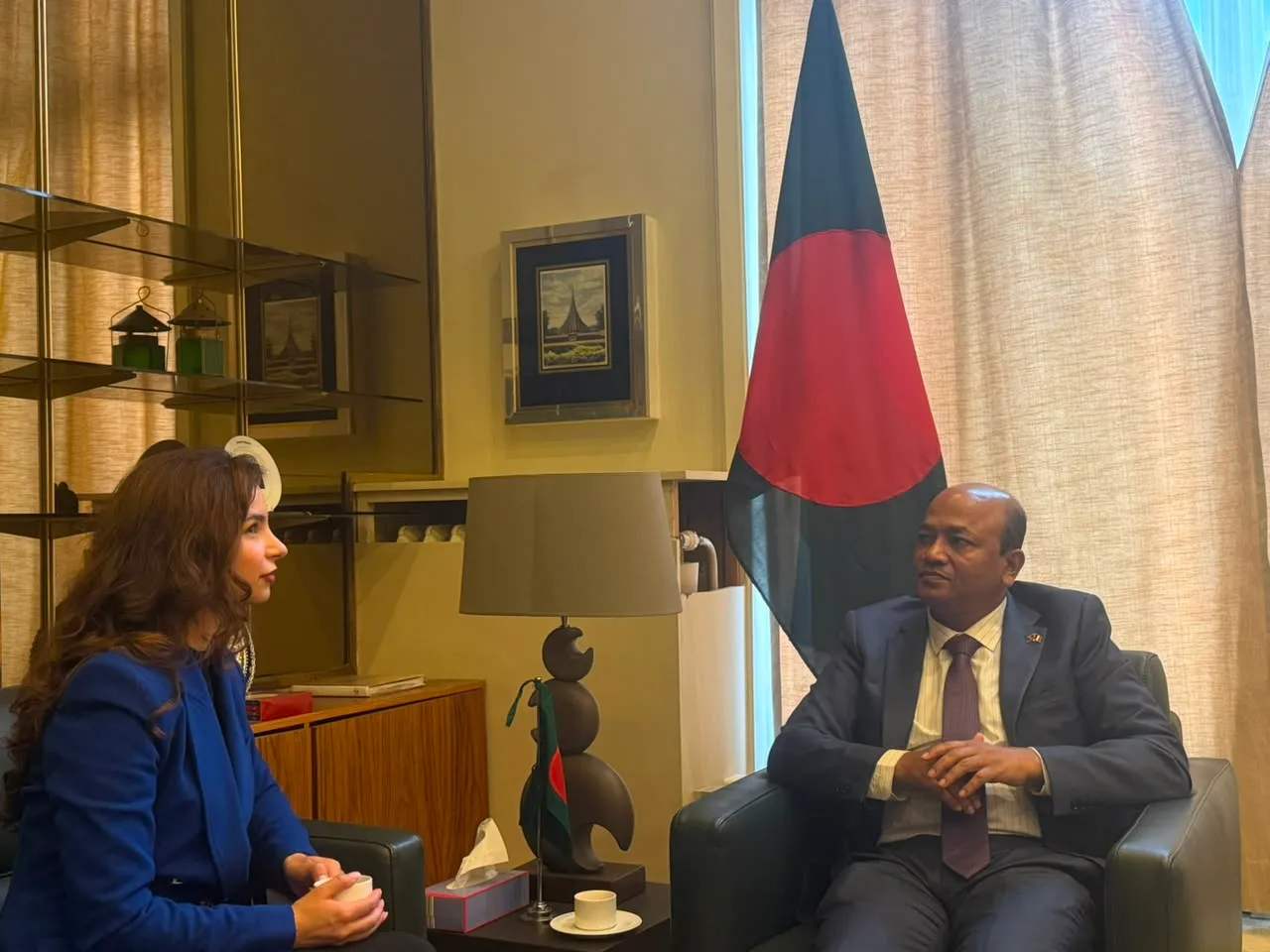
Interview with H.E. Khandker Masudul Alam, Ambassador of Bangladesh to Belgium
Interview with H.E. Khandker Masudul Alam, Ambassador of Bangladesh to Belgium, Luxembourg and the European Union
Derya Soysal:
Your Excellency, thank you very much for receiving us today. You recently hosted a Mango Festival at the Embassy. How can the mango, and Bangladeshi cuisine more broadly, be considered a form of soft power for Bangladesh in Europe?
Ambassador of Bangladesh, H.E. Khandker Masudul Alam;
Thank you very much for coming today, and thank you also for the quality visitors who attended the Mango Festival. This was the first event of its kind that we hosted at our Embassy in Brussels.
Mangoes are produced in very large quantities in Bangladesh, and we love them so much that we consume nearly 99.9% of our production ourselves. Only about 0.1% reaches the rest of the world. But we do not want to be selfish. We want to share this special agricultural product of Bangladesh with people across the globe.
Bangladesh has several of the finest varieties of mangoes, many of which are protected by Geographical Indication (GI) certifications. These products contribute to the branding of our country as a producer of high-quality goods. This reputation extends beyond agriculture. Bangladesh is also one of the world's leading exporters of garments and textiles to Europe.
This gives Bangladesh a character and an identity as a reliable source of quality products.
If we look at our culinary traditions and agricultural richness, Bangladesh is the largest living delta in the world. We have enormous rivers that many people cannot imagine unless they see them for themselves. In some areas, rivers can reach up to twenty kilometres in width.
Because of this geography, before the construction of bridges, different regions of the country developed distinct cultural identities. Although Bangladesh is not a very large country in terms of landmass, it offers extraordinary diversity in agriculture and cuisine.
When visitors travel across Bangladesh, they discover a unique blend of culinary traditions and tropical biodiversity. Some areas are alluvial, some have ancient soils, some contain mangrove ecosystems, while others are hilly regions. It is this extraordinary diversity that creates a remarkable variety of cuisines and lifestyles.
Even in the United Kingdom, the curry industry is largely dominated by Bangladeshi entrepreneurs and chefs. Much of the sector is managed by members of the Bangladeshi diaspora living in London.
There are countless stories to tell about Bangladeshi cuisine. Some of these stories have already reached European audiences, but many remain to be discovered.
Beyond cuisine, Bangladesh is also known for jute, one of the world's most unique natural fibres. Jute can be used to create environmentally friendly packaging materials with very low carbon footprints. Because of the particular tropical and monsoon conditions required for its cultivation, only a limited number of countries can produce it.
Jute has the potential to replace many of the environmentally harmful packaging materials used today. Bangladesh now possesses the technology to produce biodegradable bags from jute that are comparable to plastic bags, yet stronger and much more environmentally sustainable.
Modernity, tradition, and technology all come together in Bangladesh. This combination creates our national character and contributes significantly to our success.
Derya Soysal:
You mentioned Bangladesh's rich culinary traditions. We know that many tourists are attracted to destinations with outstanding food cultures. Why should Europeans discover Bangladesh not only through its cuisine but also through its cultural heritage and historical patrimony?
Ambassador of Bangladesh:
Bangladesh, as part of the broader South Asian region, belongs to one of the world's oldest civilizations.
If we go back thousands of years, long before Europeans began exploring this part of the world, societies in this region had already flourished for four to five thousand years.
Visitors to Bangladesh will encounter a fascinating amalgamation of cultures, traditions, and religions. The country has long served as a crossroads of civilizations.
If we talk about Buddhism, one of the world's major faiths today, Bangladesh is part of its historical heartland. Alongside neighbouring regions of South Asia, our territory played an important role in the development and spread of Buddhism.
More than 1,400 to 1,600 years ago, Bangladesh was home to thriving centres of learning and trade. Pilgrims from Southeast Asia regularly travelled to Bengal because it was considered an important centre of Buddhist scholarship.
From a historical, religious, and cultural perspective, Bangladesh is truly a country worth exploring.
Visitors will also discover the influence of Sufism and witness how different religious traditions have interacted over centuries. It is fascinating to observe how religions shaped culture and how culture, in turn, influenced religious practices.
For many Europeans living on a continent that is historically shaped by Christianity, these experiences can offer unique insights and perspectives.
As I mentioned earlier, because of the country's river-based geography, different regions developed distinctive culinary traditions. These culinary traditions are often closely linked to religious festivals and agricultural celebrations.
In Bengal, we have a popular saying: "Thirteen festivals in twelve months."
This expression reflects our love of celebration. We find reasons to celebrate throughout the year.
Therefore, whenever a European visitor comes to Bangladesh, regardless of the season, they will always find unique cultural festivals, traditions, or celebrations taking place.
Certainly, visitors will also experience our tropical climate, including its heat and humidity. But these environmental conditions have shaped our people, our cuisine, and our culture in unique ways.
Derya Soysal:
We have discussed Bangladesh's soft power and cultural assets. Let us now turn to geopolitics and economic cooperation. How do you see the future of bilateral relations between Bangladesh and the European Union, as well as between Bangladesh and Belgium? Europe is increasingly seeking new partnerships, particularly in South Asia. How can we strengthen these ties further?
Ambassador of Bangladesh:
This is a very valid and timely question.
Bangladesh has made remarkable economic progress and is one of the fastest-growing economies in the world.
The country has diversified significantly.
Bangladesh is already a major partner of the European Union in the apparel and textile sector, but that represents only part of the story.
With a population of approximately 175 million people and a median age of just twenty-six, Bangladesh possesses an exceptionally young population.
This young population is increasingly educated, technologically skilled, and actively engaged in emerging technologies, digital innovation, and information technology.
Our semiconductor sector is also developing rapidly. Bangladesh already has a presence in the fabless semiconductor industry. Bangladeshi companies are contributing to sophisticated chip design projects, including technologies used in some of the world's most advanced smartphones.
At a time when Europe is seeking supply chain resilience, technological collaboration, and research partnerships, Bangladesh is well positioned to become an increasingly important partner for both the European Union and Belgium.
The pharmaceutical sector is another excellent example. European companies such as Novo Nordisk produce insulin in Bangladesh. The production of insulin is highly complex, demonstrating Bangladesh's advanced pharmaceutical capabilities.
Our pharmaceutical products are exported to the United States, European markets, Singapore, Australia, and many other countries.
This illustrates the diversity and sophistication of our economy.
Today, Bangladesh's economy is worth approximately half a trillion dollars, and various projections suggest that it could become one of the world's ten largest consumer markets within the next few years.
A growing consumer market means opportunities not only for Bangladeshi exports but also for European products and investments.
When Bangladesh exports products to Europe, it also opens its own market to European businesses. This creates a genuinely win-win partnership.
This is one reason why Bangladesh is interested in pursuing a Free Trade Agreement with the European Union. Such an agreement would provide businesses with greater confidence and a stronger legal framework for cooperation.
Europe has an ageing population and is seeking dynamic new markets. Bangladesh offers a young demographic, a growing economy, and valuable expertise in multiple sectors.
At the same time, we must work together on common challenges, including environmental sustainability and artificial intelligence.
Derya Soysal:
So it is truly a win-win relationship. Europe needs dynamic partners such as Bangladesh, while Bangladesh benefits from stronger engagement with Europe. We must work together to bring Bangladesh closer to Belgium and the European Union, and likewise bring Belgium and Europe closer to Bangladesh.
Ambassador of Bangladesh:
Exactly.
I would also like to highlight Bangladesh's strategic geographical location.
Our country sits at the crossroads of South Asia and Southeast Asia.
The European Union actively promotes regional connectivity through initiatives such as Global Gateway. As these connectivity projects expand, Bangladesh occupies a central position as a bridge between two of the world's most dynamic regions.
This makes Bangladesh an ideal partner and hub for European engagement with both South Asia and Southeast Asia.
By working together, European and Bangladeshi partners can benefit from the enormous economic potential represented by these regions, which are among the major growth engines of the future global economy.
Derya Soysal:
Thank you very much, Your Excellency. We can conclude by saying: let us bring Bangladesh closer to Belgium and the European Union, and Belgium and the European Union closer to Bangladesh. Let us discover Bangladesh's cuisine, soft power, cultural heritage, and vibrant traditions.
Ambassador of Bangladesh:
Exactly.
I invite everyone to visit Bangladesh.
Seeing is believing.
You may hear many positive things about the country, but once you visit and experience it yourself, you will truly understand.
Bangladesh is a country of wonderful people. It is a beautiful nation that is home to the world's longest natural sea beach, the world's largest mangrove forest, and above all, people with warm hearts and exceptional hospitality.
Interview conducted by Derya Soysal.
Brussels, Belgium.
Related Topics
Derya Soysal
Contributing writer at EUReflect.
Follow EUReflect
See more of our reporting on Google
Mark EUReflect as a preferred source and our stories are ranked higher for you in Top Stories, Discover and Google News — and carry a “preferred” badge when they are cited in AI results.
Add EUReflect as a preferred source