Iraq Bypasses Northern-Controlled Pipelines with New Kirkuk–Turkey Oil Plan
Iraq is accelerating plans to export up to 250,000 barrels of oil per day directly from Kirkuk to Turkey, sidestepping the North Iraq amid stalled negotiations and rising regional tensions. The move signals a major shift in Baghdad’s energy strategy as it seeks alternative routes to secure exports and stabilize supply chains.
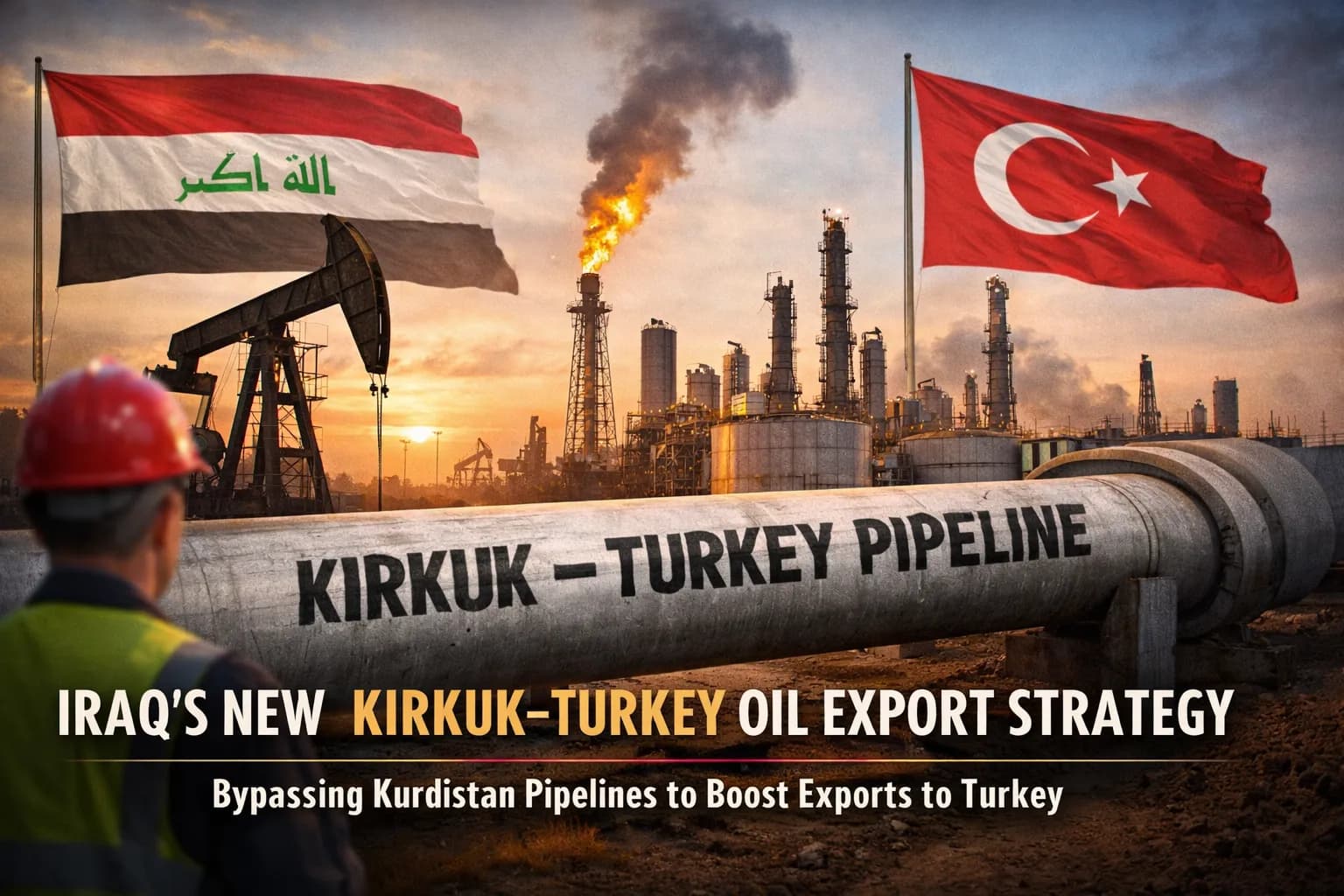
Iraq is advancing efforts to resume crude oil exports through Turkey by developing an alternative route that bypasses pipelines in the northern region, according to Oil Minister Hayan Abdul Ghani.
In a recorded statement released by the Ministry of Oil, Abdul Ghani outlined a technical plan to transport crude from the northern Kirkuk fields directly to Turkey’s Ceyhan port through the Iraq-Turkey pipeline network. The initiative comes in response to mounting challenges, including disruptions to southern exports and regional instability affecting traditional shipping routes.
The minister confirmed that rehabilitation work on the pipeline linking Kirkuk to the main export system is nearly complete. Only a 100-kilometer segment remains under inspection, a process expected to conclude within a week. Once finalized, Iraq will be able to pump crude directly from Kirkuk without relying on infrastructure controlled by regional authorities in the north.
Negotiations between Baghdad and Erbil over oil export arrangements remain unresolved. Abdul Ghani indicated that no final agreement has been reached regarding the export of a specified share of Kirkuk’s crude through existing northern pipelines.
Despite this, Iraq aims to maximize output from its northern oil fields, with projected export volumes ranging between 200,000 and 250,000 barrels per day via the Turkish route.
In parallel, the government is implementing a broader strategy to connect southern and northern oil networks to ensure supply continuity. Recent upgrades have enabled the transfer of up to 250,000 barrels per day from Basra to refineries in the north, effectively allowing equivalent volumes from Kirkuk to be exported.
To offset reduced exports through the Gulf, Iraq is also exploring additional alternatives. These include issuing tenders for temporary exports via Baniyas port and Aqaba port using tanker trucks, due to the lack of ready pipeline infrastructure.
The minister reassured citizens that domestic supplies of fuel and gas remain stable, ensuring continued operation of power plants despite an overall reduction in production levels.
Meanwhile, regional authorities in the north announced a halt in production across oil, gas, and energy facilities, citing ongoing attacks and the absence of exportable crude. In a statement, the local Ministry of Natural Resources accused federal authorities of failing to prevent these attacks and alleged that some perpetrators receive indirect support.
The broader regional context remains volatile, with escalating tensions and military exchanges contributing to instability across energy markets and supply routes.
Iraq’s latest move reflects a strategic attempt to safeguard its oil exports and maintain economic resilience amid a rapidly evolving geopolitical landscape.
Abbas Al-Zuhairy
Contributing writer at EUReflect.
Follow EUReflect
See more of our reporting on Google
Mark EUReflect as a preferred source and our stories are ranked higher for you in Top Stories, Discover and Google News — and carry a “preferred” badge when they are cited in AI results.
Add EUReflect as a preferred source