Is a New Islamic Security Alliance Coming?
Pakistan, Türkiye, Saudi Arabia, and Egypt have shown potential to form a regional security bloc after mediating the US-Iran crisis. While they aim to reshape the regional order through military, economic, and diplomatic cooperation, structural and political challenges make its permanence uncertain.
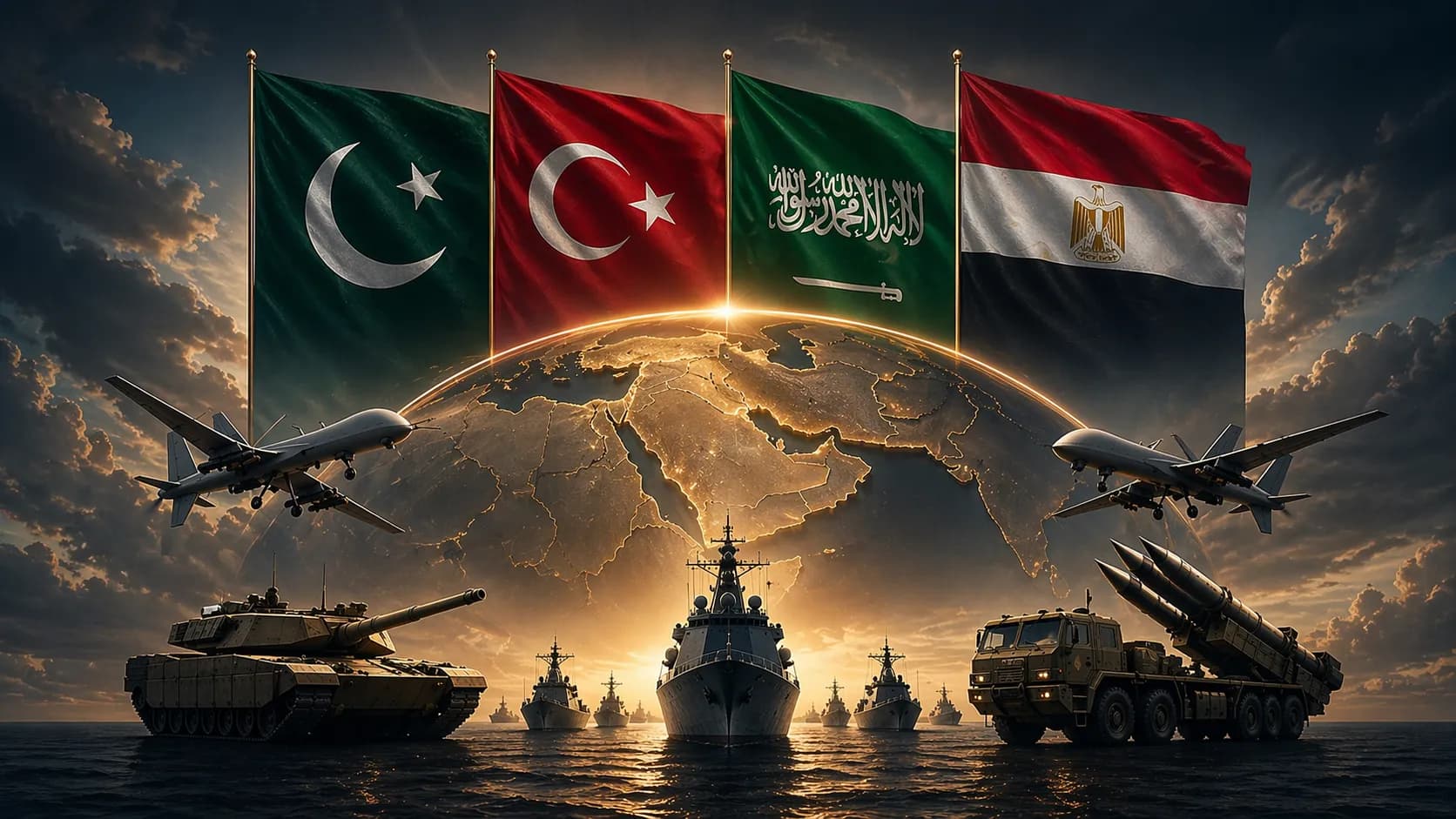
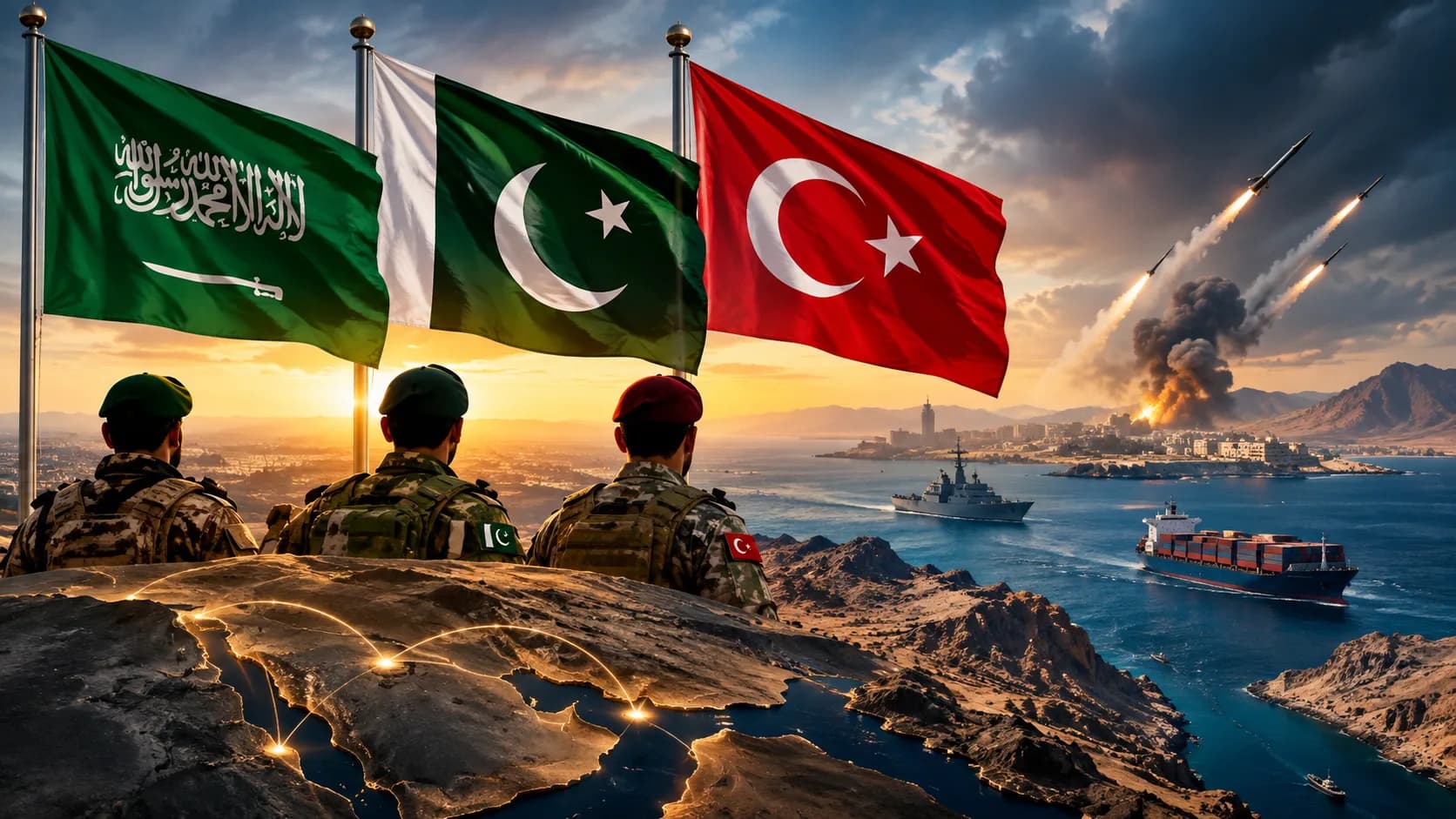
The recent war in the Middle East, surprised many people. But an unexpected development emerged from this crisis. Four countries such as Pakistan, Turkiye, Saudi Arabia, and Egypt are working together to mediate a ceasefire between Washington and Tehran. Can these four nations now form a permanent security bloc? And how they can do it, what each country brings to the table, and the real challenges they face.
The mediation effort followed a clear timeline. On March 19, 2026, the foreign ministers of all four countries met in Riyadh, Saudi Arabia. Just ten days later, on March 29, they met again in Islamabad, Pakistan. By April 8, a two-week ceasefire between the US and Iran was announced, with Pakistan playing the biggest role by carrying messages between Washington and Tehran. Further meetings took place in Islamabad on April 15 and in Antalya, Turkiye, on April 17 to discuss a permanent security framework. This series of events proved that these four nations can act together when needed.
If they form a security bloc, each member will contribute something unique. Pakistan brings nuclear weapons, it is the only Muslim-majority country with nuclear capability along with a large army of 654,000 active soldiers, ranked 12th most powerful in the world. Pakistan also proved its mediation skills during the US-Iran truce and spends around $10 billion on defense each year. Turkiye contributes the strongest drone technology in the region, with its Bayraktar drones battle-tested in several conflicts. Turkiye has the second largest army in NATO with 355,000 active troops, a fast-growing defense industry, and a defense budget of $37.5 billion. Saudi Arabia brings money, it has the richest Arab economy and the world's second largest oil reserves. Its defense budget is $78 billion, which is 7.1 percent of its GDP, and it has 257,000 active soldiers.
Saudi Arabia also has a planned $100 billion arms deal with the United States. Egypt contributes the largest Arab army, with 1.2 million total personnel including 440,000 active troops. Egypt also controls the Suez Canal, one of the world's most important shipping routes, and has a strong navy with eight submarines and two helicopter carriers. Egypt's military is ranked 19th globally and first in Africa.
Instead of signing one big treaty, these countries are building their security bloc through smaller, bilateral agreements. For example, Pakistan and Saudi Arabia signed a Strategic Mutual Defence Agreement in September 2025, which says that aggression against one is aggression against both. Turkiye and Egypt signed a Bilateral Military Cooperation Agreement in February 2026, which includes a $350 million deal for ammunition production in Egypt. Turkiye and Pakistan signed 24 new agreements in 2025, covering technology transfer, joint weapons production, and a $900 million deal for drones and loitering munitions.
Egypt and Saudi Arabia created a Joint Naval Force in September 2025 to protect the Red Sea without outside help. Finally, Turkiye and Saudi Arabia are discussing a possible $6 billion defense deal that would include warships, tanks, and missiles. To turn these separate deals into one real bloc, the four countries could create a shared intelligence center, hold joint military exercises every year, form a rapid reaction force for crises, and set up a rotating leadership system similar to the European Union.
This bloc would also reduce their reliance on the United States, which many Middle Eastern countries worry is pulling back from the region.
The formation of this security bloc will fundamentally reshape the Middle East's power structure in several ways. First, it challenges the long-standing American security umbrella that has dominated the region for more than half a century. For decades, Gulf nations believed that US bases and advanced weapons would protect them. But the 2026 war has shattered that guarantee. The US appeared increasingly hesitant to shield its Arab partners from the blowback of its conflict with Iran. In this vacuum, the quartet offers an alternative: a securityarchitecture designed by regional powers for regional powers, without external dependency.
Secondly, the bloc introduces nuclear deterrence into the regional balance. As the only Muslim country possessing nuclear weapons, Pakistan's military muscle provides a level of strategic depth that conventional Western interceptors simply cannot replicate. This fundamentally alters the security calculus, as potential aggressors must now consider the possibility of a nuclear response.
Thirdly, the quartet will enhance collective maritime security in critical waterways. Egypt controls the Suez Canal, while Saudi Arabia and Turkiye have navies capable of securing the Red Sea and the Gulf. This matters greatly because during the war, the threat to the Strait of Hormuz became real, and ship traffic dropped by 97 percent. A united bloc can patrol these waters together, ensuring energy supplies flow freely.
Fourthly, the bloc promotes defense industrial independence. After the Gulf countries' disappointment with America, many have shown interest in receiving Turkish defense industry products. Instead of buying everything from Western suppliers, these four nations can develop their own weapons, share technology, and build factories together. This will save money and create jobs.
Fifthly, the quartet gives the Islamic world a unified diplomatic voice. The bloc is already acting as the primary negotiating channel between Tehran and Washington. In the future, this grouping can mediate other conflicts, set regional agendas, and prevent outside powers from imposing solutions that serve their own interests.
Finally, the bloc challenges both Israeli dominance. The quartet's emergence signals a new regional order designed to curb excessive influence by Tel Aviv, creating a more balanced multipolar environment in the Middle East. Taken together, these changes represent a shift from passive dependency to active agency, where Middle Eastern countries finally take control of their own security destiny.
Furthermore, the inclusion of Iran in the quartet would significantly strengthen the security architecture by adding another major military power and closing the circle of regional influence
The 2026 US-Iran war left Gulf countries feeling deeply betrayed by Washington. The Qatari prime minister's helpless words, "we are betrayed," captured the feelings of many. Gulf states now face a difficult future without a reliable US security umbrella. This sense of betrayal opens the door for several nations to join the emerging bloc. Qatar is a likely candidate. Iranian missiles struck Qatar's main gas facility, which is considered the heart of the country. Even though Qatar hosts the largest US military base in the region at Al Udeid, it still found itself vulnerable. The advanced US systems could not completely stop the missiles and drones. Qatari leaders are deeply disappointed with Washington's performance, and many experts believe Qatar will now look toward Turkiye and the quartet for security solutions.
Azerbaijan has already shown interest in this security framework. The country's foreign minister supported the quartet's statement against Iran. Azerbaijan shares strong cultural and military ties with both Turkiye and Pakistan, and has been part of trilateral cooperation since the 2020 Karabakhwar. Baku would likely welcome an invitation to join the expanded bloc. Kuwait and Bahrain are also potential members. Both countries host US military bases, and both suffered during the war. Bahrain's US Fifth Fleet headquarters was hit by missiles, disrupting command and control. The Bahraini king was so angry that he ordered citizenship to be stripped from those who compromised security. Kuwait, meanwhile, has watched the war closely and is now reconsidering its long-standing defense relationship with Washington.
In the short term, over the next one to two years these four countries will likely continue to meet and sign more agreements. They will present themselves as a "security platform," but they will not become a formal alliance like NATO. In the long term, over five to ten years, success depends on three factors: first, whether they can agree on a real common threat; second, whether the United States allows the bloc to grow or tries to stop it; and third, whether Pakistan and Egypt can fix their economies. The recent US-Iran mediation was a real success and proved these four countries can work together. But turning that success into a permanent security bloc is much harder. For now, they are like friends with benefits, they help each other when needed, but no one is ready for a permanent commitment. Nevertheless, the geopolitical earthquake caused by US betrayal has opened a historic opportunity. The quartet stands ready to welcome new members, reshape the regional order, and finally retire the era of external dependency.
Uroosa Khan
Contributing writer at EUReflect.
Follow EUReflect
See more of our reporting on Google
Mark EUReflect as a preferred source and our stories are ranked higher for you in Top Stories, Discover and Google News — and carry a “preferred” badge when they are cited in AI results.
Add EUReflect as a preferred source