Migration Crises Are Shifting Across the Globe
Ceuta's crisis highlights shifting pressure points, with thousands stranded in the Spanish enclave after mass crossings.
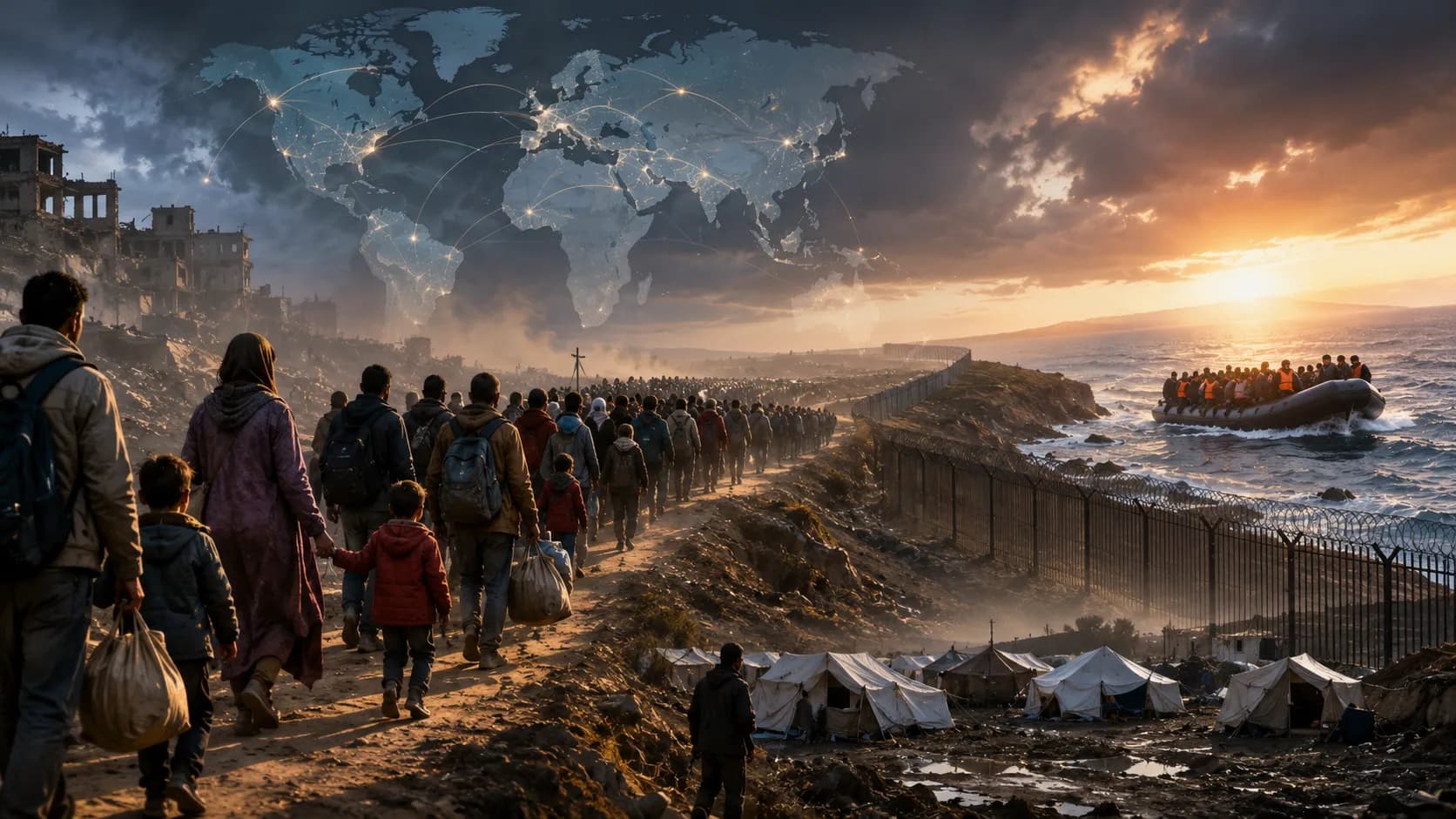
The global migration crisis is entering a new and increasingly complex phase in 2026. Wars remain one of the strongest drivers of displacement, but economic instability, climate-related disasters, political pressure and tighter border policies are simultaneously reshaping migration routes.
The result is no longer a single migration crisis concentrated around Europe. Major displacement pressures now stretch from Sudan and the wider African continent to the Mediterranean, Latin America and parts of Asia.
Sudan Remains at the Center
Sudan continues to represent one of the world's most serious displacement emergencies.
International Organization for Migration data for July estimated that approximately 8.6 million people remained internally displaced across Sudan, despite millions of people also beginning to return to their areas of origin. Children account for more than half of the internally displaced population.
Fighting, damaged infrastructure and seasonal flooding continue to generate new displacement. This makes Sudan particularly important because its crisis does not remain within its borders. Population movements can place additional pressure on neighboring countries and eventually affect migration routes toward North Africa and Europe.
The Mediterranean Remains Deadly
Europe has recorded fewer irregular arrivals than during the height of the migration crisis, but declining arrivals have not eliminated the humanitarian danger.
EU figures show 45,077 irregular arrivals during the first six months of 2026, with the Eastern Mediterranean accounting for 16,641, the Central Mediterranean for 14,272 and the Western routes for 12,138.
Meanwhile, IOM data list more than 2,000 people dead or missing on migration routes toward Europe in 2026, including more than 900 on the Central Mediterranean route alone.
The danger was demonstrated again this month when a migrant boat sank off Tunisia. Eleven bodies were eventually recovered, only one person was reported rescued and three remained missing.
The Mediterranean migration issue is therefore changing from primarily a question of numbers into a wider debate about border control, human trafficking, rescue operations and agreements between Europe and transit countries.
Europe Faces New Pressure Points
Recent developments in Spain's North African territory of Ceuta demonstrate how quickly migration pressure can move geographically.
After tens of thousands of people crossed from Morocco into Ceuta in late July, thousands remained there in August awaiting decisions about accommodation, documentation or asylum procedures. The situation has placed significant pressure on the small territory's infrastructure and reception capacity.
At the same time, asylum demand across the EU remains substantial even though overall numbers have declined.
In May, EU countries received 42,525 first-time asylum applications, 22 percent fewer than a year earlier. Venezuelans represented the largest group, followed by Afghans, Bangladeshis and Sudanese. Italy, Spain, France and Germany together received 75 percent of these applications.
Migration Is Becoming More Global
One of the most important developments of 2026 is that migration pressures are increasingly interconnected.
Latin American migration remains significant, African conflicts continue producing large displaced populations, and instability in Afghanistan and other parts of Asia continues contributing to asylum movements.
At the same time, destination countries are adopting tougher border controls, deportation arrangements and agreements with transit or third countries. This can reduce pressure on one migration corridor while redirecting people toward another.
New IOM data also indicate that migrant deaths increased sharply during the first months of 2026, with dangerous journeys extending far beyond the Mediterranean to routes including the Bay of Bengal and Atlantic Ocean.
The Crisis Is Moving, Not Disappearing
The central lesson from 2026 is that lower migration numbers on one border do not necessarily mean that the underlying crisis has been solved.
Conflict, poverty, demographic pressure, political instability and environmental disasters continue pushing millions of people away from their homes. Stronger borders can change where migrants travel, but they cannot by themselves eliminate the forces causing migration.
The global challenge is therefore shifting from managing individual migration routes toward addressing a much larger international system of displacement.
For governments, the next stage of the migration crisis will depend on whether they can combine border management with humanitarian protection, development assistance and policies addressing instability in countries of origin.
Without that broader approach, migration pressure is unlikely to disappear. It will simply move from one border, sea route or region to another.
Ahmet Balakan
Contributing writer at EUReflect.
Follow EUReflect
See more of our reporting on Google
Mark EUReflect as a preferred source and our stories are ranked higher for you in Top Stories, Discover and Google News — and carry a “preferred” badge when they are cited in AI results.
Add EUReflect as a preferred source