Private Military Companies: Between Law and War
Private Military Companies (PMCs) have become influential actors in contemporary conflicts, providing security, training, logistics, and in some cases combat support to states, corporations, and international organizations. Operating as profit-driven corporate entities, they blur the line between public and private use of force. While PMCs offer flexibility and specialized expertise, their expansion raises serious ethical, legal, and accountability concerns.
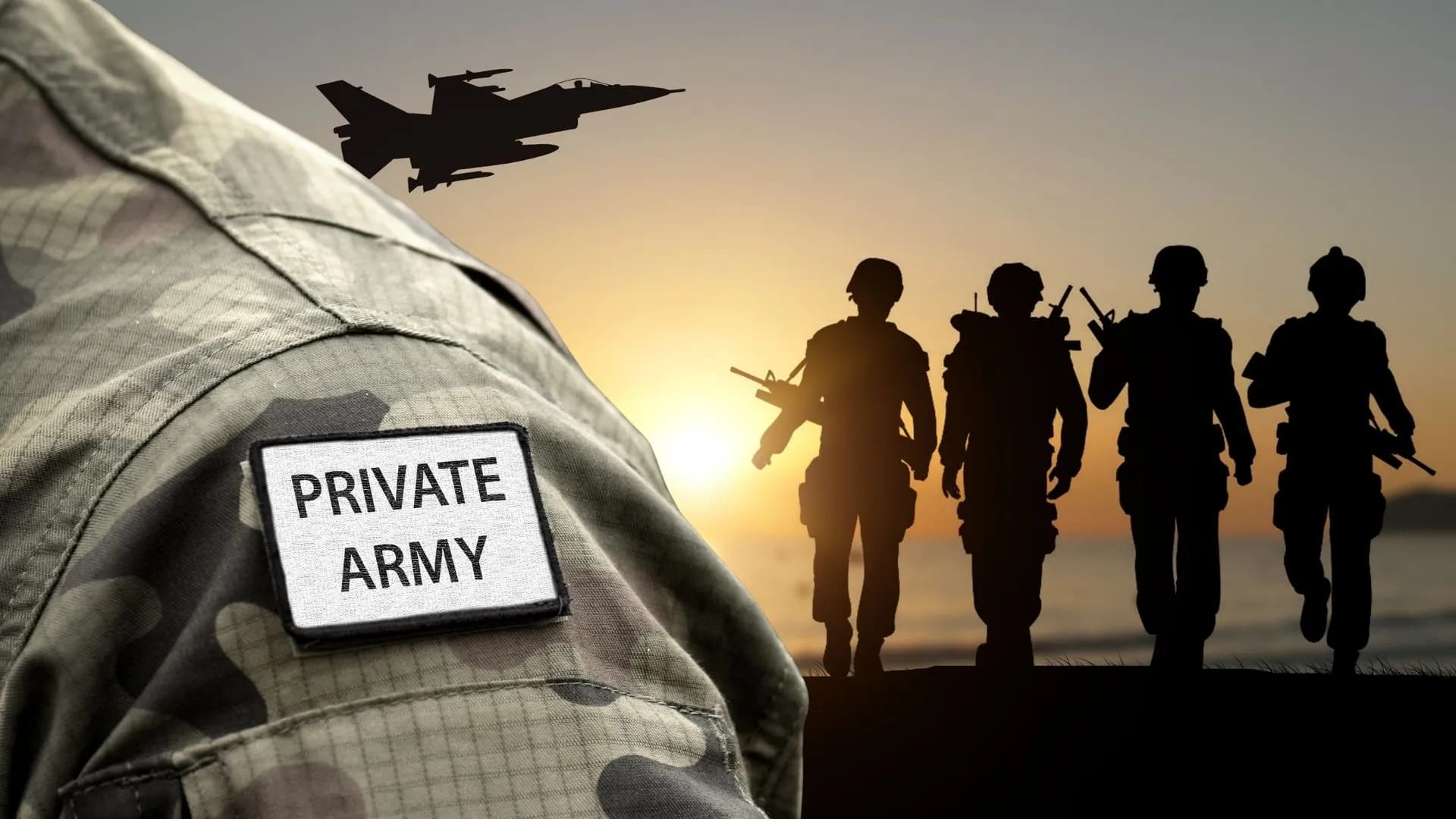
Private Military Companies (PMCs) have become key actors in modern conflict landscapes, influencing contemporary warfare, security operations, and geopolitical dynamics. Governments, corporations, international organizations, and even non-state actors have increasingly relied on them to provide services traditionally associated with national armed forces. Their growth raises important questions about the privatization of security, the ethical implications of delegating state functions to profit-driven entities, and the adequacy of existing legal frameworks to regulate their activities. Understanding what PMCs are, how they operate, and how they are (or are not) regulated is essential to grasp the challenges they pose to international governance and the future of armed conflict.
1. What Is a Private Military Company?
A Private Military Company is a legally registered, for-profit business that offers a variety of military and security-related services. Unlike individual mercenaries—who operate independently and are often considered illegal under international law—PMCs function as corporate entities with administrative structures, human resources policies, and contractual obligations. Their employees may include former soldiers, police officers, intelligence specialists, logisticians, or security experts.
PMCs are distinguished by their corporate nature, contractual basis, and broad range of services. Their activities extend well beyond direct combat: many focus on training, protection, intelligence gathering, logistics, or equipment maintenance. PMCs emerged prominently during the 1990s, especially in the aftermath of the Cold War, when many states downsized their military forces, creating a surplus of trained personnel and a demand for flexible, outsourced security services. Today, PMCs operate in conflict zones such as the Middle East, Eastern Europe, Latin America, and Africa, shaping the security environment in ways that blur the boundaries between public and private force.
2. Their Uses and Activities
PMCs serve a wide assortment of clients, including governments seeking to supplement their armed forces, corporations needing security for high-risk operations, and international organizations that require specialized logistical or protective support. Their activities can be grouped into several major categories.
First, PMCs provide security and protection services, such as guarding embassies, military bases, energy infrastructures, or humanitarian convoys. They may also offer executive protection for diplomats, corporate leaders, or NGOs operating in unstable regions. Second, they offer training and advisory services, preparing national armed forces, police units, or local security personnel in skills ranging from weapons handling to counterinsurgency or intelligence analysis. Third, they perform logistical and operational support, including equipment maintenance, transport operations, cybersecurity, and communication systems. In some cases, PMCs have been directly involved in combat or combat support roles, though this is controversial and often politically sensitive.
These capabilities give clients access to specialized expertise without the political costs of deploying national troops. However, the outsourcing of military functions to private actors also raises questions about transparency, accountability, and the potential misuse of force, especially in conflict zones with weak oversight.
3. Legislation Surrounding Their Activities
Despite their growing presence, PMCs operate within a patchwork of legal frameworks, and no single international treaty comprehensively regulates them. Several areas of international law nonetheless apply.
Central among these is International Humanitarian Law (IHL), including the Geneva Conventions, which governs the conduct of individuals during armed conflict. PMC personnel are generally classified as civilians unless directly participating in hostilities, a status that complicates their legal obligations and protections. The UN Mercenary Convention attempts to criminalize mercenary activities, but its definition is narrow and most major PMC-operating states have not ratified it, limiting its effectiveness.
Beyond treaties, the Montreux Document (2008), though non-binding, outlines good practices for states hiring PMCs and clarifies how existing international law applies to them. International Human Rights Law also applies, especially when PMCs operate under state contracts. Yet enforcement remains difficult due to weak oversight, jurisdictional conflicts, and the complexity of holding private companies accountable for actions in foreign conflict zones.
Conclusion
Private Military Companies occupy a unique, often controversial position in modern global security. Their corporate structure and broad operational capacities allow them to fill roles traditionally reserved for state militaries, offering flexibility and specialized expertise. However, their involvement in conflicts—combined with profit incentives and fragmented oversight—creates legal and ethical challenges that international law struggles to fully address. As PMCs continue to expand their reach, developing clearer regulations and stronger accountability mechanisms will be essential to ensuring that their activities align with international norms and contribute to stability rather than undermining it.
Regulating Private Military Companies: Conflicts of Law, History and Governance — Katerina Galai (Routledge, 2019)
Private Military And Security Companies: Search For International Legal AndNational Laws — European Proceedings (Dyshekov et al., 2020)
The Role of Private Military Companies in Defense Policy and Military Operations — Aris Sarjito (Andalas Journal of International Studies, 2023)
Normative-Legal Regulation of the Activities of International Private Military Companies — PRAWO i WIĘŹ Journal article
Faudel Taouli
Contributing writer at EUReflect.
Follow EUReflect
See more of our reporting on Google
Mark EUReflect as a preferred source and our stories are ranked higher for you in Top Stories, Discover and Google News — and carry a “preferred” badge when they are cited in AI results.
Add EUReflect as a preferred source