Rethinking Psychological Theory
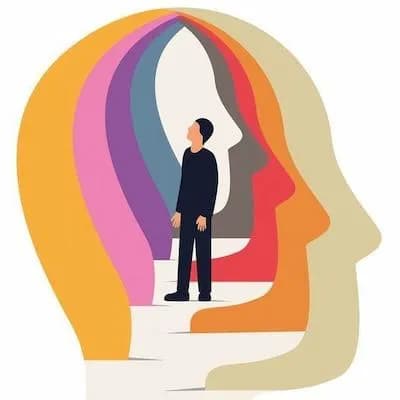
Psychology is entering a period in which some of its most familiar concepts are being reconsidered. Rather than assuming that constructs such as emotion, personality, motivation, or intelligence have fixed meanings across people and situations, emerging theoretical work is asking whether psychological concepts are inherently dependent on context, language, culture and perspective.
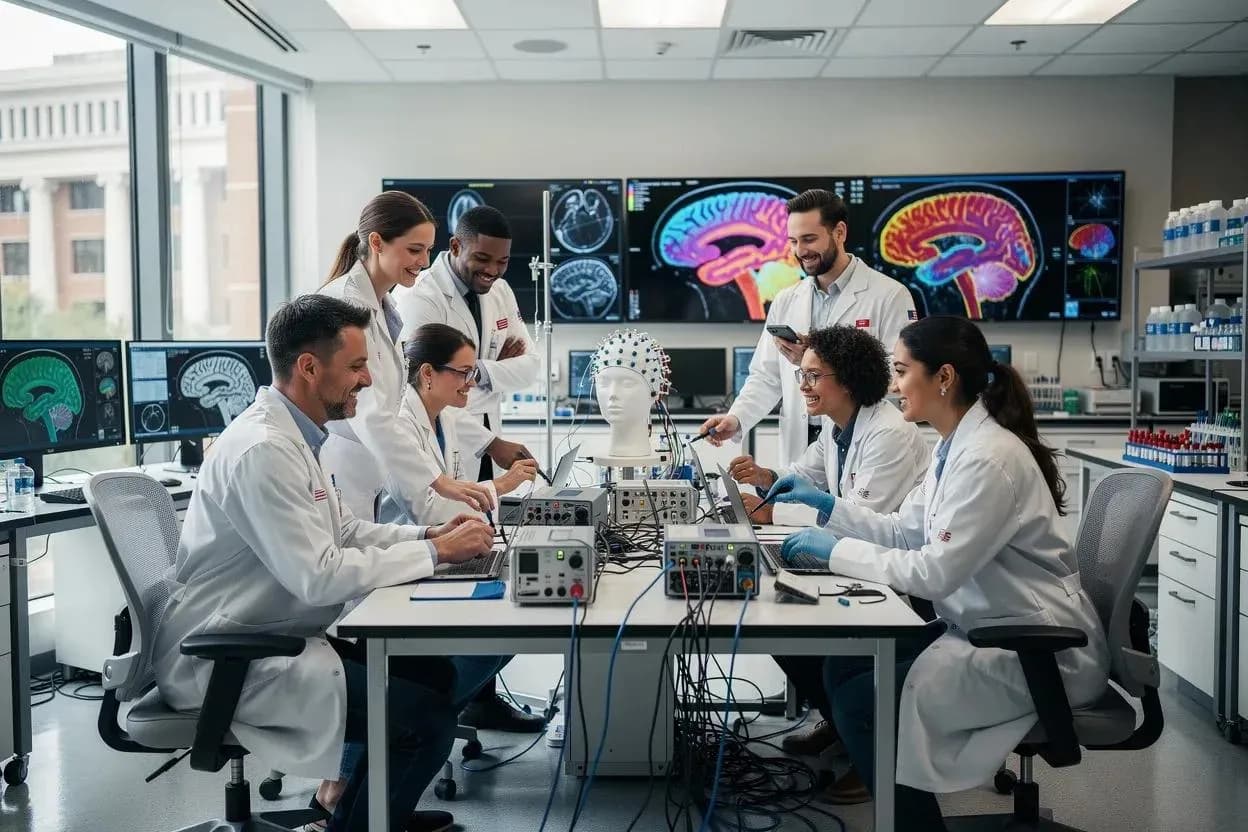
Why Psychology Is Rethinking Its Core Concepts
Psychology has accumulated an enormous body of research over the past century. Researchers have developed theories of personality, emotion, intelligence, motivation, memory and social behaviour, while increasingly sophisticated statistical and experimental methods have allowed psychologists to investigate these phenomena in greater detail.
Yet a growing theoretical discussion is asking a more fundamental question: How well do psychology's concepts actually describe the phenomena they are intended to explain?
This question has become particularly important as psychology confronts several interconnected challenges. Researchers have discussed a replication crisis, a universality crisis and a theory crisis. The first concerns difficulties reproducing some published findings; the second concerns the extent to which psychological findings generalize across cultures and historical periods; and the third concerns the development of theories that are sufficiently precise, testable and cumulative. Recent theoretical work argues that these problems may be connected to the way psychology defines and uses its basic concepts.
The Problem With Fixed Psychological Concepts
Scientific disciplines often depend on concepts that allow researchers to identify, measure and compare phenomena. In psychology, however, many of the most important concepts concern complex and partly subjective experiences.
Consider the concept of anxiety. It can refer to a subjective emotional experience, a pattern of physiological responses, a behavioural tendency, a clinical symptom or a broader response to uncertainty. These meanings overlap, but they are not identical.
Similar problems arise with concepts such as intelligence, resilience, self-esteem, personality and motivation.
The theoretical challenge is therefore not simply that psychologists need better measurements. It is also that researchers need to examine what exactly these concepts are supposed to represent.
A recent analysis in American Psychologist argues that psychological concepts can be inherently vague: their meanings and the conditions under which they are applied may not be completely fixed. The argument does not suggest that psychological concepts are meaningless. Instead, it challenges the assumption that every psychological construct can eventually be reduced to a single set of necessary and sufficient defining characteristics.
This represents an important theoretical shift.
Instead of asking only, “How can we measure this construct more accurately?”, researchers may increasingly ask, “Under what circumstances does this construct take this particular form?”
From Universal Laws to Context-Dependent Psychology
One of the strongest implications of this debate concerns universality.
For much of modern psychology, researchers have often searched for general principles of human behaviour. Such principles are valuable because science seeks explanations that extend beyond individual cases.
However, psychological processes do not necessarily operate in identical ways across cultures, historical periods or social environments.
Research on culture and the self provides an important example. Contemporary psychological science increasingly recognizes that culture is not simply an external background variable. Cultural contexts can influence cognition, emotion, motivation and the development of the self itself. The American Psychological Association has highlighted how this perspective has transformed the way psychologists understand the relationship between culture and fundamental psychological processes.
This creates a theoretical tension.
If a psychological process changes depending on social or cultural context, should researchers treat those differences as exceptions to a universal rule—or as part of the phenomenon itself?
Increasingly, theoretical psychology is moving toward the second possibility.
Why Context May Be Part of the Explanation
A context-dependent approach does not mean that psychology must abandon general explanations.
Instead, it suggests that explanations may need to specify when, where and for whom a psychological mechanism operates.
For example, a theory of motivation might identify a general mechanism while also explaining how that mechanism changes according to social expectations, cultural values or environmental conditions.
This is different from simply adding “culture” or “context” as another variable in a statistical model.
The deeper theoretical change is to treat context as potentially constitutive of psychological processes rather than merely as something surrounding them.
Such an approach can also help explain why apparently contradictory findings sometimes emerge in psychological research. Two studies may produce different results not because one is necessarily wrong, but because the psychological process may operate differently under different conditions.
A Move Toward Theoretical Pluralism
Another important development is the growing argument for theoretical pluralism.
Psychology has often been characterized by competing schools and frameworks. Behavioural, cognitive, psychodynamic, humanistic, developmental, social and biological perspectives have each emphasized different aspects of human behaviour.
The solution to theoretical fragmentation does not necessarily have to be the creation of one universal theory.
Recent theoretical discussions instead suggest that psychology may benefit from multiple complementary frameworks, provided that their concepts are clearly specified and their relationships to empirical evidence are explicit. Hutmacher and Franz, for example, argue that greater attention to context, cultural and temporal variability, language dependence and theoretical pluralism could help psychology address its current crises.
This is an important distinction.
Pluralism does not mean that every theory is equally valid.
Rather, it means that complex psychological phenomena may require different levels of explanation, with theories being evaluated according to the phenomena and mechanisms they successfully explain.
From Variables to Mechanisms
A related theoretical development is the growing interest in models that focus on relationships and mechanisms rather than isolated variables.
Traditional psychological research frequently examines associations between variables. Researchers might investigate whether stress predicts anxiety, whether self-esteem predicts well-being or whether social support is associated with resilience.
Such relationships can be informative, but they do not necessarily explain how psychological processes actually operate.
A 2025 proposal for a model-based paradigm in psychology argues that the field may need to move toward holistic models involving interconnected mechanisms. Instead of treating psychological variables as isolated entities, such models attempt to examine how multiple processes interact within particular contexts.
This approach changes the central question.
Rather than asking only:
“Does X predict Y?”
theoretical psychology increasingly asks:
“Through what mechanism does X influence Y, under what conditions, and how does that mechanism interact with other processes?”
That is a much more demanding question—but potentially a more informative one.
What This Means for the Future of Psychology
The current theoretical debate does not suggest that psychology is failing.
On the contrary, it may represent a stage of scientific maturation.
As empirical research becomes more sophisticated, weaknesses in older conceptual frameworks become easier to identify. Psychology is therefore being pushed to examine not only its data, but also the theoretical assumptions used to interpret those data.
The emerging picture is not necessarily one in which psychology will discover a single grand theory capable of explaining every aspect of human behaviour.
A more realistic future may involve theories that are:
more explicit about their assumptions,
more sensitive to cultural and historical variation,
more precise about the mechanisms they propose,
more transparent about the limits of their concepts,
and better connected to one another.
This would represent a significant change in how psychological knowledge is produced.
A Different Way of Thinking About Psychological Science
The most important development may therefore be conceptual rather than technological.
Psychology has traditionally asked many questions about what people do, think and feel.
The emerging theoretical perspective adds another question:
What do we actually mean when we say that people “think,” “feel,” “adapt,” “remember” or “behave” in a particular way?
That question may appear philosophical, but it has direct scientific consequences.
If psychological concepts are vague, context-dependent or culturally variable, then the way researchers define those concepts influences the questions they ask, the measurements they choose and the conclusions they draw.
The future of psychological theory may consequently depend on becoming more comfortable with complexity rather than attempting to eliminate it.
Psychology does not necessarily need fewer theories.
It may need better theories—ones that acknowledge context, specify mechanisms and recognize that human psychological life cannot always be captured by fixed categories.
The so-called theory crisis may therefore be more than a problem.
It may be an opportunity to rethink what a psychological theory should actually be.
Ipek Tuncer
M.A. in International Relations
Follow EUReflect
See more of our reporting on Google
Mark EUReflect as a preferred source and our stories are ranked higher for you in Top Stories, Discover and Google News — and carry a “preferred” badge when they are cited in AI results.
Add EUReflect as a preferred source