Social Media and Youth Happiness
Social media has become a central part of young people's everyday lives, but its relationship with happiness is more complicated than a simple question of screen time. New European and international research suggests that the effects of social media depend on how young people use these platforms, their social environment and the type of engagement they experience online.
The Psychology of Digital Connection
Social media has become one of the defining features of contemporary adolescence and young adulthood. Platforms that were originally designed primarily for communication are now deeply integrated into entertainment, friendship, identity formation, news consumption and everyday social interaction.
At the same time, researchers have become increasingly interested in a difficult question: Does social media make young people less happy?
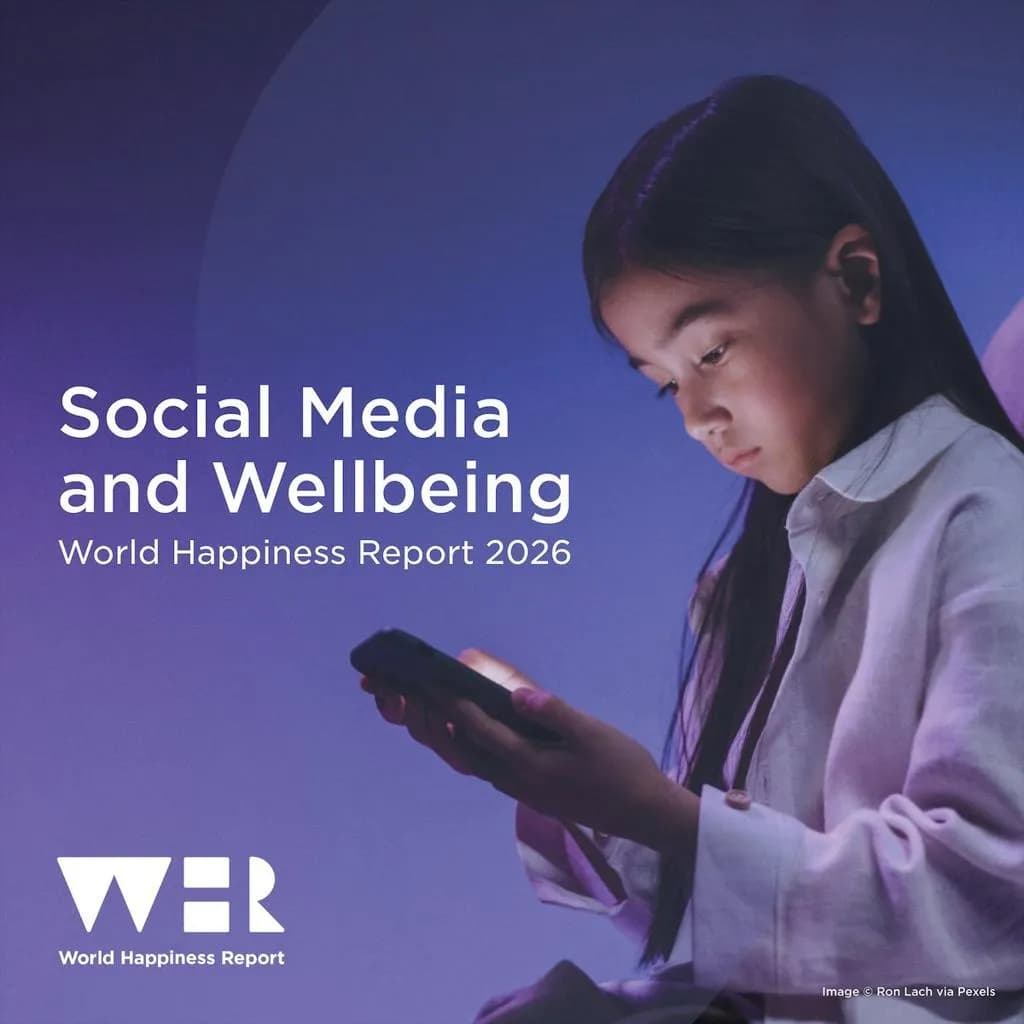
The question has gained particular attention in Europe and other high-income regions. The 2026 World Happiness Report notes that young people's happiness has declined over the past 15 years in North America and Western Europe, during the same period in which social media use expanded dramatically. However, the report also stresses that the relationship is not straightforward and varies considerably across countries and groups.
The Relationship Is More Complicated Than Screen Time
One of the most important developments in recent psychological research is the move away from measuring social media only by the number of hours people spend online.
The European Commission's Joint Research Centre published a 2026 review of research on social media use and youth mental health and well-being. Its overall conclusion was that existing evidence does not demonstrate one uniform relationship between social media use and poorer mental health among all young people.
Studies based simply on frequency or time spent online often find relatively small and inconsistent associations. Researchers have also identified the possibility of reverse or bidirectional relationships: social media may influence well-being, but young people's existing emotional states may also influence how and why they use social media.
This distinction is important. A young person experiencing loneliness, anxiety or low mood may turn to social media more frequently. In such a case, high social media use may partly reflect an existing difficulty rather than being its sole cause.
What Happens When Use Becomes Excessive?
Although ordinary social media use does not produce the same outcome for everyone, research becomes more consistent when the focus shifts toward problematic or very intensive use.
The 2026 World Happiness Report examined problematic social media use among adolescents across 43 countries. It found a consistent association between problematic use and lower well-being, including more psychological complaints and lower evaluations of life. The relationship was particularly pronounced in some regions, including Central and Eastern Europe and Anglo-Celtic countries.
The distinction between ordinary and problematic use therefore matters psychologically.
Using a platform to communicate with friends is not equivalent to repeatedly checking feeds despite wanting to stop, allowing online activity to interfere with sleep or daily responsibilities, or relying heavily on social media for emotional regulation.
The psychological consequences may depend not only on how much people use social media, but also on why and how they use it.
Social Media and Loneliness
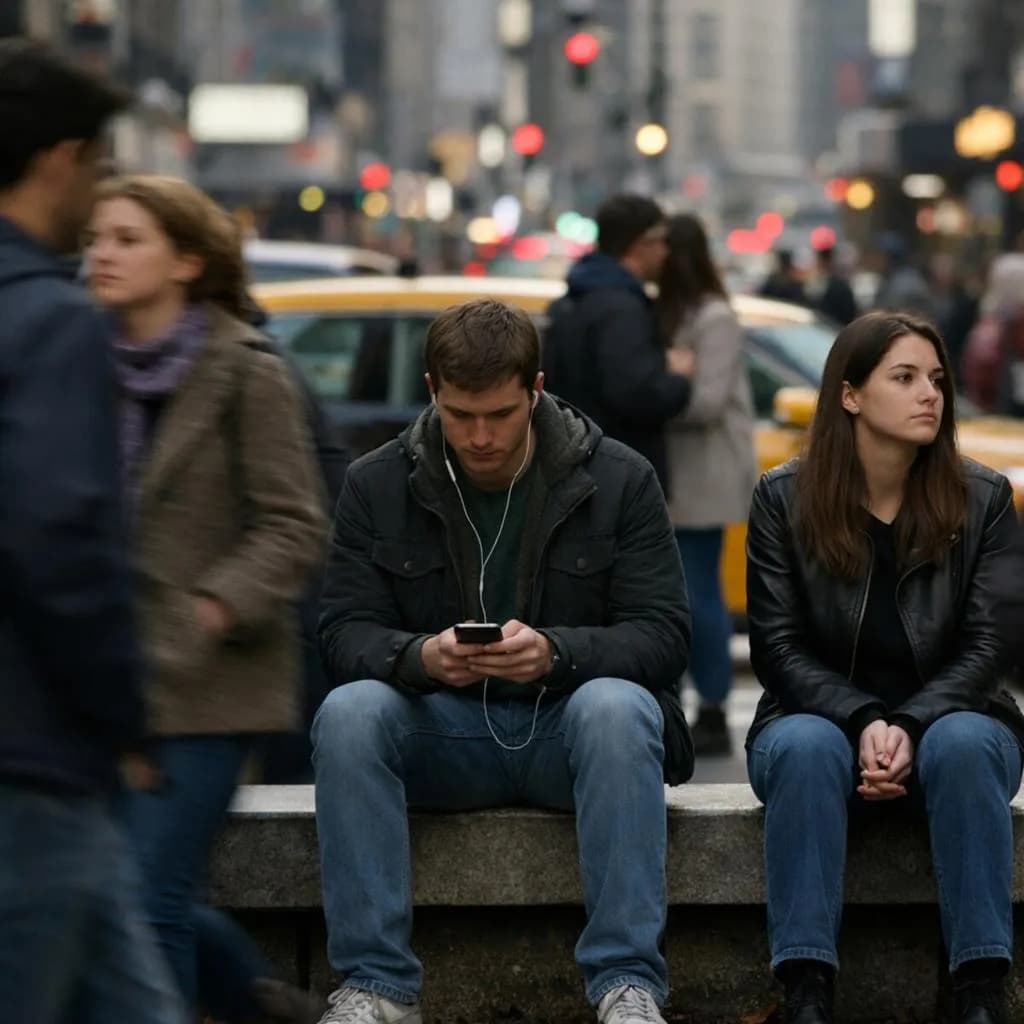
European research also provides evidence connecting intensive social networking use with loneliness.
A 2026 study using data from the EU-wide 2022 Loneliness Survey examined social media use, loneliness and emotional distress among young people. The researchers reported a positive association between intensive social networking use and both loneliness and emotional distress, while excessive use of messaging tools showed a much more limited relationship.
This difference is psychologically significant.
Not every form of digital communication serves the same social function. Messaging a close friend may reinforce an existing relationship, while repeatedly consuming social media content without meaningful interaction may provide a very different experience.
This suggests that the psychological value of digital communication may depend heavily on whether technology is being used to connect with people or primarily to consume content.
Why Young Women May Be Particularly Vulnerable
Gender differences have also become an important part of the discussion.
The 2026 World Happiness Report identifies particularly concerning patterns among adolescent girls in countries where youth well-being has declined. Heavy social media use appears to be associated with lower well-being among young people in Western Europe and English-speaking countries, with particularly strong concerns regarding girls.
Researchers have proposed several possible explanations, including social comparison, appearance-related pressures, cyberbullying and differences in how girls and boys use digital platforms. However, these mechanisms should not be treated as universally established explanations. The European Commission's review emphasizes that relationships between social media and youth well-being remain complex and can vary by individual and context.
Happiness Depends on More Than Social Media
An important finding from the 2026 World Happiness Report is that social relationships and a sense of belonging are associated with substantial differences in how people evaluate their lives.
Interestingly, the report found that young people using social media for less than one hour per day reported particularly high levels of well-being in one analysis. Their well-being was even higher than that of young people who reported no social media use. This finding illustrates why simply arguing that “less social media is always better” is inadequate.
The psychological question is therefore not simply whether young people should use social media.
It is whether their digital lives complement or replace meaningful social relationships.
A young person who uses social media to maintain friendships, participate in communities or express creativity may experience it differently from someone who spends hours passively scrolling, comparing themselves with others or seeking constant social approval.
A Changing Understanding of Digital Well-Being
The growing body of research is changing how psychologists and policymakers approach digital well-being.
Rather than treating social media as either completely harmful or completely beneficial, researchers increasingly examine patterns of use, individual differences and social context.
This approach is particularly important because social media is now embedded in ordinary social life. Completely separating young people from digital environments is neither realistic nor necessarily desirable. The more relevant objective is to understand which forms of digital engagement support well-being and which patterns may contribute to psychological difficulties.
The European Commission's Joint Research Centre is therefore examining social media not only in relation to mental health but also to young people's well-being and academic performance, using interdisciplinary research that combines psychology, education and policy perspectives.
The Psychology of Digital Connection
The central lesson from recent research is that social media cannot be understood through screen time alone.
Young people's psychological well-being emerges from a combination of social relationships, personal circumstances, offline environments and digital experiences. Social media can strengthen existing relationships, provide communities and facilitate communication, but intensive or problematic use can also be associated with loneliness and poorer well-being.
For psychology, the challenge is therefore moving beyond a simple question of whether social media is “good” or “bad.”
The more important question is what kind of digital experience produces what kind of psychological outcome, for whom, and under which circumstances.
As social media becomes increasingly integrated into everyday life, answering that question may be more useful than focusing on screen time alone.
Ipek Tuncer
M.A. in International Relations
Follow EUReflect
See more of our reporting on Google
Mark EUReflect as a preferred source and our stories are ranked higher for you in Top Stories, Discover and Google News — and carry a “preferred” badge when they are cited in AI results.
Add EUReflect as a preferred source