Singapore’s Throughcare Model: Rethinking Rehabilitation Beyond Prison
Singapore’s throughcare model connects prison rehabilitation with post-release support, focusing on reintegration, desistance and reducing re-offending.
Rehabilitation as a Continuous Journey from Prison to Society
Singapore is increasingly framing offender rehabilitation not as a process confined to prison, but as a continuous journey extending into the community. At the centre of this approach is the Singapore Prison Service’s (SPS) “throughcare” model, which connects rehabilitation efforts during incarceration with structured support after release.
According to the SPS, its rehabilitation and reintegration approach is based on continuous and coordinated efforts to address the risks and needs of inmates while they are in prison and to carry these efforts forward after their release. The model divides the rehabilitation journey into two interconnected phases: “incarе”, referring to the period in prison, and “aftercare”, which begins in the community.
The approach reflects a broader shift in correctional policy: successful rehabilitation is increasingly measured not simply by an individual's behaviour inside prison, but by their ability to build a stable, law-abiding life after returning to society.
From Correction to Reintegration
Singapore’s model places the individual at the centre of the rehabilitation process. SPS describes inmates as responsible and motivated individuals who are encouraged to take ownership of their lives and develop a pro-social identity.
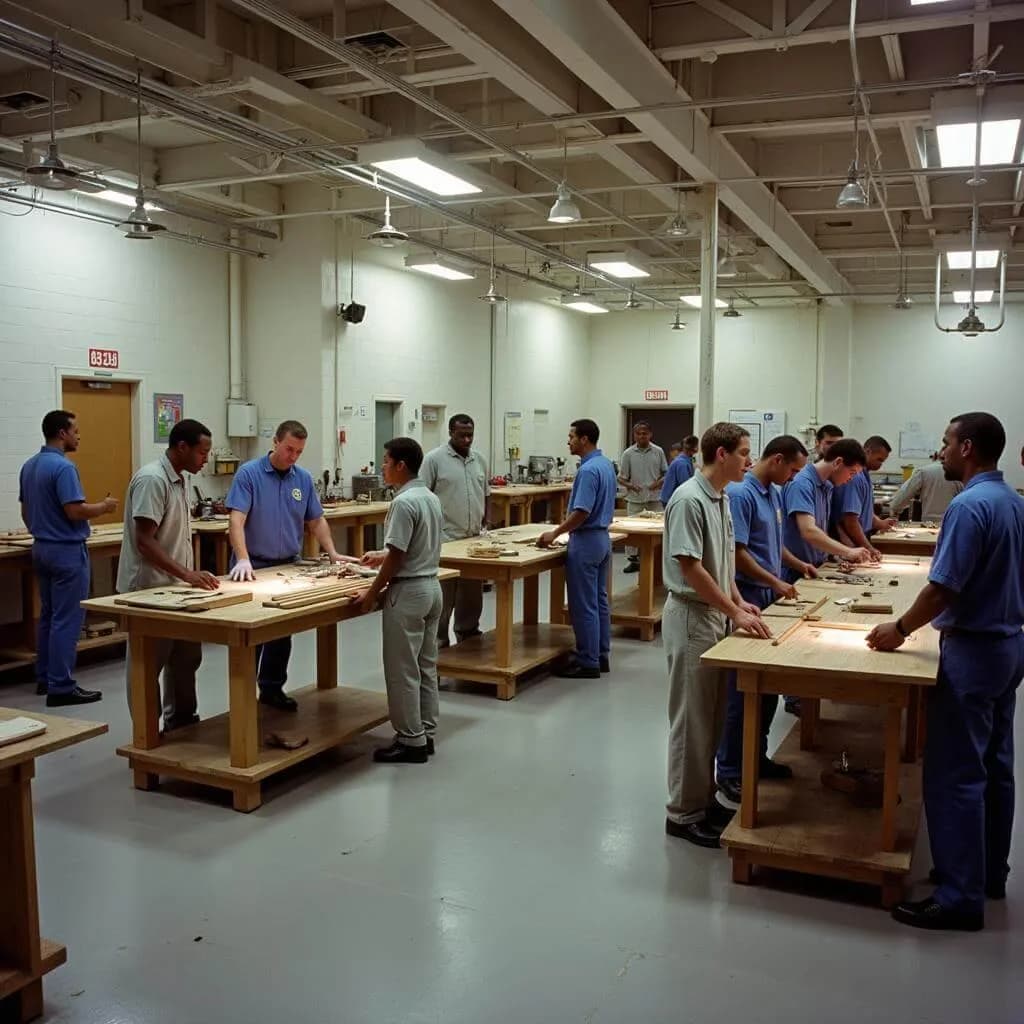
This is supported through a combination of psychology-based correctional programmes, family programmes, employment opportunities, vocational training and education. Rather than relying on a single intervention, the system attempts to address several dimensions of an individual's life that may influence their ability to desist from crime.
This approach is particularly important because reintegration can be undermined by problems that extend beyond the criminal justice system. Employment, family relationships, social networks, education and community acceptance can all affect an individual's ability to establish a new life after imprisonment.
Singapore therefore treats rehabilitation as a process involving not only correctional institutions, but also families, employers, volunteers and community organisations.
Theoretical Framework: Risk, Needs and Responsivity
One of the most significant features of Singapore's approach is its explicit reference to the Risk-Needs-Responsivity (RNR) Model.
The RNR framework argues that effective correctional interventions should be proportionate to an individual's level of risk, should target factors associated with criminal behaviour, and should be delivered in ways that respond to the individual's characteristics and circumstances.
Singapore's Prison Service states that its rehabilitation approach is informed by RNR as well as strength-based and desistance theories. The objective is to address offending risks and rehabilitation needs while using social and community networks to support reintegration and prevent re-offending.
This is significant because it demonstrates that Singapore's rehabilitation policy is not simply based on the idea of providing assistance to prisoners. It is also structured around an evidence-informed understanding of why offending occurs and what conditions may support behavioural change.
Desistance and the Development of a New Identity
The second major theoretical dimension is desistance theory.
Desistance refers to the process through which individuals reduce and ultimately cease involvement in crime. Unlike a purely intervention-based understanding of rehabilitation, desistance theory places greater emphasis on long-term personal change, identity, relationships and social circumstances.
Singapore's approach reflects this perspective by encouraging inmates to take responsibility for their lives and develop a pro-social identity. The role of community networks is also important because successful desistance often requires individuals to establish meaningful relationships and legitimate roles outside the criminal justice system.
The Singapore Prison Service has also described its wider rehabilitation strategy as aiming to promote longer-term desistance from crime and to strengthen the support ecosystem surrounding inmates and ex-offenders.
In this sense, rehabilitation is not understood simply as changing an individual's behaviour. It also involves creating the social conditions in which that change can be sustained.
The Community as Part of the Correctional System
A distinctive feature of Singapore's model is the importance assigned to community participation.
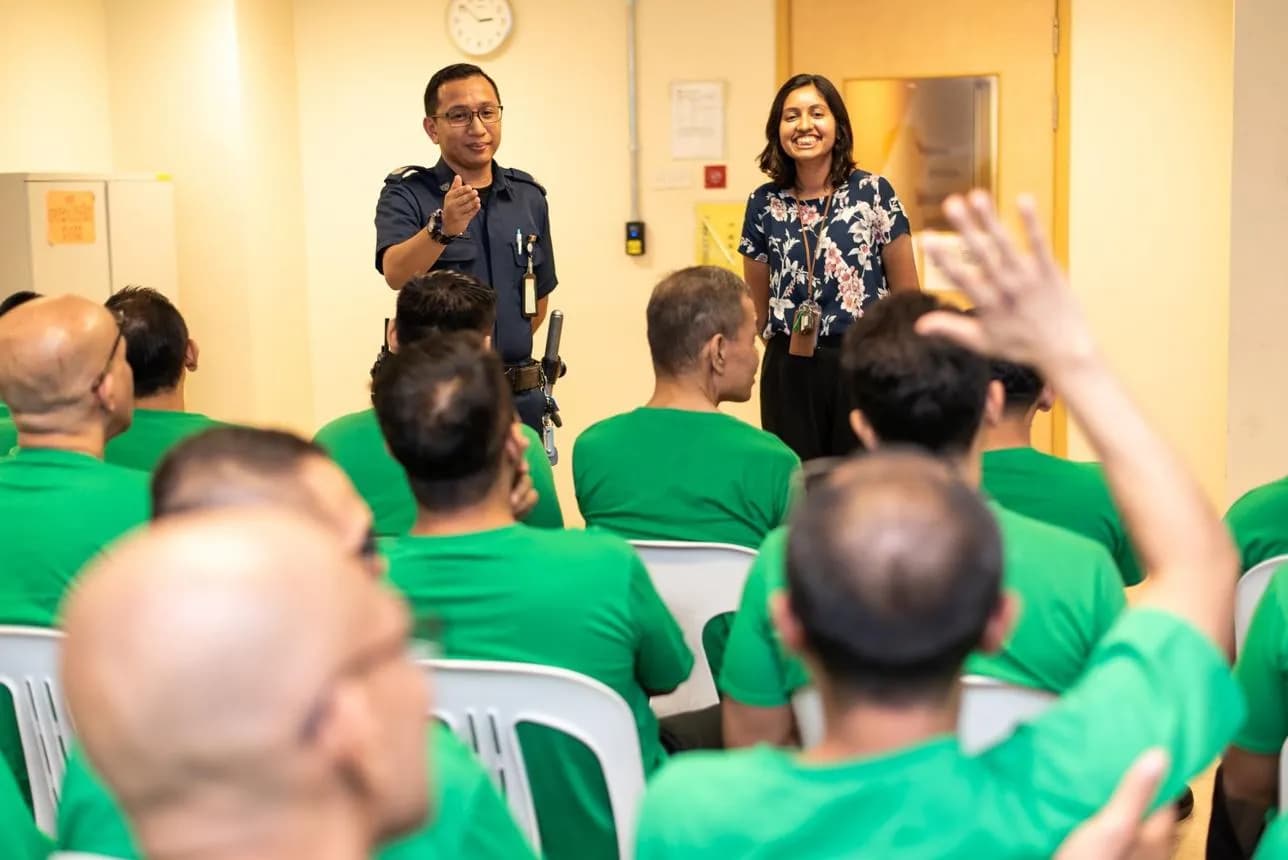
The SPS works with families, employers, volunteers, community partners and other organisations as part of the rehabilitation and reintegration process. Its broader strategy explicitly seeks to strengthen social and community capital and create an ecosystem of support for ex-offenders.
The CARE Network illustrates this institutional approach. Established in 2000, the network has developed into a coordinating platform for aftercare and rehabilitation services, bringing together government organisations and social-service agencies. By 2025, it had expanded to ten core members and more than 170 community partners.
The network's development also illustrates the changing understanding of rehabilitation: the responsibility for preventing re-offending is increasingly distributed across institutions and communities rather than being placed exclusively on prisons.
Rehabilitation and Recidivism
Singapore's approach is also closely connected to the objective of reducing recidivism.
The CARE Network reported that Singapore's two-year recidivism rate declined from 40.1% among the 2000 release cohort to 21.3% among the 2022 release cohort. The network attributes part of its continuing work to strengthening throughcare support and developing partnerships across the community.
These figures do not, by themselves, establish that the throughcare model caused the decline. However, they illustrate the policy rationale behind Singapore's approach: rehabilitation, community support and reintegration are treated as interconnected mechanisms for reducing repeated offending.
A Broader Shift in Correctional Policy
Singapore's throughcare model reflects a broader transformation in the philosophy of corrections.
The traditional prison model tends to draw a sharp institutional boundary between imprisonment and freedom. Throughcare attempts to make that boundary less abrupt. Rehabilitation begins inside prison but does not end at the prison gate.
This produces a three-stage policy logic:
Risk and needs assessment → Rehabilitation and behavioural change → Social reintegration and desistance
The model therefore combines institutional intervention with community-based support. Its underlying assumption is that preventing re-offending requires more than punishment: individuals also need the skills, relationships, opportunities and social environment necessary to sustain a different way of life.
Singapore's experience consequently offers an important case for the international debate over the future of rehabilitation. Its model demonstrates how correctional policy can combine risk-based intervention with a desistance-oriented emphasis on personal responsibility, identity and community support.
Conclusion
Singapore's throughcare model represents a shift from viewing rehabilitation as a programme delivered inside prison to understanding it as a continuous process extending from incarceration to community life.
By explicitly incorporating the Risk-Needs-Responsivity Model, strength-based approaches and desistance theory, the Singapore Prison Service has developed a framework that connects individual behavioural change with broader social reintegration.
The central lesson is that rehabilitation does not end when a sentence ends. For reintegration to be sustainable, the transition from prison to society must be supported by families, employers, community organisations and public institutions.
In Singapore's approach, therefore, rehabilitation is not simply about preparing prisoners for release; it is about creating the conditions under which they can successfully remain outside prison.
Ipek Tuncer
M.A. in International Relations
Follow EUReflect
See more of our reporting on Google
Mark EUReflect as a preferred source and our stories are ranked higher for you in Top Stories, Discover and Google News — and carry a “preferred” badge when they are cited in AI results.
Add EUReflect as a preferred source