The IAEA Showdown
The U.S. has drafted an IAEA resolution demanding Iran disclose its nuclear materials and bombed site status. With 440kg of enriched uranium unaccounted for, Washington pushes for transparency amid fragile ceasefire talks, facing opposition from Russia and China at the 35-nation board.
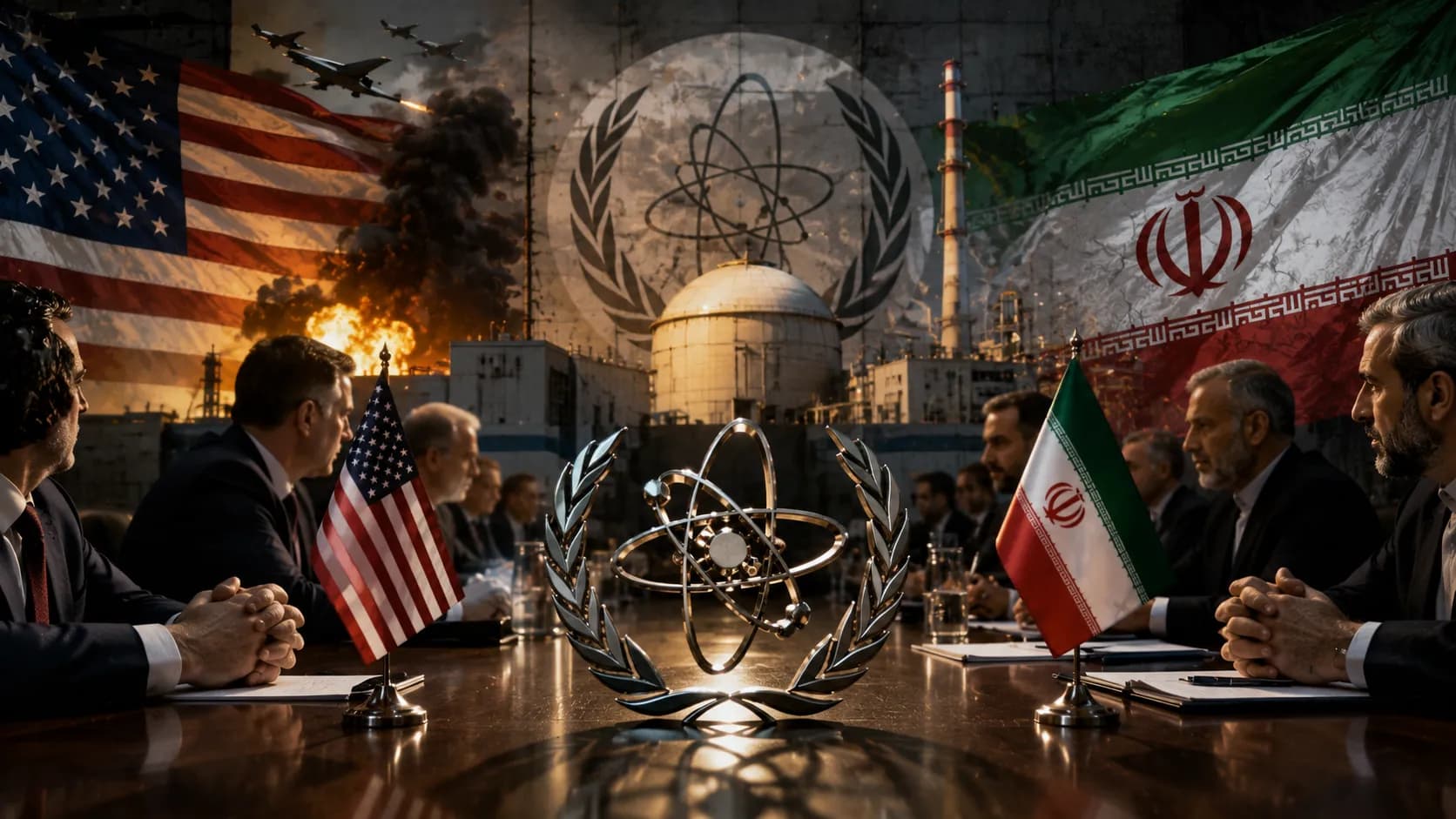
The United States has drafted a resolution for consideration by the International Atomic Energy Agency’s Board of Governors that would formally demand Iran provide a precise and comprehensive account of its nuclear materials, enriched uranium stockpiles, and the current status of nuclear facilities damaged or destroyed in Israeli airstrikes last year. The draft text, seen by Reuters on Sunday ahead of the IAEA’s quarterly board meeting this week, represents a significant escalation in diplomatic pressure on Tehran at a moment of acute geopolitical sensitivity — with ongoing U.S.-Iran ceasefire talks hanging in the balance and the broader architecture of nuclear non-proliferation under unprecedented strain.
The resolution, circulated by Washington to other members of the 35-nation board, calls on Iran to fulfil obligations described in the text as “essential and urgent,” demanding full transparency on nuclear material accounting and unrestricted access for IAEA inspectors to verify that information. The initiative comes against a backdrop of extraordinary complexity: Iran’s principal uranium enrichment facilities were struck by Israeli forces in June 2025, but a substantial portion of Iran’s enriched uranium is believed to have survived those attacks, and the IAEA has been unable to verify the precise quantities or location of remaining stocks since the bombing commenced.
The move carries considerable risk. Iran has historically responded to IAEA board resolutions by accelerating its nuclear activities or curtailing its cooperation with the agency — responses that could fatally undermine the delicate diplomatic process currently underway between Washington and Tehran. The timing of the U.S. initiative has therefore drawn scrutiny from allies and adversaries alike, raising questions about whether the resolution reflects a coherent strategy or risks trading long-term non-proliferation objectives for short-term political posturing.
The Draft Resolution: Demands, Scope, and Diplomatic Stakes
The text of the U.S. draft resolution is precise and uncompromising in its demands. Iran must, it states, “provide the Agency with precise information on nuclear material accountancy and safeguarded nuclear facilities in Iran” and grant it “all access it requires to verify this information.” The language makes clear that these are not aspirational requests but legal obligations, described in the draft as “essential and urgent” measures to be taken “without delay.” The inclusion of the phrase “without delay” echoes the language of a previous IAEA board resolution adopted in November, which made identical demands that Tehran has, to date, not fulfilled.
Notably, the draft stops short of referring Iran to the United Nations Security Council — a more severe step that some diplomats had indicated was under consideration and that would have represented a dramatic escalation. A Security Council referral would have followed from the June 2025 resolution in which the IAEA board declared Iran in breach of its nuclear non-proliferation obligations — a determination that came just one day before Israel launched its initial airstrikes against Iranian nuclear installations. The decision not to include a Security Council referral in the current draft may reflect a calculated attempt to maintain pressure on Tehran while leaving diplomatic space for the ongoing ceasefire and nuclear negotiations to proceed.
Previous resolutions submitted to the IAEA board by the United States, the United Kingdom, France, and Germany — the so-called E3 partners — have passed by substantial margins, reflecting broad international concern about Iran’s nuclear trajectory. However, the current geopolitical environment is considerably more fraught than at any previous point in the IAEA’s engagement with the Iranian nuclear file. The combination of military strikes, surviving uranium stocks of uncertain quantity, a contested ceasefire, and active diplomatic negotiations creates a uniquely volatile context in which the consequences of a miscalculated diplomatic move could be severe. The U.S. mission to the IAEA declined to comment on the draft or on Washington’s lobbying efforts among board members.
Iran’s Nuclear Stockpile: What Survived and Why It Matters
Central to the urgency driving the U.S. resolution is the unresolved question of what remains of Iran’s enriched uranium stockpile following the Israeli military campaign that began in June 2025. While the strikes are assessed to have destroyed or severely damaged Iran’s principal uranium enrichment facilities — most notably the hardened underground complexes at Natanz and Fordow — the bulk of Iran’s enriched uranium is believed to have survived. This is because enriched uranium, unlike the centrifuge infrastructure used to produce it, is stored separately and in dispersed locations, many of which were not targeted or were not successfully neutralised in the strikes.
The scale of the surviving stockpile is a matter of profound strategic concern. At the time Israel launched its initial attacks, the IAEA estimated that Iran held approximately 440.9 kilograms of uranium enriched to up to 60 percent purity — a level that is technically classified as highly enriched uranium and that stands only a short technical step away from the approximately 90 percent enrichment level required for weapons-grade material. According to established IAEA yardsticks, this quantity, if further enriched, would be sufficient to produce material for as many as ten nuclear weapons. The precise current status of this stockpile — its location, its volume, and whether any of it has been moved, processed, or concealed — is unknown to the international community, because IAEA access to Iran’s sites was effectively severed when the bombing began.
U.S. President Donald Trump has made the removal of Iran’s highly enriched uranium a stated objective of American nuclear policy toward Tehran. In public statements, Trump has been explicit that he considers the elimination of Iran’s weapons-capable uranium stocks a non-negotiable condition for any durable resolution of the nuclear dispute. This position has shaped the content of the draft resolution, which frames full transparency on nuclear material accounting not merely as a legal obligation under the Nuclear Non-Proliferation Treaty but as a precondition for meaningful progress in the broader diplomatic process. The gap between that demand and Iran’s current posture of non-disclosure represents one of the most dangerous unresolved issues in contemporary international security.
Russia, China, and the Fracturing of International Consensus
The U.S. resolution faces certain opposition from Russia and China, both of which hold seats on the IAEA Board of Governors and have consistently voted against recent resolutions targeting Iran. Russia’s ambassador to the IAEA made Moscow’s position unambiguously clear in remarks to reporters on Friday, warning that adopting the resolution would serve only to antagonise Tehran and further undermine the cooperative framework that once governed IAEA engagement with Iran’s nuclear programme. “It was exactly the United States who undermined this cooperation,” the ambassador stated, in a pointed reference to the fact that the IAEA had maintained access to Iran’s nuclear sites until the Israeli bombing campaign — conducted with what Tehran and Moscow characterise as at minimum tacit American approval — brought that access to an abrupt end.
The Russian critique cuts to a genuine tension at the heart of the current U.S. approach. Washington is simultaneously conducting diplomatic negotiations with Tehran aimed at extending the ceasefire and establishing the conditions for broader talks — including on the nuclear file — while also pursuing a resolution at the IAEA that Iran is virtually certain to view as a hostile act. Iran has consistently retaliated against IAEA board resolutions by escalating its nuclear activities, reducing the agency’s access, or both. If Tehran responds to the current resolution in similar fashion, the consequences for the ceasefire talks and for international visibility into Iran’s nuclear programme could be severe.
China, for its part, has aligned with Russia in opposing the resolution, reflecting Beijing’s broader strategic interest in maintaining Iran as a partner and in resisting what it characterises as the weaponisation of multilateral institutions by Western powers. The opposition of both permanent members of the UN Security Council to the resolution also has practical implications: it ensures that even if the IAEA board adopts the resolution by a wide margin, as previous Iran resolutions have been, any attempt to escalate the matter to the Security Council would face near-certain vetoes from Moscow and Beijing. This structural reality places real limits on the coercive leverage available to the United States and its European partners, and underscores the extent to which the international non-proliferation architecture has been strained by the events of the past year.
Conclusion: Diplomacy on a Knife’s Edge
The U.S. draft resolution at the IAEA encapsulates the profound contradictions of Washington’s current Iran policy. On one hand, the Trump administration is engaged in active diplomatic negotiations with Tehran, seeking to consolidate a ceasefire and lay the groundwork for a comprehensive nuclear agreement that would prevent Iran from acquiring nuclear weapons. On the other hand, it is simultaneously pursuing a resolution at the IAEA that Iran regards as confrontational, and that risks provoking exactly the kind of retaliatory escalation that would render meaningful diplomacy impossible.
The unresolved question of Iran’s surviving uranium stockpile adds a layer of urgency that neither Washington nor the international community can afford to ignore. With enough highly enriched uranium potentially remaining for up to ten nuclear devices, and with IAEA inspectors currently unable to verify the location or status of those stocks, the gap in international knowledge about Iran’s nuclear capabilities represents a serious and growing proliferation risk. Resolving that uncertainty requires Iranian cooperation — cooperation that a confrontational resolution may be precisely the wrong instrument to secure.
As the IAEA board convenes for its quarterly meeting this week, the decisions taken in Vienna will carry consequences that extend far beyond the walls of the agency’s headquarters. They will shape the trajectory of U.S.-Iran relations, the credibility of the international non-proliferation regime, and the prospects for a diplomatic resolution to one of the most dangerous nuclear standoffs of the modern era. The margin for error is vanishingly small.
Botakoz Unbayeva
Contributing writer at EUReflect.
Follow EUReflect
See more of our reporting on Google
Mark EUReflect as a preferred source and our stories are ranked higher for you in Top Stories, Discover and Google News — and carry a “preferred” badge when they are cited in AI results.
Add EUReflect as a preferred source