The Unjust Reality of Global Climate Finance
The climate crisis is no longer only environmental but economic and political. Despite the goals of the Paris Agreement, the financing gap continues to widen. While major powers compete, developing countries struggle with debt and inequality; fair finance and cooperation are essential.
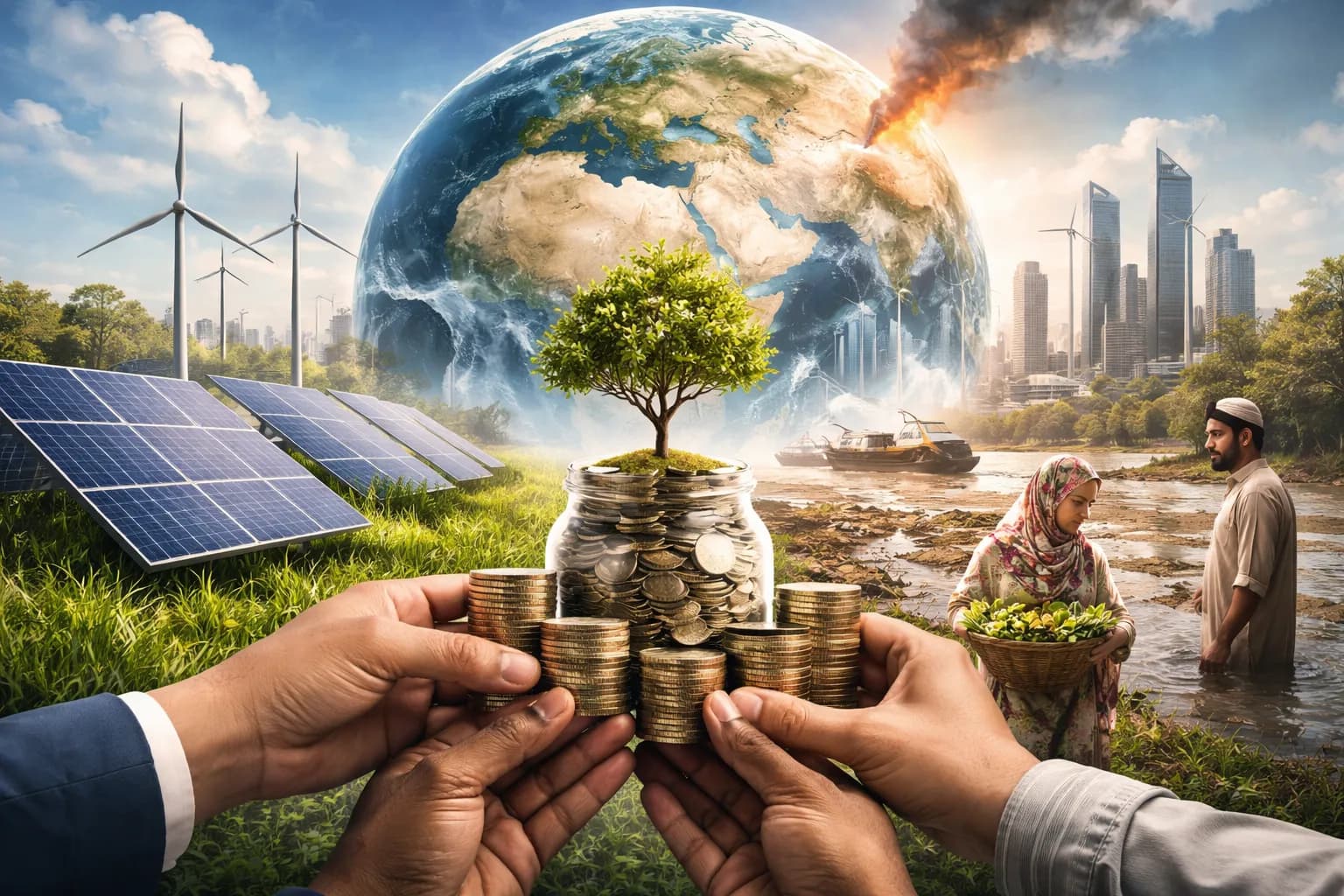
The climate crisis has evolved beyond an environmental concern into the defining economic and political challenge of our era. By 2026, climate finance has become essential not just for protecting ecosystems, but for global economic stability, technological advancement, and political security. International organizations continue to broker agreements, yet a troubling gap persists between ambitious promises and actual delivery on the ground. This disconnect hits developing countries hardest, nations that contributed least to historical emissions but face the most severe consequences. The resulting ethical and financial tensions between wealthy and developing nations threaten to undermine the entire global climate effort.
The Paris Agreement established a clear target: keep global temperature rise below two degrees Celsius. Despite this commitment, scientific data indicates the world remains on a dangerous trajectory. Current climate finance investment has surpassed two trillion dollars annually, an impressive figure that nonetheless falls dramatically short of actual needs. Experts estimate the world requires between nine and ten trillion dollars yearly by 2030 to effectively combat climate change. This staggering gap reveals that global financial cooperation remains fundamentally inadequate and poorly coordinated.
Wealthy nations dominate climate technology development and financial resources, but their approaches differ significantly. The United States favors private investment and market-based solutions, trusting corporations and investors to drive the green transition. China, meanwhile, employs state-directed investment to dominate solar energy, battery production, and electric vehicle manufacturing. This has sparked intense competition between the world's largest economies for supremacy in emerging green technology markets.
Unfortunately, this competition frequently undermines global cooperation. Trade disputes and technology restrictions have slowed climate progress, as nations prioritize economic advantage over collective action. Climate change is now framed as a national security concern in many capitals, shifting the conversation from shared responsibility to strategic competition. When countries view climate technology through a lens of geopolitical rivalry, collaboration suffers and the urgent pace of action slows.
Perhaps the most troubling aspect of current climate finance is the stark inequality between rich and poor nations. Institutions like the World Bank and International Monetary Fund attempt to channel resources, yet countless developing countries cannot access affordable financing for essential climate projects. Nations already burdened by heavy debt face impossible choices when attempting to adapt to rising temperatures, stronger storms, and shifting agricultural conditions. The financial system designed to help them instead traps them in cycles of borrowing that deepen their vulnerability.
Pakistan provides a painful example of this injustice. The country regularly experiences devastating floods, prolonged droughts, and intense heatwaves that destroy lives, displace communities, and cripple agricultural production. These climate disasters inflict massive economic damage, yet international climate finance arrives slowly, if at all, tangled in bureaucratic requirements and complex application processes. For ordinary Pakistanis facing rising floodwaters or failed harvests, distant promises of financial support offer little comfort.
Private investment in climate projects continues growing, particularly in European markets where green bonds and sustainable investments attract considerable capital. This trend carries promise, but investors naturally prefer stable, developed markets over riskier developing countries. Capital flows toward safety and profit, not toward the communities most desperately needing support. This dynamic reinforces global inequality, channeling resources to wealthy nations while leaving vulnerable populations exposed to escalating climate threats.
Energy transition presents another layer of complexity. European and East Asian countries rapidly expand renewable energy production, backed by strict environmental regulations and supportive policies. The European Union leads with ambitious climate laws that push industries toward cleaner operations. Yet developing nations face a fundamentally different reality. Many depend heavily on fossil fuels for economic growth and struggle to envision development pathways that skip the cheap energy that powered industrialization elsewhere. Without substantial financial and technological assistance, asking these countries to abandon fossil fuels seems both impractical and unjust.
Emerging economic blocs like BRICS nations are exploring alternative financial mechanisms for climate investment. These efforts could reshape global economic power structures in coming decades, potentially creating parallel systems that bypass traditional Western-dominated institutions. Whether this development promotes healthy competition or further fragments global cooperation remains uncertain, but it signals growing dissatisfaction with existing arrangements.
Technology holds immense potential for climate protection. Artificial intelligence improves disaster prediction and response. Satellite monitoring tracks deforestation and emissions with unprecedented accuracy. Advanced climate modeling helps farmers adapt to changing conditions. These tools could transform how societies manage climate risk. Yet developing countries cannot afford expensive technologies, and without access, they fall further behind. The technological divide becomes another dimension of climate injustice.
Within countries, climate change amplifies existing inequalities. Rising temperatures, water shortages, and food price increases disproportionately affect poor communities with fewer resources to adapt. Climate migration has already begun and threatens to become a defining global challenge of coming decades. As agricultural regions become unlivable and coastal cities face rising seas, millions will move in search of safety and opportunity, testing social cohesion and political stability worldwide.
Building a climate-resilient future requires fundamental changes to current approaches. Wealthy nations must deliver genuine climate finance support, not recycled aid or high-interest loans disguised as assistance. Debt-for-climate swap programs offer creative solutions, allowing poor countries to reduce debt burdens while investing in environmental protection. Critical technologies should be shared with developing nations at accessible costs, treating innovation as a global public good rather than proprietary advantage.
Local communities deserve central roles in climate protection programs. People closest to the problems often understand solutions best, yet international funding rarely reaches them. Grassroots organizations, Indigenous groups, and local governments possess knowledge and relationships that outside experts cannot replicate. Supporting their work directly would improve effectiveness while respecting local leadership and priorities.
Global carbon pricing systems require standardization to prevent pollution simply migrating to jurisdictions with weak environmental rules. Without coordinated approaches, industries relocate rather than reform, shifting emissions without reducing them. A level playing field would encourage genuine reductions while protecting economies from unfair competition.
International climate agreements must become stronger and enforceable. Current arrangements rely on voluntary commitments without meaningful consequences for failure. Organizations charged with coordinating global response should gain authority to monitor compliance and ensure nations honor their pledges. Accountability transforms promises into action.
Climate finance ultimately determines whether humanity confronts this challenge successfully. Investment flows increase, yet inequality, political competition, and weak institutions block progress. Money exists. Technology exists. What remains lacking is political will, fair systems, and genuine cooperation. A sustainable future demands not just financial resources but transformed relationships between nations, grounded in shared responsibility and mutual respect. Without these foundations, even trillions of dollars will prove insufficient.
Uroosa Khan
Contributing writer at EUReflect.
Follow EUReflect
See more of our reporting on Google
Mark EUReflect as a preferred source and our stories are ranked higher for you in Top Stories, Discover and Google News — and carry a “preferred” badge when they are cited in AI results.
Add EUReflect as a preferred source