Türkiye’s KAAN Fighter and the U.S. License Dilemma
Türkiye’s ambitious national fighter project, KAAN, described domestically as a 100% indigenous fifth-generation multifunctional aircraft, faces a critical obstacle: the United States has refused to grant licenses for certain technologies used in its production. This development, highlighted by Foreign Minister Hakan Fidan, raises fundamental questions: Is KAAN truly a fully indigenous product, or is Türkiye still reliant on external suppliers? Does this situation indicate strategic tension between Ankara and Washington, or could it reflect a broader geopolitical maneuver targeting third countries? This article examines the roots of the licensing issue, explores the structural dependency embedded in the global defense supply chain, and evaluates Türkiye’s potential alternatives. The findings suggest that Türkiye stands at a strategic crossroads where decisions on technological independence will define its long-term military and political autonomy.
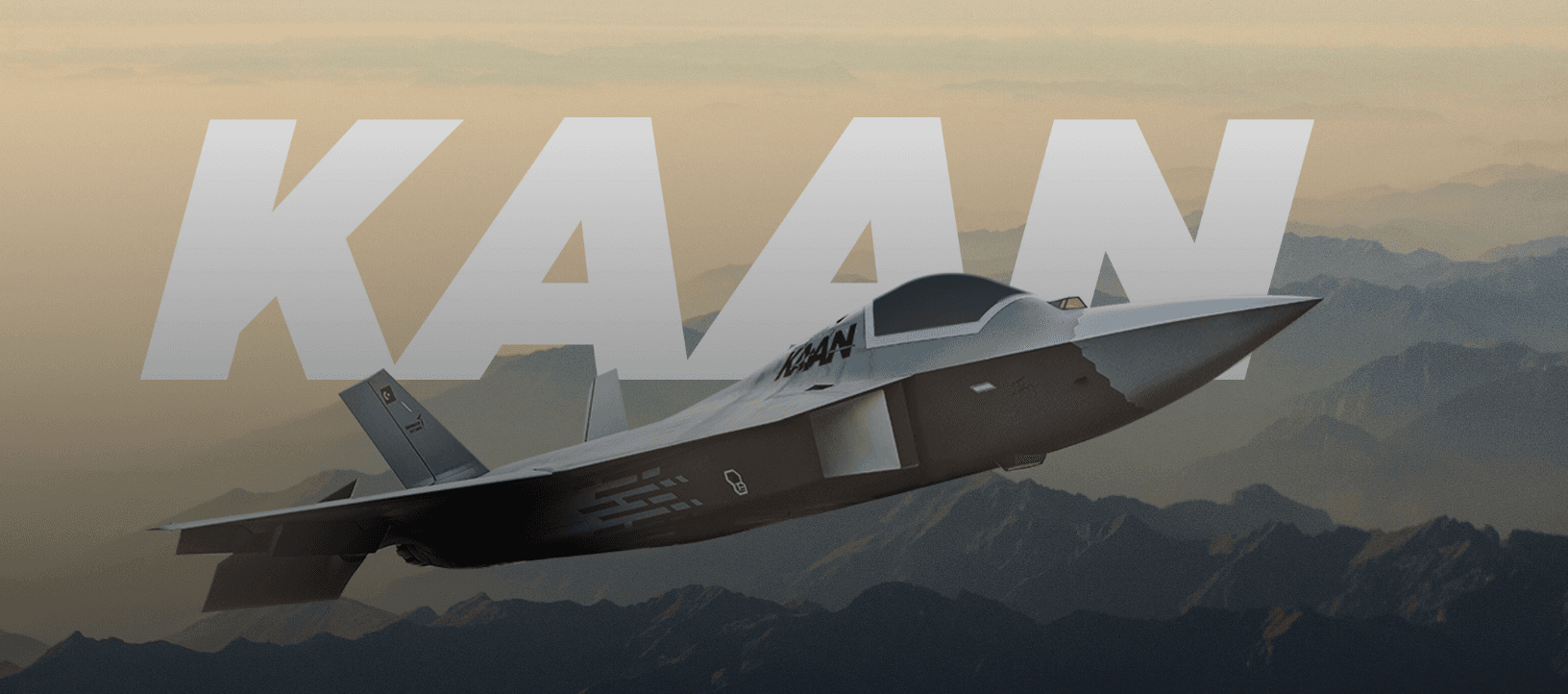
The announcement by Foreign Minister Hakan Fidan that the United States had denied licensing permissions for critical components of Türkiye’s national combat aircraft, KAAN, has triggered intense public and academic debate. Promoted as a symbol of technological sovereignty, KAAN is intended to represent Türkiye’s independent air power following its exclusion from the F-35 program. However, Washington’s licensing restrictions expose the limitations of Türkiye’s claim to full autonomy in defense manufacturing.
This study seeks to analyze the underlying causes of this dilemma, focusing on the intersection of defense technology, strategic dependency, and international politics.
Analysis
Why Does Türkiye Need U.S. Licenses?
KAAN cannot be classified as a genuine fifth-generation fighter without critical subsystems such as advanced engines, radar, and electronic warfare suites.
Many of these systems involve U.S.-owned patents, software codes, or subcomponent production rights.
Despite Türkiye’s drive for indigenous development, the global defense supply chain remains heavily dominated by U.S. technologies.
This dependency generates the paradox: why does Türkiye still require U.S. licensing if KAAN is promoted as a 100% national aircraft?
Roadmap of KAAN
Developed by Turkish Aerospace Industries (TUSAŞ), KAAN represents the most ambitious program in Türkiye’s defense sector.
The aircraft completed its maiden flight in 2024.
It will be equipped with national radar and electronic warfare systems.
Following Türkiye’s removal from the F-35 project, KAAN has become the symbol of an “independent air power” doctrine.
Yet U.S. licensing restrictions highlight Türkiye’s continuing dependence on foreign engine technologies. As a response, Ankara is intensifying efforts with Rolls-Royce (UK) and the domestic TRMotor initiative to build alternative propulsion solutions.
Diplomatic Dimensions
Fidan’s remarks reflect not only a defense industry challenge but also Türkiye’s broader quest for foreign policy independence. While officials emphasize that “the U.S. position cannot halt national projects but will instead accelerate indigenization”, the Turkish public has expressed skepticism, interpreting the crisis as evidence of hidden vulnerabilities in defense narratives.
Expert Assessments
Defense analysts warn that the licensing dispute may affect NATO’s internal dynamics. On one hand, Türkiye is negotiating the procurement of F-16V fighters from the U.S.; on the other hand, it views KAAN as a strategic insurance policy to secure its air superiority in the long term.
Strategic Alternatives: Russia and Asia
The licensing crisis leaves Ankara with two difficult choices:
To accept its dependency and maintain balanced relations with Washington.
Or to pursue alternative partnerships with Russia and Asian powers to achieve real independence.
Both options entail high costs: the former risks undermining Türkiye’s autonomy, while the latter risks escalating tensions within NATO.
Conclusion
The U.S. licensing restrictions place Türkiye at a strategic crossroads. KAAN’s success will not merely be a test of aerospace engineering but a determinant of Türkiye’s broader political and military sovereignty. Whether Ankara continues to rely on the U.S.-dominated defense ecosystem or shifts toward alternative partnerships, one truth remains: Türkiye’s long-term autonomy depends on its capacity to develop and master critical technologies domestically.
Botakoz Unbayeva
Contributing writer at EUReflect.
Follow EUReflect
See more of our reporting on Google
Mark EUReflect as a preferred source and our stories are ranked higher for you in Top Stories, Discover and Google News — and carry a “preferred” badge when they are cited in AI results.
Add EUReflect as a preferred source