Belgium, Arizona Budget Agreement: A Political Band-Aid, Not a Social Project
But who really benefits from this last-minute budget deal supposedly designed to save the government from collapse or from decisions taken at the very last minute without real reflection?
Bruxelles Korner, Kadir Duran
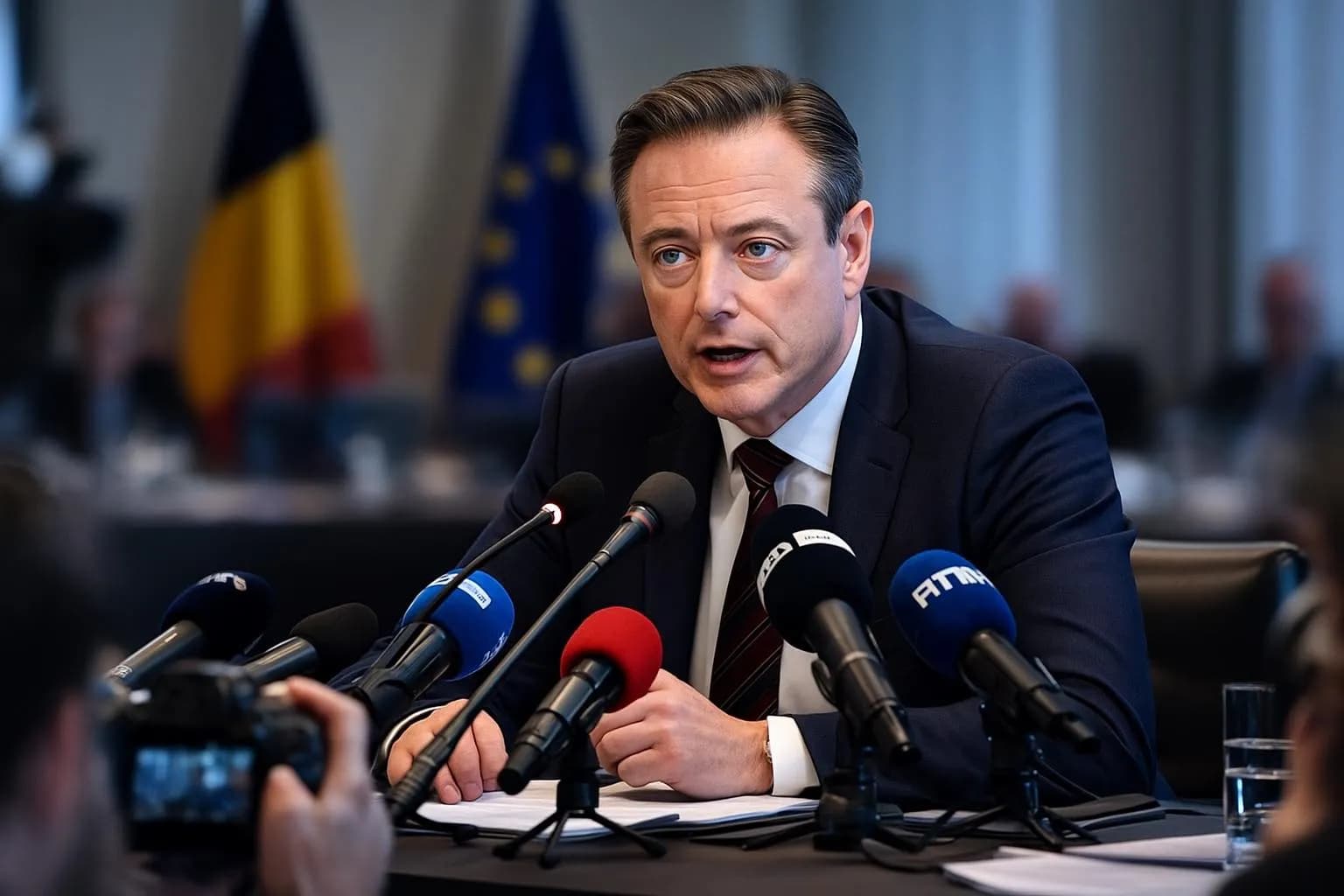
On Monday morning, the ministers presented the outcome of their long budget conclave.
“We discussed in order to meet the European norm by 2029,” explained Bart De Wever.
They claim to have “found” €9.2 billion for 2029 and €10 billion for 2030 financed 60% through spending cuts and 40% through new revenues.
But in reality, no: they did not “find” 10 billion. They barely generated 4.
The rest is political fiction more than actual funding.
The Prime Minister speaks of a “robust and solid budget, with a deficit reduction of €2.2 billion.”
But who really benefits from this last-minute budget deal supposedly designed to save the government from collapse or from decisions taken at the very last minute without real reflection?
In truth, whether rich or poor, everyone will feel the impact except perhaps the soda drinker, since VAT falls from 21% to 12%, a symbolic gesture that changes nothing fundamentally.
Spending cuts represent 60% of the effort, and new revenues the remaining 40%. But in practice, only those 40% were actually secured.
The government announces a crackdown on fraud and a plan to bring long-term sick people back to work: on paper, it sounds good; in reality, it is highly uncertain.
Higher taxes on dividends and new taxes on capital gains: will that really encourage investors?
Very little additional revenue for a massive gamble.
Did they truly think this through?
Targeting the poor and scraping the rich the same old tune.
Analysis: Who Really Gains from This Last-Minute Budget?
Let’s be honest: this agreement produces no winners.
It mainly limits political damage.
Its primary purpose is to save the Arizona government, not to build a coherent economic strategy.
1. Politically, the only real winner is… the government itself
This agreement acts as a firewall. It prevents:
• the collapse of the coalition,
• a total loss of credibility,
• immediate market backlash,
• humiliation in Brussels six months before EU oversight.
It is a survival agreement, hastily assembled, allowing each coalition partner to avoid blame for a historic budget failure.
The citizen gains nothing neither the poor nor the wealthy.
2. For households: everyone pays, but differently
Low-income households
• Higher gas excise duties → higher bills
• Very limited protections
• Weak indexation effect
• The only “gift”:
👉 soda VAT at 12%, anecdotal and incoherent
Middle-class households
The most affected:
• Higher energy costs
• VAT increases on multiple items
• Capped indexation
• Overall tax pressure unchanged
High-income households
• Doubled tax on securities accounts
• VVPR-bis: 15% → 18%
• New capital gains tax: symbolic
But fundamentally:
• no structural reform,
• no tax on large fortunes,
• optimisation channels remain intact.
Result:
➡️ The rich are not really affected,
➡️ the poor are not helped,
➡️ the middle class pays the bill.
3. For businesses: a half-wrapped gift
They gain:
• €800 million thanks to capped wage indexation
• A few targeted reductions
• Some pro-competitiveness signals
They lose:
• Higher withholding tax on capital income
• New capital gains tax
• No clear roadmap for 2026 and beyond
A contradictory message: relief on one side, new taxes on the other.
Not ideal for attracting investors.
4. The unrealistic bet: “bringing 100,000 long-term sick people back to work”
On paper, yes.
In reality:
• an overloaded medical system,
• insufficient support structures,
• unfinished reforms,
• slow administrative processes.
This is an accounting trick, not a social policy.
5. “We will crack down on fraud”: the classic illusion
377 extra inspectors, fine.
But without:
• digital modernisation,
• tax simplification,
• real international cooperation,
• tools to target complex tax structures,
… organised fraud will continue.
👉 As always, small-scale fraud will be targeted.
The weak are pursued, not the powerful.
6. Overall: a budget with no vision, just defensive politics
This agreement does not:
• stimulate the economy,
• attract investors,
• protect households,
• reform the state,
• modernise institutions,
• prepare for 2029.
It is a budget trying to survive,
not a budget building anything.
And
Rich or poor, everyone will pay.
Some slightly less, others much more.
But no one wins.
This budget is not a vision.
It is a political drip-feed compromise written at four in the morning to avoid the fall of a government…
that no longer truly governs.
Kadir Duran
Contributing writer at EUReflect.
Follow EUReflect
See more of our reporting on Google
Mark EUReflect as a preferred source and our stories are ranked higher for you in Top Stories, Discover and Google News — and carry a “preferred” badge when they are cited in AI results.
Add EUReflect as a preferred source