Crisis Commerce: How Emergencies Become Opportunities for Exploitation
In times of crisis, markets do not disappear—they transform. While some respond with solidarity, others exploit fear and scarcity for profit. This article explores how “crisis commerce” operates, why it emerges, and the ethical and economic consequences it leaves behind.
Article:
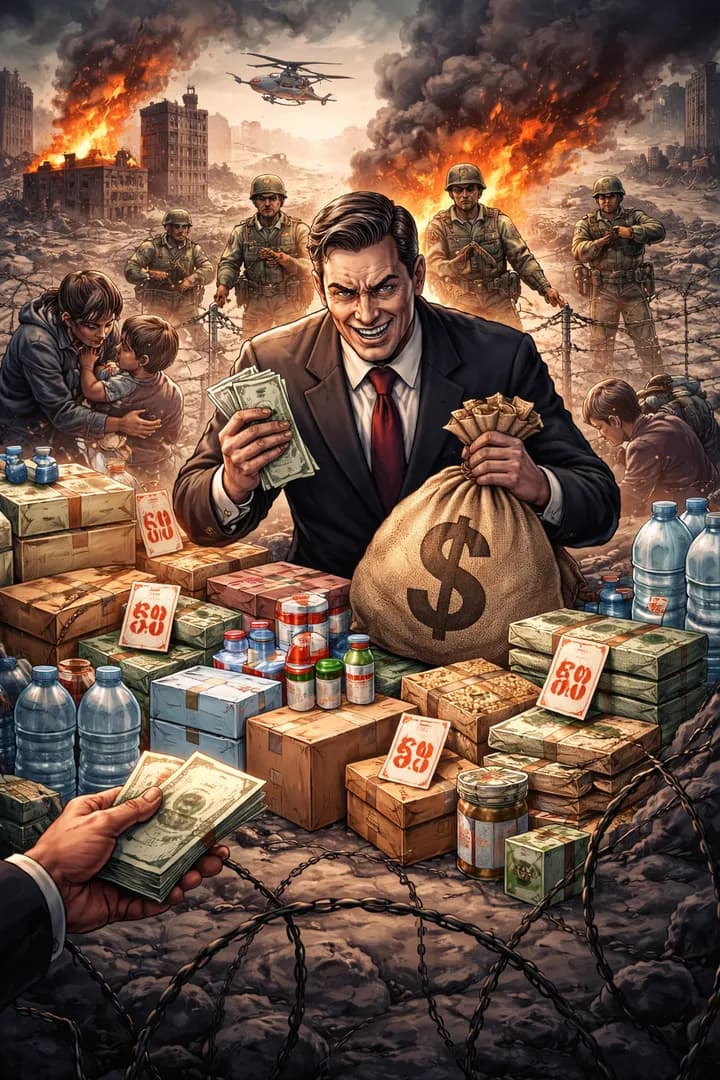
Crisis commerce refers to the exploitation of emergencies—such as wars, natural disasters, and pandemics—for financial gain. Unlike legitimate business adaptation during difficult times, this phenomenon is characterized by unethical and often illegal practices that take advantage of people’s urgent needs and limited options.
At its core, crisis commerce thrives on imbalance. When supply chains are disrupted and demand for essential goods surges, opportunities arise for individuals or groups to manipulate access to resources. This manipulation often manifests in several forms.
One of the most common practices is hoarding and price inflation. Essential goods—such as food, fuel, or medical supplies—are stockpiled and deliberately withheld from the market. Once scarcity intensifies, these goods are reintroduced at significantly higher prices, placing vulnerable populations under severe financial strain.
Another form involves the diversion of humanitarian aid. In regions affected by conflict or disaster, relief supplies intended for affected communities may be intercepted and redirected into black markets. This not only deprives those in need but also undermines trust in aid systems and institutions.
The black market itself plays a central role in crisis commerce. During emergencies, regulatory oversight often weakens, allowing counterfeit or substandard products to circulate. This is especially dangerous in the case of medicines or medical equipment, where poor quality can directly threaten lives.
Additionally, crises may be exploited for political or financial gain under the guise of charitable or humanitarian work. Organizations or individuals may present themselves as aid providers while using such activities as cover for money laundering, influence-building, or resource control.
Crisis commerce typically intensifies during periods of instability—armed conflicts, economic collapse, or widespread health emergencies. In such environments, governance structures are weakened, enforcement becomes inconsistent, and desperation increases, creating ideal conditions for exploitation.
However, it is important to distinguish between unethical crisis exploitation and legitimate market adaptation. Businesses adjusting prices due to increased costs or logistical challenges operate within a different framework than those intentionally creating scarcity or deceiving consumers.
The consequences of crisis commerce are profound. Beyond immediate economic harm, it deepens inequality, erodes public trust, and can prolong the duration of crises by disrupting fair distribution of resources. In extreme cases, it can even contribute to social unrest.
Addressing this issue requires a combination of strong regulatory frameworks, transparent supply chains, and public awareness. Governments, international organizations, and civil society all play critical roles in monitoring markets, ensuring accountability, and protecting vulnerable populations.
Ultimately, crises reveal both the resilience and the fragility of human systems. While some exploit these moments for personal gain, others work to uphold fairness and solidarity. The challenge lies in strengthening the latter while limiting opportunities for the former.
Abbas Al-Zuhairy
Contributing writer at EUReflect.
Follow EUReflect
See more of our reporting on Google
Mark EUReflect as a preferred source and our stories are ranked higher for you in Top Stories, Discover and Google News — and carry a “preferred” badge when they are cited in AI results.
Add EUReflect as a preferred source