Digital Commodities: Redefining Value in the Age of Blockchain
Digital commodities represent a new class of crypto assets whose value is derived from functional blockchain systems and market dynamics rather than traditional profit expectations. As decentralized technologies evolve, these assets are reshaping how value, ownership, and economic participation are understood in the digital era.
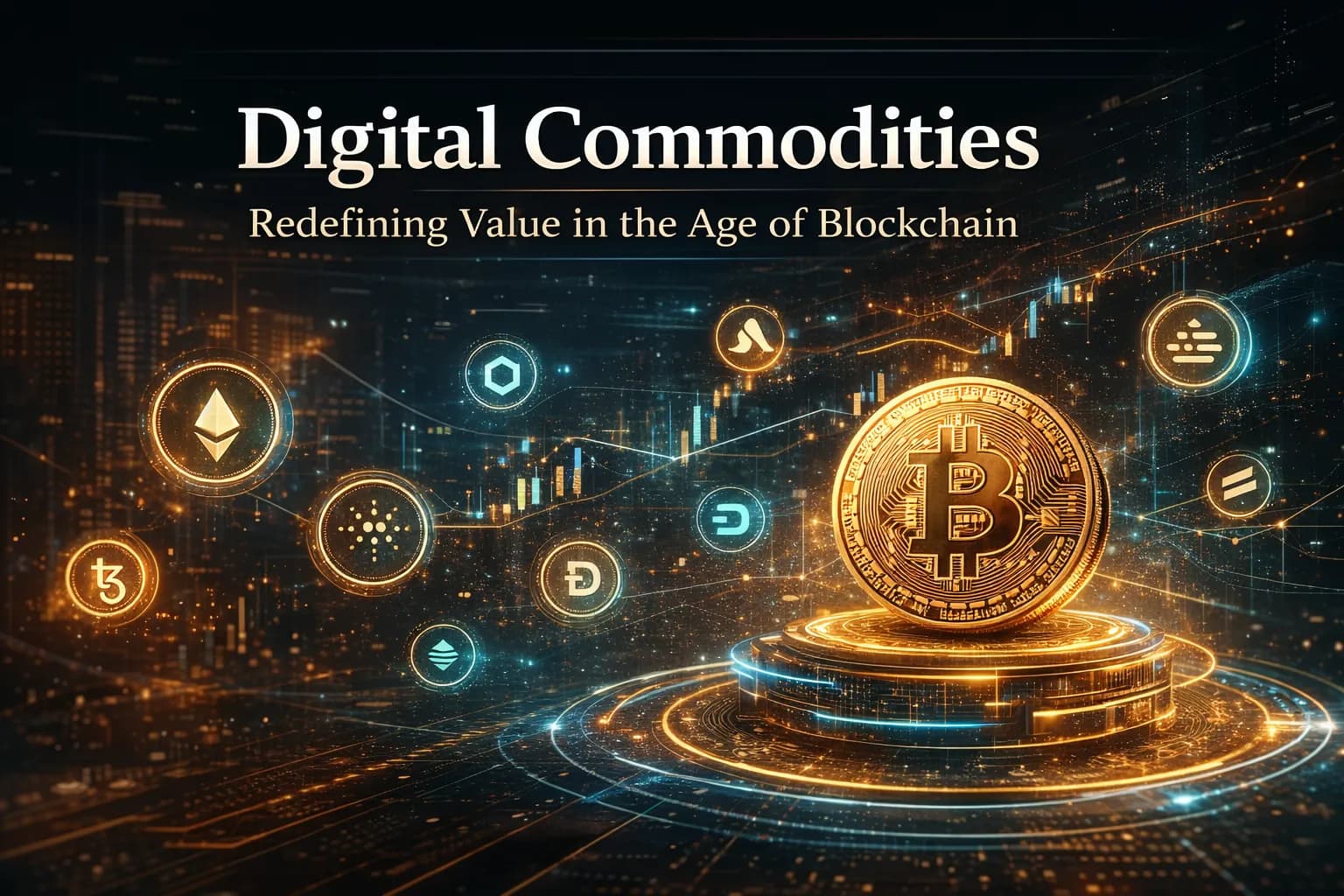
Digital Commodities: A Comprehensive Analysis
Introduction
The rapid expansion of blockchain technology has given rise to a wide spectrum of digital assets, each serving different roles within decentralized ecosystems. Among these, digital commodities have emerged as a distinct category. Unlike traditional financial instruments or securities, digital commodities derive their value primarily from their utility within a functional blockchain network and the forces of supply and demand.
This report explores the concept of digital commodities, their defining characteristics, their economic implications, and their role in the evolving digital economy.
What Are Digital Commodities?
A digital commodity is a type of crypto asset that is intrinsically linked to the operation of a blockchain or decentralized protocol. Its value is not based on expectations of profit generated by a central organization or managerial efforts, but rather on:
The functionality of the underlying network
The utility it provides to users
Market-driven supply and demand dynamics
In essence, digital commodities function similarly to traditional commodities like gold or oil—but within a digital infrastructure.
Key Characteristics
1. Functional Value
Digital commodities derive their worth from their role in powering blockchain systems. For example, they may be used to:
Pay transaction fees
Secure networks through staking or mining
Enable smart contract execution
Facilitate decentralized applications (dApps)
2. Decentralization
These assets typically operate within decentralized ecosystems, meaning no single entity controls their issuance or value. This reduces reliance on centralized authorities and enhances transparency.
3. No Intrinsic Income Rights
Unlike stocks or bonds, digital commodities generally do not:
Generate passive income by default
Provide ownership in a company
Grant rights to future profits or dividends
Their value is utility-based rather than income-based.
4. Market-Driven Pricing
Prices are determined by open market forces, including:
User adoption
Network activity
Scarcity mechanisms
Investor sentiment
Examples of Digital Commodities
A wide range of well-known cryptocurrencies fall into this category due to their functional roles within their respective ecosystems. These include:
Aptos (APT)
Avalanche (AVAX)
Bitcoin (BTC)
Bitcoin Cash (BCH)
Cardano (ADA)
Chainlink (LINK)
Dogecoin (DOGE)
Ether (ETH)
Hedera (HBAR)
Litecoin (LTC)
Polkadot (DOT)
Shiba Inu (SHIB)
Solana (SOL)
Stellar (XLM)
Tezos (XTZ)
XRP (XRP)
Each of these assets serves a functional purpose within its ecosystem, whether as a medium of exchange, a utility token, or a network governance mechanism.
Economic Significance
1. Enabling Decentralized Economies
Digital commodities are foundational to decentralized finance (DeFi), gaming ecosystems, and Web3 platforms. They enable peer-to-peer interactions without intermediaries.
2. Liquidity and Global Access
They provide:
24/7 trading markets
Borderless transactions
Financial access to unbanked populations
3. Innovation Catalyst
By removing traditional barriers, digital commodities foster innovation in:
Financial services
Digital identity
Supply chain systems
Risks and Challenges
Despite their advantages, digital commodities present several challenges:
Volatility
Prices can fluctuate dramatically due to speculative trading and market sentiment.
Regulatory Uncertainty
Governments are still defining how to classify and regulate these assets, leading to legal ambiguity.
Security Risks
Users may face risks such as:
Hacks
Smart contract vulnerabilities
Loss of private keys
Scalability Issues
Some networks struggle to handle large transaction volumes efficiently.
Future Outlook
The role of digital commodities is expected to grow as blockchain adoption increases. Future developments may include:
Greater regulatory clarity
Improved scalability solutions
Integration with traditional financial systems
Expansion into new industries such as healthcare and logistics
As the technology matures, digital commodities may become a fundamental component of the global digital economy.
Conclusion
Digital commodities represent a paradigm shift in how value is created and exchanged. By emphasizing utility, decentralization, and open market dynamics, they challenge traditional financial models and introduce new opportunities for innovation and economic participation.
While risks remain, their growing adoption signals a transformative trend that is likely to shape the future of finance and technology.
Abbas Al-Zuhairy
Contributing writer at EUReflect.
Follow EUReflect
See more of our reporting on Google
Mark EUReflect as a preferred source and our stories are ranked higher for you in Top Stories, Discover and Google News — and carry a “preferred” badge when they are cited in AI results.
Add EUReflect as a preferred source