Germany Seeks a New Growth Model
After two years of near-stagnation, Germany's GDP grew 0.2% in Q2 2026, but the recovery is fragile as the country grapples with high energy costs and competition from China.
Germany, Europe’s largest economy, is entering the second half of 2026 with signs of recovery after several years of stagnation, but the structure that powered its economic success for decades is undergoing a significant transformation.
The German economy expanded by 0.2% in the second quarter of 2026, following revised growth of 0.4% in the first quarter. Compared with the same period of 2025, GDP was 0.9% higher. The figures indicate that Germany has returned to growth, although the recovery remains relatively weak.
The European Commission currently expects German GDP to grow by approximately 0.6% in 2026 and 0.9% in 2027, after growth of only 0.2% in 2025.
Behind these numbers lies a larger economic story: Germany is attempting to modernize an industrial model built around manufacturing, exports, relatively affordable energy and global supply chains.
Industry Remains Germany’s Core Strength
Manufacturing continues to distinguish Germany from many other advanced European economies.
Automobiles, machinery, chemicals, electrical equipment, pharmaceuticals and precision engineering remain central to the country's industrial base.
Companies such as Volkswagen, BMW, Mercedes-Benz, Siemens and BASF symbolize a wider network of manufacturers and specialized Mittelstand companies that have traditionally provided Germany with strong export capacity.
But this model is under pressure.
German manufacturers face higher energy costs, increasing competition from China, the transition toward electric vehicles, expensive financing and the need to invest heavily in digitalization and artificial intelligence.
Germany therefore faces a difficult transition: it must protect its industrial capacity while simultaneously transforming that industry.
Exports Are Recovering
Foreign trade remains one of the strongest pillars of the German economy.
German goods exports reached €139.3 billion in June 2026, the highest seasonally adjusted monthly level recorded by Destatis. Exports increased 0.9% from May and 6.6% compared with June 2025.
During the first half of 2026, Germany exported goods worth approximately €816.6 billion, while imports reached €711.6 billion. This produced a trade surplus of around €105 billion.
More recent indicators are also encouraging.
Germany's Ifo export expectations index jumped from -2.8 points in July to 9.6 points in August, its highest level since February 2022. Electrical equipment, automotive, data-processing and optical industries were among the sectors showing greater optimism.
Yet the geographic structure of German trade is changing. Trade within the EU remains strong, while German exporters continue to face difficulties in China and uncertainty in the United States.
The China Model Is Changing
For decades, Germany benefited enormously from China's economic expansion.
German companies sold automobiles, chemicals, machinery and industrial equipment to a rapidly developing Chinese economy.
That relationship is becoming more competitive.
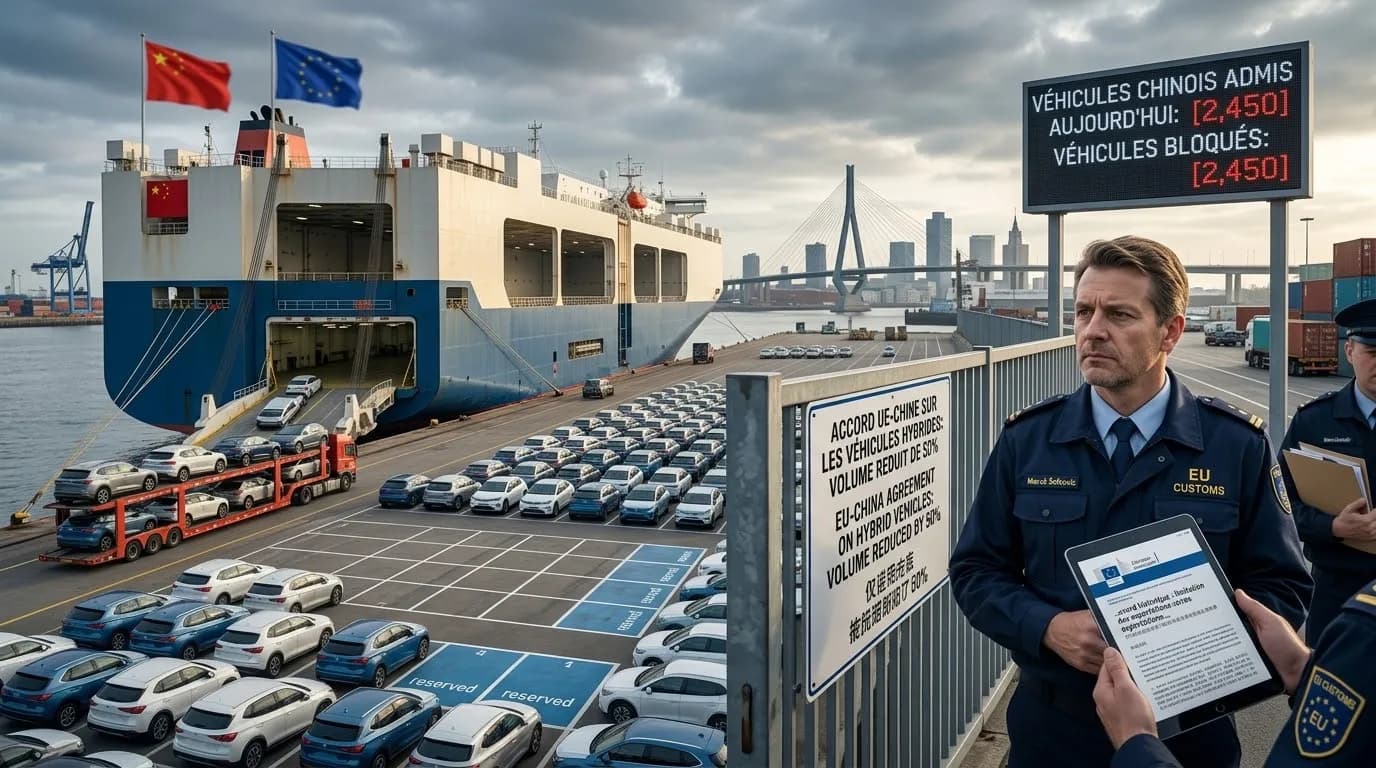
Chinese companies increasingly manufacture sophisticated machinery, electric vehicles, batteries and industrial technology themselves. In some sectors they are now direct competitors to German manufacturers in both China and international markets.
The European Commission identifies competition from China, US tariffs and high energy prices among the structural factors that have weakened German exports and investment.
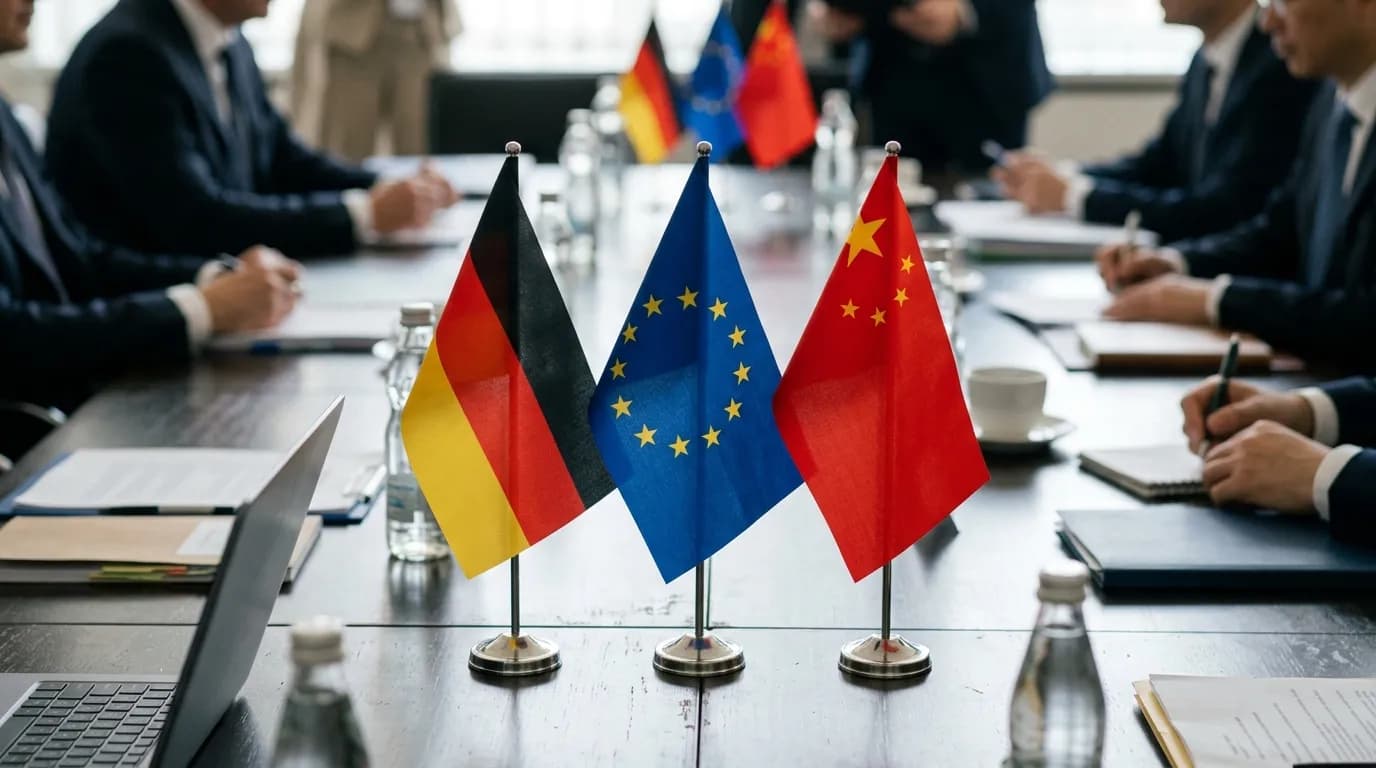
Germany therefore needs to diversify its export markets while maintaining access to China — one of the most difficult strategic challenges facing its industrial economy.
Berlin Turns Toward Public Investment
One of the biggest changes in Germany's economic structure is occurring in fiscal policy.
The country was traditionally associated with strict budget discipline and its constitutional "debt brake." But reforms agreed in 2025 created considerably more room for infrastructure and defence spending.
The government is now expected to use public investment to modernize transport networks, digital infrastructure, energy systems and military capabilities.
The European Commission expects Germany's government deficit to increase from 2.7% of GDP in 2025 to 3.7% in 2026, while public debt is forecast to rise from 63.5% to 65.8% of GDP.
This represents an important shift.
Germany is increasingly willing to use government spending as an instrument for economic modernization rather than relying predominantly on private industry and exports to generate growth.
Energy Remains a Structural Vulnerability
Energy continues to be one of the greatest challenges for German industry.
The loss of the previous model based partly on inexpensive Russian pipeline gas forced Germany to reorganize its energy supply while simultaneously pursuing its long-term transition toward renewable energy.
The economic consequences remain visible.
Inflation reached 2.8% in July 2026, compared with 2.3% in June, with higher energy prices playing an important role.
Energy-intensive industries such as chemicals, metals, glass and other heavy manufacturing remain particularly exposed to energy costs.
Even logistics has become a vulnerability. Exceptionally low water levels on major German rivers, including the Rhine, have recently restricted cargo transportation, increased freight costs and created additional difficulties for industrial production. The Bundesbank expects this to constrain economic activity during the third quarter.
The Labour Market Is Beginning to Feel the Transition
Germany's historically strong labour market is also under pressure.
Employment fell by 23,000 people in June after declining by 27,000 in May, while unemployment increased again in July. Germany's Economy Ministry warned that demographic and structural changes are likely to prevent a rapid improvement in labour-market conditions.
However, the latest business surveys provide some evidence that conditions may be stabilizing.
The Ifo employment barometer rose to 94.8 points in August, its highest level since May 2025. German companies are still reducing employment overall, but the pace of planned job cuts has slowed, particularly in manufacturing.
Germany's ageing population adds another long-term challenge. A shrinking workforce means that productivity, automation, skilled immigration and artificial intelligence will become increasingly important to maintaining economic growth.
From Industrial Giant to High-Tech Industrial Power
Germany's economic challenge is therefore deeper than restoring GDP growth.
The country is attempting to redesign the foundations of its economic model.
The old formula combined powerful manufacturing companies, cheap energy, strong demand from China, relatively conservative public spending and access to global markets.
The emerging model is likely to look different: higher public investment, greater defence expenditure, renewable energy, artificial intelligence, automation, digital infrastructure and more diversified export markets.
Germany still possesses enormous advantages — advanced industry, engineering expertise, infrastructure, research institutions, skilled workers and one of the world's strongest manufacturing ecosystems.
But 2026 is demonstrating that maintaining Germany's position as Europe's industrial centre will require considerably more investment and structural adaptation than in previous decades.
The German economy is recovering. The more important question is whether Germany can use that recovery to build the next version of its industrial model before global competition moves further ahead.
Ahmet Balakan
Contributing writer at EUReflect.
Follow EUReflect
See more of our reporting on Google
Mark EUReflect as a preferred source and our stories are ranked higher for you in Top Stories, Discover and Google News — and carry a “preferred” badge when they are cited in AI results.
Add EUReflect as a preferred source