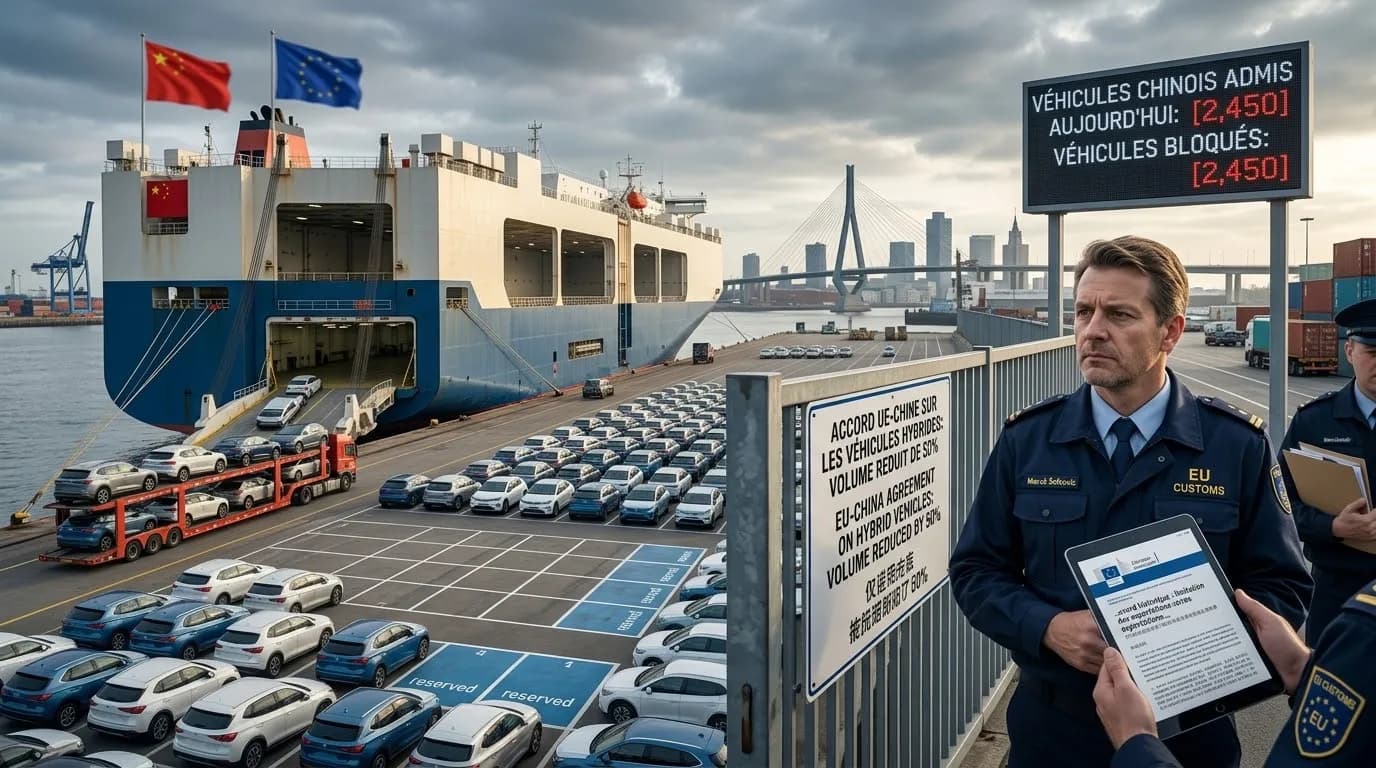
China’s Auto Boom and Its Impact on Europe’s Economy
China’s rapid rise in the electric vehicle sector has triggered a profound transformation in Europe’s automotive market. While affordable Chinese EVs offer clear benefits to consumers and support climate goals, they also intensify competitive pressure on European automakers, threatening profitability, employment, and industrial capacity. This development exposes the EU’s vulnerabilities in supply chains and industrial sovereignty. Europe’s response will depend on a comprehensive strategy based on domestic investment, balanced trade policies, industrial cooperation, and supply chain diversification.
Introduction
Over the past decade, China has emerged as a dominant global force in the automotive industry, particularly in electric vehicles (EVs). Backed by strong state support, advanced manufacturing capacity, and aggressive pricing strategies, Chinese automakers such as BYD, SAIC (MG), and Geely have rapidly expanded their footprint in the European Union. Between 2020 and 2023, EV exports from China to the EU surged by nearly 1,600 percent, reaching close to €11 billion and accounting for almost half of all electric vehicles imported into the EU. This rapid expansion is not merely a short-term market fluctuation but a structural shift that is reshaping Europe’s automotive ecosystem and raising critical economic and strategic questions.
1. Market Disruption and Competitive Pressure on European Automakers
The most immediate impact of China’s automotive rise is intense price competition. On average, Chinese electric vehicles are priced 20–30 percent lower than comparable European models. This price advantage has significantly increased their appeal to European consumers, especially at a time when inflation and cost-of-living pressures make affordability a key purchasing factor.
For European automakers, this has resulted in shrinking profit margins and heightened competitive stress. The automotive sector is a cornerstone of the EU economy, supporting more than 13 million direct and indirect jobs and generating an annual trade surplus exceeding €100 billion. Countries such as Germany, France, Italy, and the Czech Republic are particularly vulnerable due to their heavy reliance on car manufacturing for employment, exports, and regional development. Analysts warn that without strategic adjustments, EU vehicle production could decline sharply, potentially leading to losses exceeding €24 billion by 2030, with serious consequences for employment and local economies.
2. Strategic Vulnerabilities and Supply Chain Dependence
Beyond pricing and market share, China’s dominance highlights deeper strategic vulnerabilities within Europe’s industrial supply chains. China controls a substantial portion of global battery manufacturing, rare earth processing, and key components such as electric drivetrains. This concentration creates long-term dependency risks for Europe, particularly as electric vehicles become central to both economic growth and climate policy.
While the European Union has introduced countervailing duties of up to 20 percent on certain Chinese EV imports, such measures mainly address short-term competitive imbalances. Protectionist tools can slow market penetration but cannot fully compensate for gaps in technology, scale, and cost efficiency. Continued reliance on Chinese EVs may weaken Europe’s position in the global innovation race, especially as Chinese firms advance rapidly in battery performance, cost reduction, and vehicle design. In this context, industrial sovereignty and technological leadership have become as important as market competitiveness.
3. Policy Responses and Europe’s Strategic Options
To respond effectively, the EU must pursue a comprehensive and forward-looking strategy. First, significant investment in domestic EV production and battery manufacturing is essential. This includes expanding gigafactories, supporting research and development, and offering incentives that encourage innovation and scaling within Europe. Public-private partnerships can play a key role in building resilient supply chains for critical raw materials and components.
Second, the EU should adopt targeted and balanced trade policies. Strategic tariffs, anti-dumping measures, and regulatory standards should aim to ensure fair competition without undermining consumer access or triggering excessive retaliation. Third, greater collaboration among European automakers is needed. Pooling resources for research, sharing platforms, and coordinating production can help achieve economies of scale and technological breakthroughs.
Finally, diversification of supply sources and deeper cooperation with partners outside China—such as countries in Latin America, Africa, and Asia-Pacific—will be crucial to strengthening resilience in the EV sector and reducing geopolitical and economic risks.
Conclusion
China’s rapid rise in the global automotive industry represents a double-edged sword for Europe. On one hand, European consumers benefit from affordable, technologically advanced electric vehicles that support climate goals and accelerate the green transition. On the other hand, European automakers face unprecedented competitive pressure that threatens jobs, profitability, and long-term industrial capacity. The outcome will depend on Europe’s ability to respond strategically. Through coordinated innovation, smart trade policies, and the development of robust and diversified supply chains, the EU can not only defend its position in the global automotive market but also lay the foundation for sustainable economic growth over the coming decade.
Uroosa Khan
Contributing writer at EUReflect.
Follow EUReflect
See more of our reporting on Google
Mark EUReflect as a preferred source and our stories are ranked higher for you in Top Stories, Discover and Google News — and carry a “preferred” badge when they are cited in AI results.
Add EUReflect as a preferred source