Germany-France Rivalry Deepens
Germany and France, the EU's twin engines, are locked in intensifying rivalry over investment appeal, industrial jobs, and political vision. Foreign investment is declining, layoffs continue in autos and banking, and disputes over Ukraine and MERCOSUR are deepening the rift between Berlin and Paris.
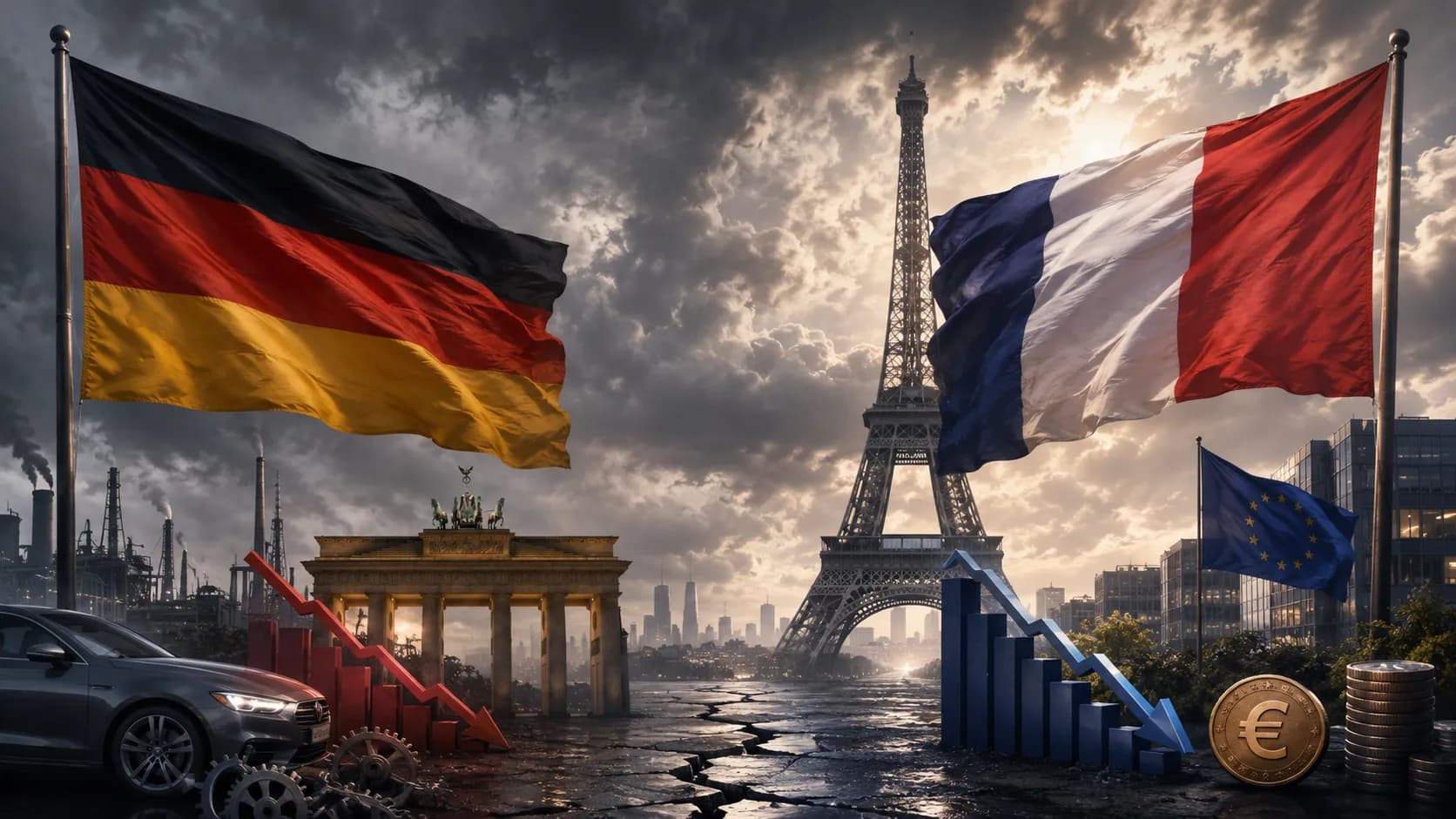
Germany and France, the two founding powers of the European Union, have long been described as the continent's economic and political "engine." However, data released in recent months shows that the rivalry between the two countries has moved beyond symbolic leadership and turned into a tangible loss of economic strength on both sides. Slowing growth, declining foreign investment, a wave of layoffs in industry, and disagreements over Ukraine policy and trade have pushed relations between Berlin and Paris into one of their tensest periods in years. This article examines three key dimensions of that rivalry — investment attractiveness, industrial production, and political vision — before drawing together what it means for the EU as a whole.
Losing the Investment Race: Germany or France?
According to Euronews Türkçe, the long-standing competition to attract foreign investors in Europe is undergoing a fundamental shift. Per EY's European Attractiveness Survey, the number of new investment projects in Germany has fallen by 44 percent since 2019, compared with a 28 percent decline in France and a 34 percent drop in the United Kingdom over the same period — meaning Germany's losses have been considerably sharper than its neighbors'.
Analysts point to structural problems behind Germany's fading appeal: a heavy tax burden, high labor costs, expensive energy, and cumbersome bureaucracy. France, by contrast, has run its "Choose France" promotional campaign since 2018 to draw in international investors. Even so, the latest EY figures show French project numbers also fell, dropping 17 percent to 852 in 2025 — the steepest decline among Europe's major investment hubs that year.
Despite this, both countries remain among Europe's two largest investment destinations. Germany still ranks third on the continent with 548 new projects, while France holds onto the top spot. Yet as reported by Enerji Ekonomisi, citing the EY study, the rising momentum of countries such as Spain, Poland, and Turkey — which increased their investment project counts — signals a relative weakening in the competitive edge of both economic giants.
Industrial Contraction: Layoffs Hit Both Countries
One of the clearest signs of the Germany-France rivalry is the contraction underway in the industrial sector. As reported by Anadolu Agency, German automotive giant Volkswagen Group cut thousands of jobs as part of a cost-reduction program, while its luxury brand Porsche entered a similar downsizing process. German tire and auto-parts maker Continental also launched a major savings program in its research and development division.
The picture looks no different on the French side. French automaker Renault announced layoffs at a factory in northern France, citing slowing demand for commercial vehicles across Europe. Sector data shows tens of thousands of jobs lost within a single year in Germany's automotive industry alone, representing a significant share of total sector employment. Analysts attribute this trend to intensifying competition from China, weak domestic demand, and rising energy costs.
The wave of downsizing isn't limited to the automotive sector. One of Germany's leading banks announced it would cut thousands of jobs over the coming years, while another major German bank launched a comparable savings program. These developments show that both countries are contending not only with each other, but also with low-cost competition from Asia and trade uncertainty stemming from the United States.
Political Divergence: Ukraine, MERCOSUR, and the "European Preference" Debate
Beneath the economic rivalry lies a deepening political rift. According to Cumhuriyet newspaper, French President Emmanuel Macron and German Chancellor Friedrich Merz set out a joint roadmap in the summer of 2025 covering industry, energy, defense, and technological sovereignty. But by the end of that year, a decision at the EU Leaders' Summit in Brussels to fund Ukraine's financing needs through joint borrowing — rather than through frozen Russian assets — triggered a breakdown of trust between the two governments.
Berlin and Paris also diverge on economic vision. Germany and Italy favor keeping the EU open to foreign investment while boosting competitiveness, whereas France has been pushing a "European preference" approach that prioritizes domestic production. This split is also visible in the MERCOSUR trade agreement with South American countries: France remains hesitant, largely due to farmer protests and domestic political pressures, while Germany views the deal as an opportunity — particularly for its automotive sector and as a counterweight to competition from China.
Conclusion
The rivalry between Germany and France is no longer just about which country attracts more investment or which industry shrinks less — it has become a clash between two different economic and political visions for Europe's future. According to IMF data cited by camiahaber.com, France's economy is expected to grow around 1 percent in 2026, even as its public debt-to-GDP ratio continues to climb, while Germany keeps struggling with energy costs and bureaucratic obstacles. Regardless of which country comes out ahead in the short term, the weakening of both economies carries the potential to directly affect the European Union's overall global competitiveness. For that reason, how this "friendly rivalry" between Berlin and Paris shapes the EU's joint industrial and trade policies going forward deserves close attention.
Botakoz Unbayeva
Contributing writer at EUReflect.
Follow EUReflect
See more of our reporting on Google
Mark EUReflect as a preferred source and our stories are ranked higher for you in Top Stories, Discover and Google News — and carry a “preferred” badge when they are cited in AI results.
Add EUReflect as a preferred source