How Uncertainty Shapes Human Behavior
Psychological uncertainty can influence emotions, decision-making and behavior. New research shows that uncertainty is not always harmful and may also support curiosity, attention and learning.
The Psychology of Uncertainty
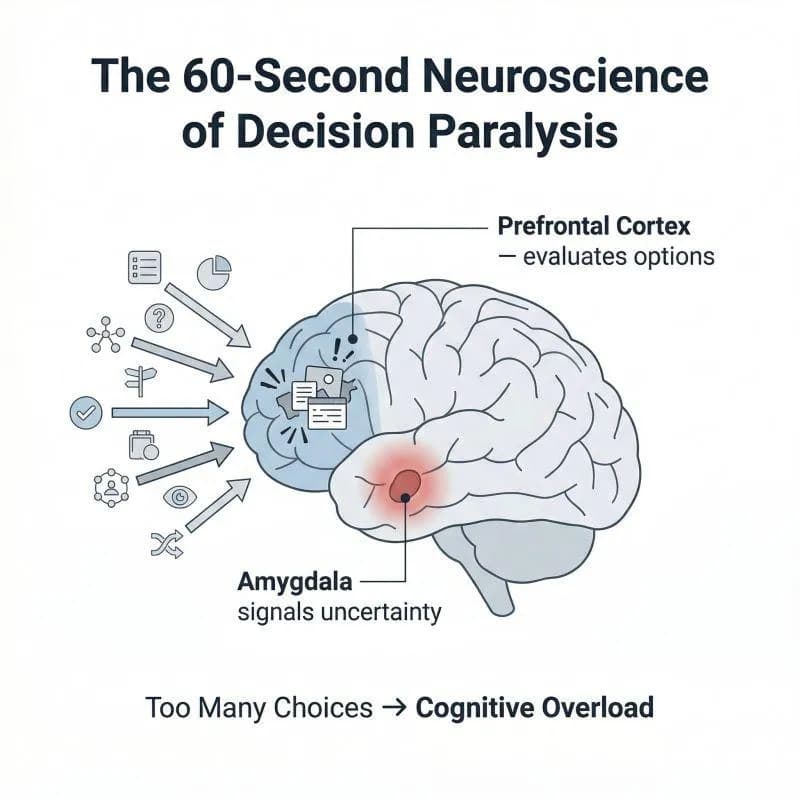
People regularly make decisions without knowing exactly what will happen next. Whether choosing between alternatives, interpreting new information or adapting to unfamiliar situations, individuals often have to act with incomplete knowledge. Psychology researchers describe this experience as psychological uncertainty.
A 2026 systematic review published in Frontiers in Psychology examined 27 peer-reviewed studies to investigate how psychological uncertainty is defined, measured and experienced. The researchers describe it as a mental experience involving a lack of knowledge about the past, present or future that makes it difficult to predict outcomes accurately.
The review suggests that uncertainty can influence both emotional responses and behavioral outcomes. Previous research included in the review has associated uncertainty with discomfort, stress-related responses and difficulties in decision-making. In some situations, uncertainty can also slow responses because individuals need additional information before deciding how to act.
However, uncertainty does not necessarily produce negative outcomes. The researchers found evidence that its effects can vary according to factors such as context, perceived control, individual differences and the consequences associated with the uncertain situation.
When uncertainty is manageable, it may stimulate curiosity and encourage people to seek additional information. It can also increase attention and support learning because individuals have a stronger reason to update their expectations as new information becomes available.
This distinction is important because uncertainty is often treated as something that people simply want to eliminate. Psychological research instead suggests that its effects may depend on how the situation is experienced and interpreted. A lack of information can be stressful when the outcome has serious consequences, but the same uncertainty may encourage exploration when the stakes are relatively manageable.
The researchers also note that uncertainty is difficult to study because the term can refer to different psychological experiences. Some forms involve incomplete knowledge, while others involve difficulty predicting future events. The 2026 review therefore proposes a broader framework for understanding uncertainty as an experiential psychological state rather than simply a characteristic of an external situation.
Understanding uncertainty may become increasingly important as people interact with complex technologies and automated systems. How individuals perceive uncertainty can influence trust, attention and willingness to engage with new technologies.
Rather than viewing uncertainty exclusively as a psychological problem, current research suggests a more nuanced interpretation. Under certain conditions, uncertainty can create discomfort and impair decision quality, while under others it can promote curiosity, attention and learning. The psychological impact of uncertainty therefore depends not only on what people do not know, but also on how they experience and respond to that uncertainty.
Ipek Tuncer
M.A. in International Relations
Follow EUReflect
See more of our reporting on Google
Mark EUReflect as a preferred source and our stories are ranked higher for you in Top Stories, Discover and Google News — and carry a “preferred” badge when they are cited in AI results.
Add EUReflect as a preferred source