Iran Crisis, Central Asia Gains?
Iran’s resistance to Israel and the US affects Strait of Hormuz energy security, creating both opportunities and risks for Central Asia. Rising energy prices, stronger transit routes, and export demand may benefit the region, while inflation, instability, and geopolitical rivalry pose serious long-term challenges.
Introduction
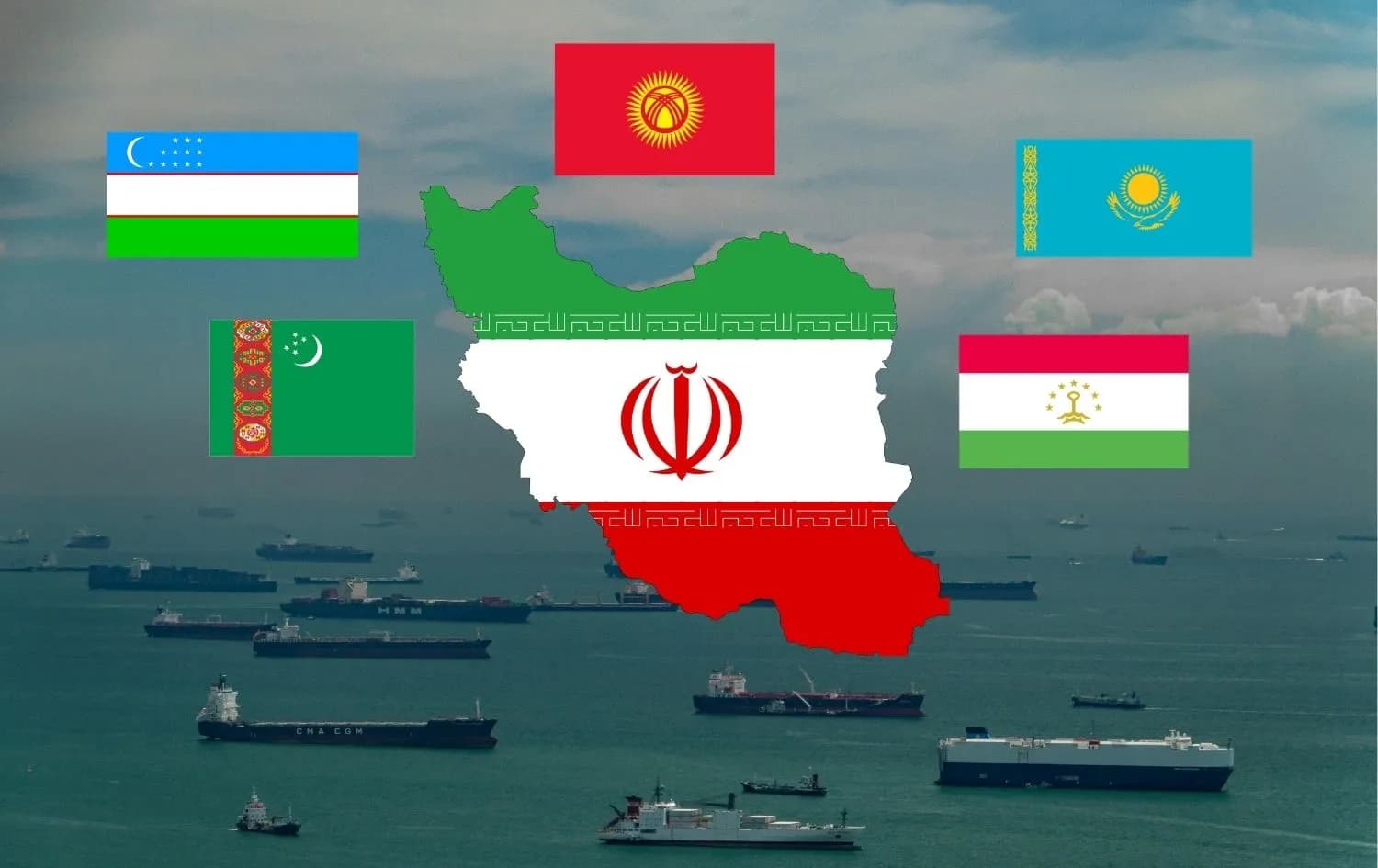
Iran’s resistance to Israel and the United States has evolved into one of the most consequential geopolitical dynamics affecting the Middle East and the wider international system. Beyond military and diplomatic dimensions, this confrontation directly influences global energy security through its connection to the Strait of Hormuz, one of the world’s most strategic maritime chokepoints. A substantial share of globally traded crude oil, petroleum products, and liquefied natural gas passes through this narrow corridor, making any escalation in regional tensions a matter of global economic concern. Since Central Asia remains a resource-rich yet landlocked region highly dependent on external transport corridors and external markets, instability surrounding the Strait of Hormuz has significant implications for Kazakhstan, Turkmenistan, Uzbekistan, Kyrgyzstan, and Tajikistan. While disruptions in the Gulf may enhance the strategic relevance of Central Asian energy resources and transit routes, they may simultaneously generate economic volatility, geopolitical pressure, and logistical vulnerabilities. Therefore, Iran’s continued resistance must be assessed not solely as a Middle Eastern security issue, but also as a factor reshaping opportunities and risks for Central Asia.
Rising Strategic Opportunities for Central Asia
One of the primary consequences of instability in the Strait of Hormuz is the growing strategic value of alternative energy suppliers. If Gulf exports face disruption or uncertainty, global consumers such as the European Union, China, and South Asian economies are likely to intensify their search for diversified energy sources. In this context, Kazakhstan’s oil reserves, Turkmenistan’s natural gas capacity, and Uzbekistan’s growing energy potential become increasingly important. Such developments may strengthen Central Asian states’ bargaining power in negotiations with external actors and attract new infrastructure investments.
In addition, maritime insecurity in the Gulf can accelerate interest in overland transport corridors linking Asia and Europe. The Trans-Caspian International Transport Route, often referred to as the Middle Corridor, gains relevance when maritime chokepoints become vulnerable. This route, extending from China through Central Asia, the Caspian Sea, the South Caucasus, and Türkiye toward Europe, offers an alternative logistical framework. Kazakhstan’s ports of Aktau and Kuryk, Turkmenistan’s Turkmenbashi port, and Uzbekistan’s inland logistics centers may therefore experience increased commercial significance.
A further opportunity concerns commodity prices. Historically, tensions in the Strait of Hormuz tend to trigger upward pressure on global oil and gas prices. For hydrocarbon exporters such as Kazakhstan and Turkmenistan, such price increases may generate short-term fiscal gains, stronger export revenues, and enhanced foreign currency inflows.
Economic and Logistical Vulnerabilities
Despite these opportunities, prolonged confrontation involving Iran may create substantial economic costs for Central Asia. Rising energy prices often produce inflationary effects across global markets, weaken industrial output in importing economies, and reduce overall demand growth. If the global economy slows significantly, export-oriented Central Asian states may eventually face lower revenues despite higher nominal prices, particularly if external demand contracts.
Logistical risks are equally important. Iran represents one of the most practical southern gateways for Central Asia to access the Persian Gulf and the Indian Ocean. This is especially relevant for Uzbekistan, Turkmenistan, and Kazakhstan, all of which seek diversified trade routes beyond Russian and Chinese corridors. However, if Iran remains under military pressure, sanctions expansion, or transport insecurity, access through Iranian territory may become more expensive and less reliable. Insurance premiums, freight costs, customs delays, and infrastructure uncertainty could weaken the attractiveness of these routes.
Moreover, uncertainty in Gulf shipping markets may affect food imports, industrial inputs, and consumer prices in import-dependent Central Asian economies. Countries with limited fiscal buffers may be particularly exposed to imported inflation and supply-chain stress.
Geopolitical and Security Consequences
Iran’s resistance may also intensify great-power competition in Central Asia. As Gulf instability threatens Chinese energy security, Beijing may seek deeper economic and strategic engagement across the region. Russia may simultaneously attempt to reinforce its traditional security influence, while the United States and European actors could increase diplomatic and economic outreach to reduce dependence on rival powers. Although such competition can create opportunities for multi-vector diplomacy, it may also pressure Central Asian governments to balance conflicting interests more carefully.
Security spillovers constitute another concern. Prolonged regional conflict can stimulate illicit trade networks, arms trafficking, irregular migration flows, and extremist mobilization across wider Eurasian spaces. States with weaker institutions or more fragile socioeconomic conditions, particularly Kyrgyzstan and Tajikistan, may face greater exposure to secondary instability. Even absent direct conflict transmission, governments may need to allocate more resources toward border management and domestic security.
Finally, the strategic autonomy of Central Asian states could narrow if external actors increasingly view the region through the lens of energy competition and geopolitical containment. This would complicate existing efforts by regional governments to preserve balanced foreign policies.
Conclusion
Iran’s resistance to Israel and the United States, when viewed through the framework of Strait of Hormuz energy security, presents a mixed strategic landscape for Central Asia. On one hand, it increases the global relevance of Central Asian hydrocarbons, strengthens the importance of overland trade corridors, and may generate short-term revenue gains for exporters. On the other hand, it introduces serious risks including global economic slowdown, trade-route insecurity, inflationary pressure, and intensified great-power rivalry. For Central Asian states, the most rational response lies in diversifying export corridors, strengthening regional connectivity, enhancing economic resilience, and maintaining balanced multi-vector diplomacy. In this sense, the Hormuz question is not distant from Central Asia; rather, it is increasingly embedded in the region’s long-term strategic future.
Alvara Merrick
Contributing writer at EUReflect.
Follow EUReflect
See more of our reporting on Google
Mark EUReflect as a preferred source and our stories are ranked higher for you in Top Stories, Discover and Google News — and carry a “preferred” badge when they are cited in AI results.
Add EUReflect as a preferred source