Kazakhstan in China–Europe Connectivity
Kazakhstan has emerged as a key hub in Eurasian trade due to its strategic location between China and Europe, advanced logistics infrastructure, broad market access, and investor-friendly policies.
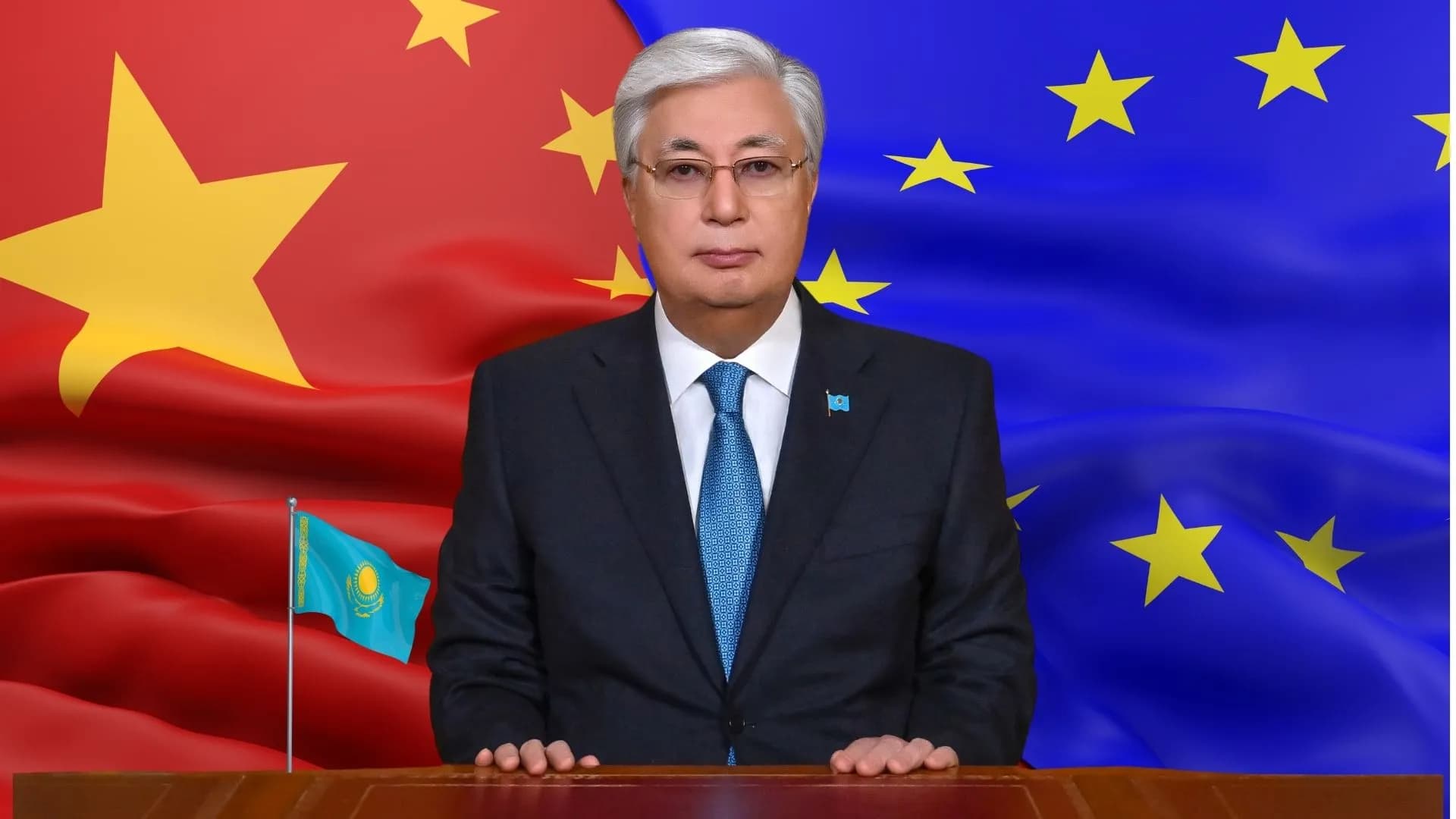
Introduction
Kazakhstan occupies a pivotal geopolitical and geoeconomic position at the crossroads of Europe and Asia, making it a central actor in Eurasian trade, logistics, and investment flows. Historically traversed by the Great Silk Road, the country has re-emerged as a strategic transit and economic hub within the framework of China’s Belt and Road Initiative (BRI). Its geographical location, combined with preferential market access, advanced transport corridors, and an increasingly favorable investment climate, positions Kazakhstan as a critical connector between Chinese and European markets.
Kazakhstan as a Core Transit and Logistics Corridor
Kazakhstan’s strategic value is most evident in its role as a land bridge facilitating fast and cost-effective logistics between China and Europe. The country enables significantly reduced transit times: freight transportation from Europe to China via Kazakhstan reaches St. Petersburg in approximately 10 days, Hamburg in 16 days, and London in 18 days. The Western Europe–Western China Highway further enhances efficiency, allowing cargo to be transported across the Eurasian continent in as little as 10 days.
Maritime and multimodal connectivity also reinforce Kazakhstan’s logistical importance. The ports of Aktau and Kuryk provide direct access to the Caspian Sea and international maritime trade routes, while Kazakhstan’s logistics infrastructure in Batumi (Georgia) and Lianyungang (China) strengthens its integration into global supply chains. These corridors enable Kazakhstan to function not merely as a transit country, but as a logistical backbone linking European and Asian markets.
Market Access and Economic Attractiveness
Beyond transit, Kazakhstan offers investors preferential access to large regional markets. The country serves as a gateway to a regional consumer base exceeding 500 million people and provides direct access to the Eurasian Economic Union (EAEU), encompassing a market of approximately 180 million consumers. This dual access enhances Kazakhstan’s attractiveness as a production, distribution, and export platform.
Kazakhstan’s economic appeal is reinforced by its competitive tax regime and business-friendly regulatory environment. The country ranks fifth globally in tax policy according to the IMD World Competitiveness Ranking. Administrative procedures are streamlined, with legal entities registered within one day, property rights within three days, and construction permits obtained within 100 days. Special Economic Zones (SEZs), numbering fourteen, offer zero percent corporate income tax, land tax, customs duties, and VAT on imported goods, as well as exemption from property tax. Additionally, fifty industrial zones provide developed infrastructure, long-term leases on favorable terms, and no sectoral restrictions.
Investment Protection, Institutional Support, and Human Capital
Kazakhstan has established a comprehensive framework to protect investors’ rights and ensure regulatory stability. Large-scale investment projects benefit from investment agreements that allow for tax liability reductions of up to 20 percent, legislative stability guarantees for up to 25 years, and reimbursement of up to 20 percent of construction and equipment costs. These incentives are complemented by robust institutional mechanisms, including the Council of Foreign Investors under the President, coordination councils chaired by the Prime Minister, and dedicated bodies for improving the investment climate.
Legal certainty is further strengthened by the Astana International Financial Centre (AIFC), which operates under English common law principles, as well as the International Arbitration Centre and specialized courts for investment disputes. The presence of an Investment Ombudsman, represented at the level of the Prime Minister, underscores the state’s commitment to investor protection.
Human capital development constitutes another strategic asset. Kazakhstan ranks 31st in the World Bank’s Human Capital Index, with a literacy rate of 100 percent. A visa-free regime for citizens of more than 65 countries, including OECD members, enhances labor mobility and international cooperation. The country hosts 128 universities, eight of which are included in global rankings, while over 10,000 specialists have been trained at leading international universities through the Bolashak scholarship program.
Conclusion
Kazakhstan’s strategic location between China and Europe, combined with its advanced logistics infrastructure, preferential market access, competitive tax policies, and strong investment protection mechanisms, positions it as a cornerstone of Eurasian connectivity. As trade flows between Asia and Europe continue to intensify, Kazakhstan is evolving from a traditional transit corridor into a comprehensive economic and investment hub. Its role in shaping the future architecture of Eurasian trade and economic cooperation is therefore likely to expand further, reinforcing its significance within the global economic system.
Zhansaya Nurlanovna
Contributing writer at EUReflect.
Follow EUReflect
See more of our reporting on Google
Mark EUReflect as a preferred source and our stories are ranked higher for you in Top Stories, Discover and Google News — and carry a “preferred” badge when they are cited in AI results.
Add EUReflect as a preferred source