NATO’s Cold Response to the EU Army Debate
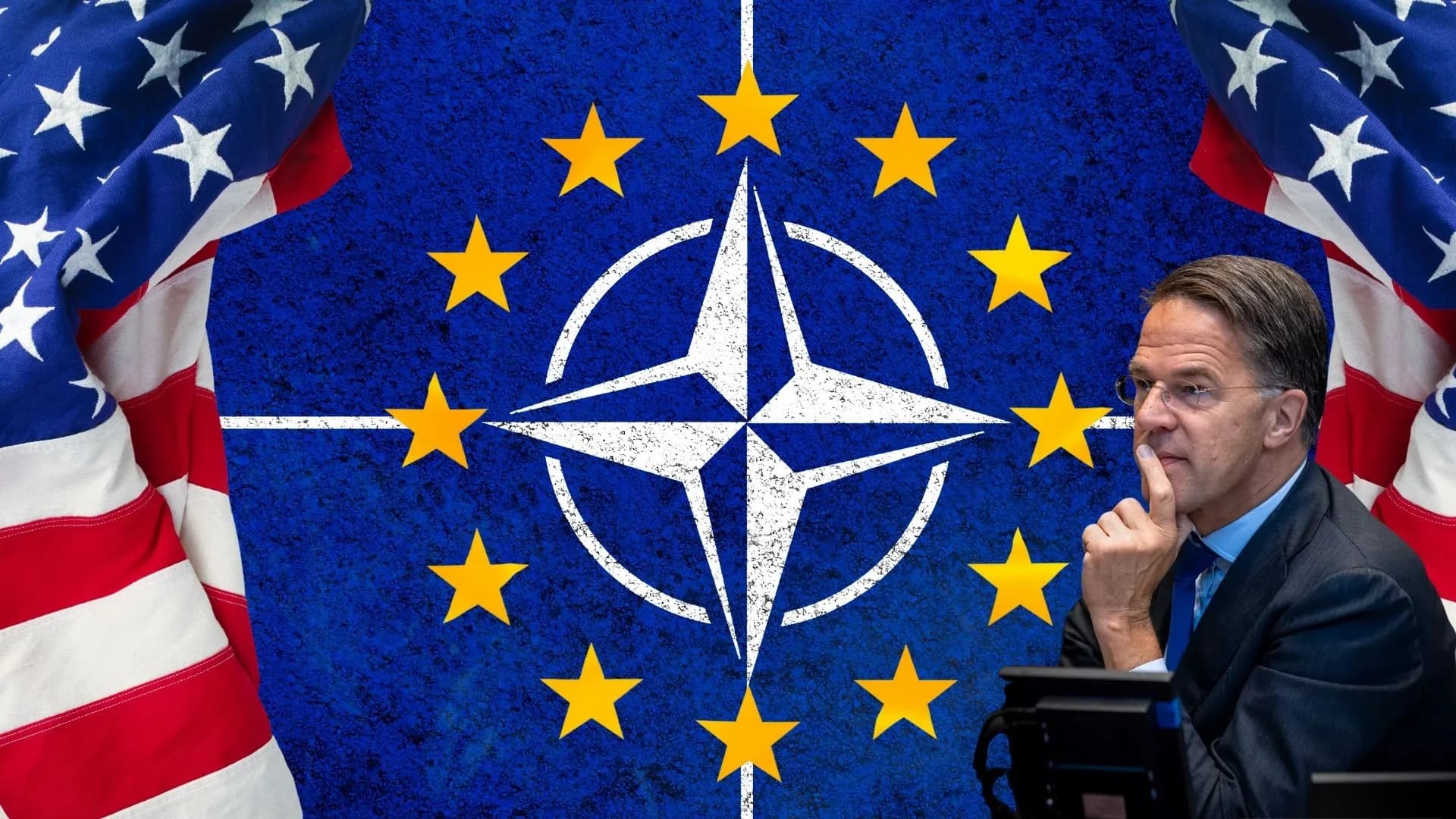
NATO Secretary General Mark Rutte rejected calls for an independent EU army, stressing that European security cannot be ensured without the United States. He argued that Europe should take greater responsibility for defence, but within NATO and the transatlantic framework rather than through separate security structures.
Introduction
In an interview published on Thursday, NATO Secretary General Mark Rutte firmly rejected proposals advocating the deployment of European-led forces in Ukraine under an independent EU command structure. Emphasizing the continued centrality of the transatlantic alliance, Rutte argued that collective security in Europe cannot be sustained without the United States and that NATO remains the cornerstone of Euro-Atlantic defence. His remarks come amid growing debates within the European Union over strategic autonomy and calls for a more independent European security architecture.
EU-Led Military Proposals and NATO’s Position
The debate was reignited after Manfred Weber, leader of the European People’s Party (EPP) and head of its group in the European Parliament, publicly advocated for the deployment of European troops in Ukraine under EU command. In an interview with the German media outlet Funke, Weber expressed his vision of European soldiers, bearing the EU flag, working alongside Ukrainian forces to secure peace.
Rutte, however, dismissed this approach in his interview with the German news agency dpa. He underscored that the United States remains fully committed to NATO and that there is no ambiguity regarding Washington’s role within the alliance. According to Rutte, the primary expectation placed on European allies is not institutional separation from the US, but rather increased defence spending and a greater assumption of responsibility within the existing NATO framework. European efforts to strengthen defence capabilities, he stressed, should complement US engagement, not replace it.
NATO Beyond the European Union
Rutte further challenged the conceptual basis of an EU-centric defence model by highlighting the broader composition of NATO. He noted that discussions about “Europe and NATO” extend far beyond the European Union itself. Of NATO’s member states, 23 are EU countries, yet together they account for only approximately one quarter of the alliance’s total economic output. This imbalance, Rutte argued, illustrates why European security cannot be effectively addressed through EU mechanisms alone.
By framing NATO as a transatlantic, rather than purely European, institution, Rutte reinforced the idea that strategic fragmentation would weaken deterrence rather than enhance it. In this context, proposals for autonomous European military structures risk duplicating existing capabilities and undermining alliance cohesion.
Shared Strategic Interests: The Arctic and Emerging Threats
A significant component of Rutte’s argument focused on shared US-European strategic interests, particularly in the Arctic and the North Atlantic. He described the Arctic as a growing security concern, citing increased activity by Chinese and Russian vessels in the region. According to Rutte, the defence of the Arctic is of vital importance to the United States and inseparable from European security interests.
“This is an area we can only defend together,” Rutte stated, stressing that cooperation between European and American NATO allies is indispensable. The Arctic, in his assessment, exemplifies how emerging geopolitical challenges demand collective responses rather than fragmented national or regional strategies.
Rutte also warned that Russia could pose a serious threat to NATO as early as 2027, based on certain intelligence assessments. While avoiding speculation on specific scenarios, he reiterated the centrality of NATO’s Article 5, which enshrines the principle that an attack on one ally constitutes an attack on all. This collective defence commitment, he argued, remains the alliance’s strongest deterrent.
Defence Spending, Ukraine, and European Leadership
Concluding his remarks, Rutte linked deterrence credibility to two key factors: sustained support for Ukraine and increased defence spending across NATO. He praised Germany’s commitment to raising defence expenditures to 3.5 percent of GDP by 2029, well ahead of the 2035 deadline agreed at NATO’s summit in The Hague. Describing Germany’s approach as “very impressive,” Rutte characterized Berlin as “leading the pack” among European allies.
Conclusion
Rutte’s statements represent a clear and cautious response from NATO to renewed discussions about an EU army and European strategic autonomy. While acknowledging the need for Europe to assume greater responsibility for its own defence, he firmly rejected the notion that this should occur outside the transatlantic framework. Instead, NATO’s leadership continues to advocate for deeper integration, higher defence investment, and unwavering cooperation between Europe and the United States as the most effective path to long-term security and deterrence.
EUReflect News
Site Administrator
Follow EUReflect
See more of our reporting on Google
Mark EUReflect as a preferred source and our stories are ranked higher for you in Top Stories, Discover and Google News — and carry a “preferred” badge when they are cited in AI results.
Add EUReflect as a preferred source