Ports Become Strategic Trade Hubs
More than 80% of world merchandise trade by volume moves by sea, and UNCTAD data show Shanghai, Ningbo-Zhoushan, and Singapore as the best-connected ports in Q2 2026.
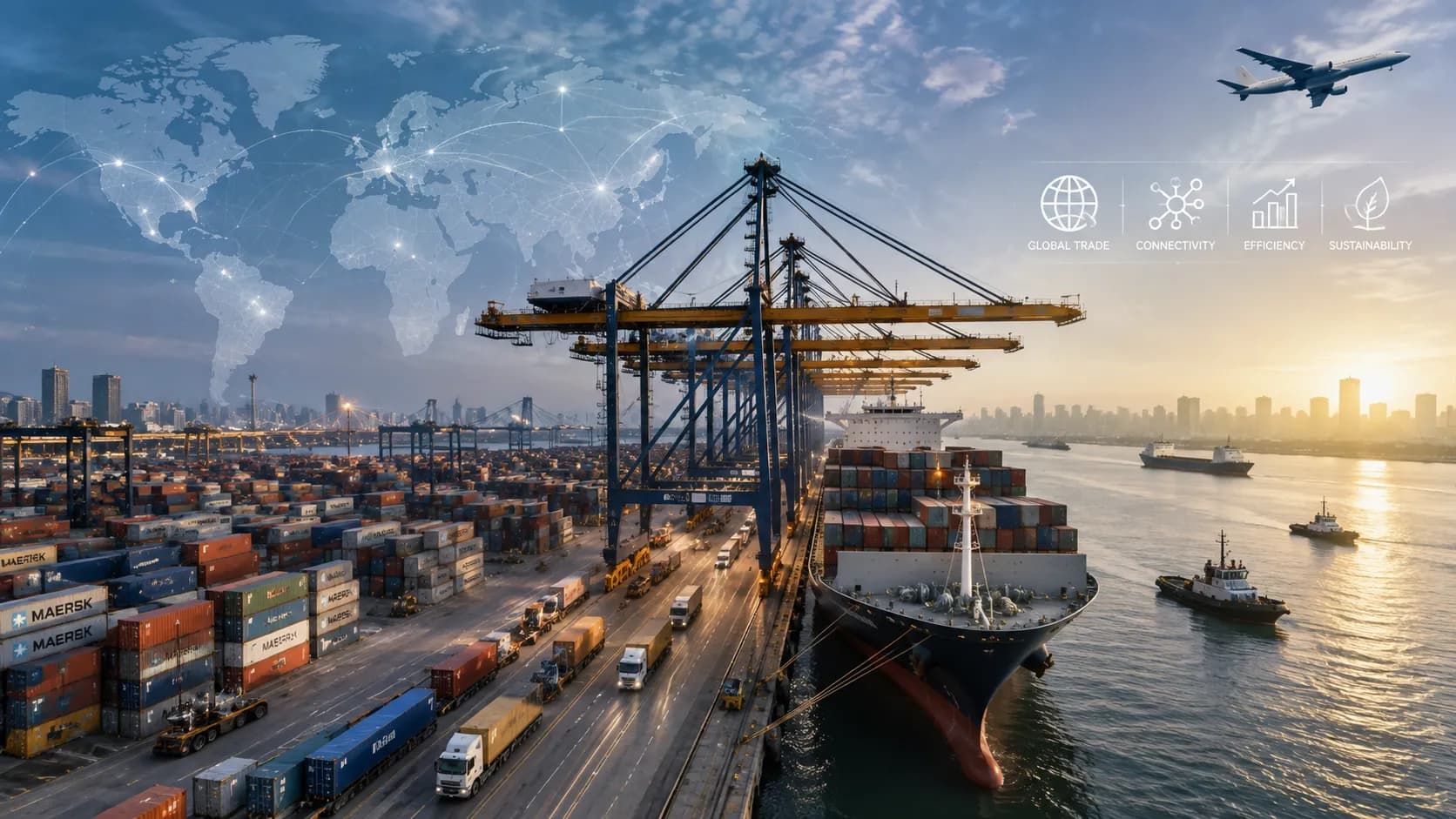
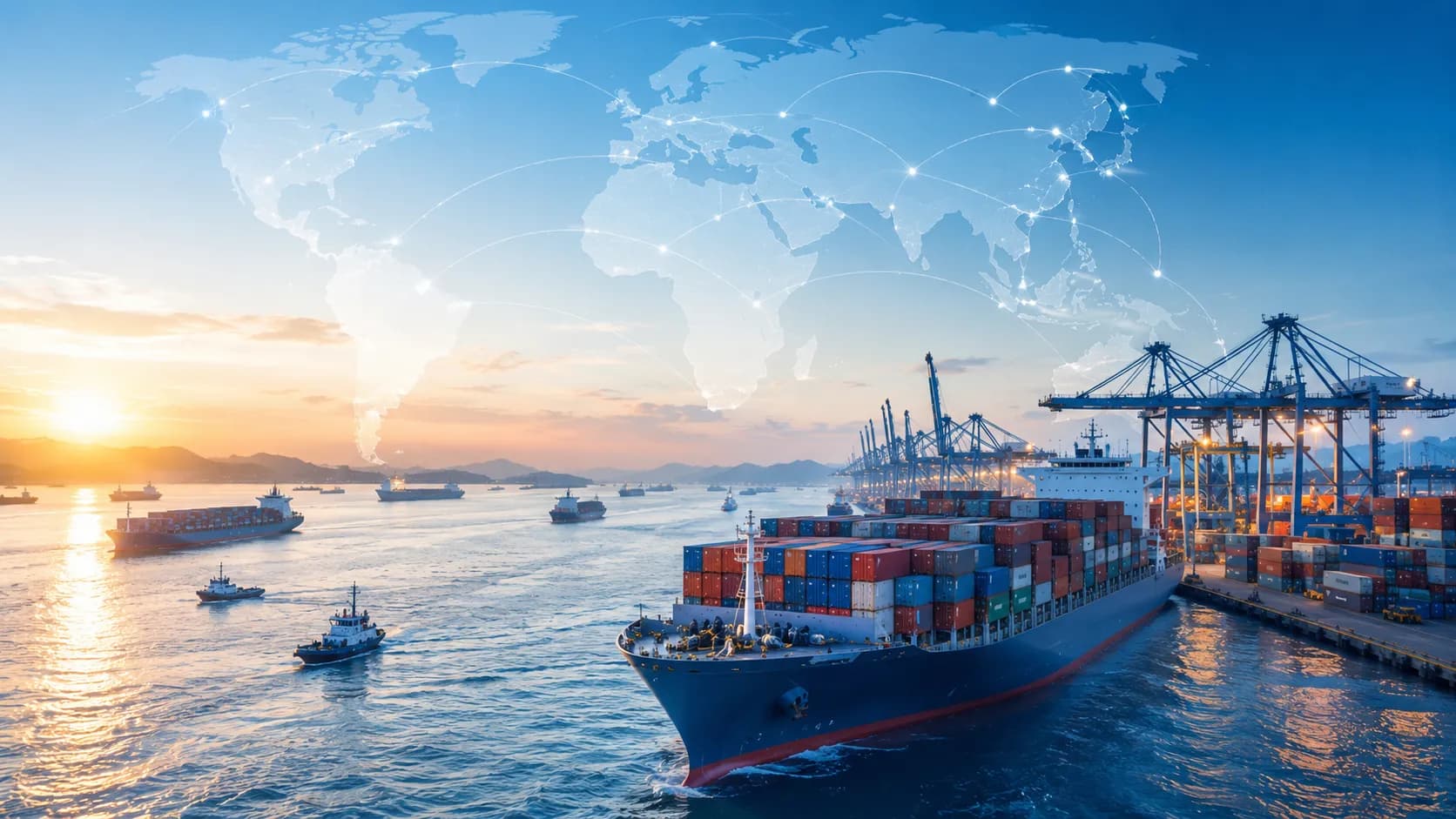
Ports are emerging as some of the most strategically important infrastructure in the global economy as geopolitical tensions, changing supply chains and rapidly expanding technology trade reshape international commerce.
More than 80 percent of world merchandise trade by volume is transported by sea, making ports indispensable links between factories, energy producers, agricultural regions and global consumer markets.
But in 2026, ports are becoming more than places where ships load and unload cargo. They are increasingly economic, technological and geopolitical assets.
Global Trade Still Depends on the Sea
Despite tariffs and geopolitical fragmentation, international trade continues to expand.
UN Trade and Development estimates that global goods trade reached approximately $13.7 trillion in the first half of 2026, increasing 12.5 percent compared with the same period of 2025. Combined goods and services trade added around $2 trillion year-on-year.
Much of this physical trade eventually passes through maritime gateways.
A modern port therefore connects much more than ships to land. Railways, highways, warehouses, customs systems, industrial zones and logistics companies increasingly develop around major ports.
Countries with efficient access to these networks can reduce transportation costs and make their exports more competitive.
Asia Dominates Port Connectivity
The global port hierarchy also reveals where international trade is concentrating.
UNCTAD's latest data show that Shanghai, Ningbo-Zhoushan and Singapore were the world's three best-connected container ports in the second quarter of 2026. Busan and Qingdao completed the top five.
Asia's dominance is closely connected to the region's position in global manufacturing.
China, South Korea, Japan and Southeast Asian economies have built extensive networks connecting factories directly with large-scale maritime infrastructure. As a result, ports have become an important component of their industrial competitiveness.
But other ports are rising quickly. Over the past decade, connectivity increased by more than 1,100 percent in Malaga, around 886 percent in Fujairah and more than 800 percent in Tripoli, Lebanon. Türkiye's Derince was also among the ports recording particularly strong connectivity growth.
A Port Can Change an Economy
The economic impact extends far beyond the dock.
A World Bank study published in July found that maritime trade in East Asia and the Pacific exceeded 6 billion tons in 2025, supporting as much as $3.7 trillion in economic activity.
The maritime sector directly employs up to nine million people in the region and supports as many as 18 million livelihoods. The World Bank estimates that every ton of cargo handled through the region's maritime system can ultimately generate between $310 and $620 in broader economic value through manufacturing, trade and household income.
This explains why governments increasingly treat port development as industrial policy rather than simply transportation policy.
A successful port can attract warehouses, factories, logistics centers, energy facilities and foreign investment.
Geopolitics Makes Ports More Important
Recent crises have also demonstrated the vulnerability of maritime trade.
Disruptions affecting the Red Sea, Panama Canal and other maritime corridors have forced shipping companies to alter routes, increased transportation costs and contributed to congestion at ports elsewhere.
UNCTAD warned at the Türkiye Maritime Summit in July that geopolitical tensions and climate-related disruptions are fundamentally reshaping maritime trade and supply chains.
The latest UNCTAD trade data also show how disruption around the Strait of Hormuz contributed to higher energy, transportation and logistics costs during 2026.
A port's strategic value therefore increasingly depends not only on its size but also on where it is located and which trade corridors it connects.
Digital Ports Gain an Advantage
The competition is also becoming technological.
Modern ports increasingly depend on automated terminals, artificial intelligence, cargo-tracking systems, digital customs procedures and Port Community Systems that allow shipping companies, terminal operators and government authorities to exchange information.
The World Bank notes that the world's strongest-performing logistics environments have generally adopted such integrated digital systems.
Digitalization can reduce waiting times, improve customs procedures and allow containers to move more efficiently between ships, trains and trucks.
But it also creates a new vulnerability: cyberattacks against ports can disrupt entire supply chains.
The Next Competition Is for Smart Ports
Ports are now facing another transformation: the energy transition.
Cleaner shipping fuels, electrification and new environmental regulations require ports to develop new infrastructure. UNCTAD warned in August that ports must adapt rapidly as alternative fuels and changing regulations reshape maritime transportation.
The World Bank estimates that East Asia and the Pacific alone could require more than $180 billion in port expansion and modernization investment between 2025 and 2040.
The port of the future will therefore not simply be larger.
It will need to be faster, digital, connected to rail and road networks, energy-efficient and resilient against geopolitical, climatic and cyber disruptions.
For centuries, ports have connected countries to international commerce.
In today's increasingly fragmented global economy, however, their importance is growing further.
The countries that control efficient ports and the trade corridors behind them will hold an increasingly powerful position in global commerce.
Ahmet Balakan
Contributing writer at EUReflect.
Follow EUReflect
See more of our reporting on Google
Mark EUReflect as a preferred source and our stories are ranked higher for you in Top Stories, Discover and Google News — and carry a “preferred” badge when they are cited in AI results.
Add EUReflect as a preferred source