How Is the EU’s CBAM Reshaping Global Trade and Climate Policy?
From January 2026, importers must buy certificates for embedded emissions in steel, cement, and other goods, with the first annual declarations due by September 2027.
The European Union's Carbon Border Adjustment Mechanism represents one of the most significant experiments at the intersection of climate policy and international trade, and its implications are only beginning to be understood. On 1 January 2026, the European Union's Carbon Border Adjustment Mechanism, or CBAM for short, moved from being a pilot project to the real deal. This isn't just another piece of bureaucratic red tape from Brussels. It is a bold experiment that could reshape global trade, pressure major polluters to clean up their act, and maybe even create a fairer system for tackling climate change. But here is the thing: it is complicated, and its impact on the developing world has sparked fierce debate.
What exactly is CBAM
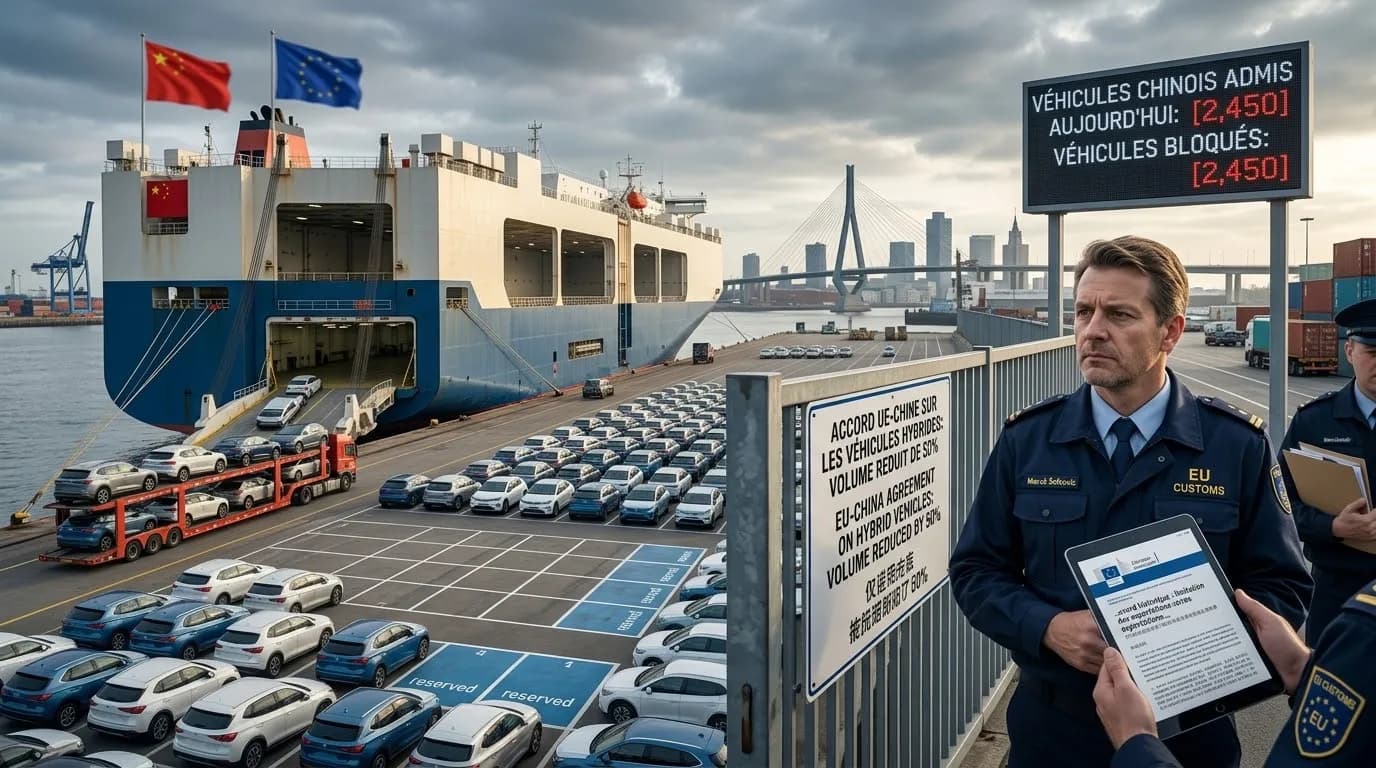
So what exactly is CBAM? Think of it this way. European manufacturers have to pay a price for the carbon they emit under the EU's Emissions Trading System. CBAM simply extends that logic to imports. If you are a steel producer in another country selling to the EU, you now face a similar carbon cost. The mechanism initially covers six sectors: iron and steel, cement, fertilisers, aluminium, electricity, and hydrogen. But the EU has already agreed to expand it to around 180 downstream products like machinery, vehicle parts, and construction equipment by 2030. Importers now must buy CBAM certificates based on the embedded emissions in their goods. The first annual declarations are due by September 2027.
Concerns about climate justice
At first glance, this seems fair enough. Why should European companies face higher costs while foreign competitors get a free pass? But dig a little deeper, and you will find serious concerns about climate justice. A country like India, whose steel industry exports heavily to Europe, could see its costs jump by up to 20 percent. According to the World Bank, CBAM could affect roughly 16 billion dollars worth of exports from developing countries annually. Nations like Brazil, South Africa, and Indonesia could lose billions. African countries that rely on raw material exports might see their GDP growth shrink by nearly 1 percent. That is not pocket change for economies already struggling with poverty and inequality.
The critics have a point. CBAM applies a basically uniform carbon standard to everyone, regardless of their historical emissions or their capacity to decarbonize. This clashes with the principle of common but differentiated responsibilities that has been at the heart of international climate agreements for decades. Countries like Brazil, which already generates 89 percent of its electricity from renewables, feel unfairly penalized because the EU's accounting system does not fully recognize this advantage. Many developing nations also lack the sophisticated monitoring and verification systems needed to comply with CBAM reporting requirements. It is like asking someone to run a marathon before they have learned to walk.
Addressing equity concerns
So does this mean CBAM is just green protectionism dressed up as climate policy? Not necessarily. What makes this mechanism potentially revolutionary for climate inclusivity is how the EU is evolving its approach to address these equity concerns.
The EU has quietly been building a support system alongside the regulatory stick. There is technical assistance through the TAIEX instrument, which helps neighbouring countries improve their decarbonisation efforts. Webinars, recorded guidance, and practical support are being offered to help businesses understand their obligations. The MED-GEM Network is working with industries across the Southern Neighbourhood to prepare for the energy transition. The message from Brussels seems to be shifting: we are not just here to punish; we also want to help.
Revenue recycling and support
Perhaps the most promising development is the growing momentum around revenue recycling. The European Parliament has proposed that at least 25 percent of the money raised from CBAM certificate sales should be funnelled into new international climate finance. This would be additional to existing aid commitments. Scholars have gone further, suggesting models like CBAM Plus, which would link carbon pricing directly with development assistance. The idea is to use the revenues from the mechanism to help developing countries invest in green technologies and build the infrastructure they need to compete fairly.
There is also talk of a Just Transition framework that includes creating an IP Bank for Climate. This would acquire rights to critical low carbon technologies and license them at zero or subsidised cost to manufacturers in the poorest countries. Imagine a world where the same mechanism that penalises high emissions also funds the solution. That is the kind of thinking that could turn CBAM from a divisive tool into a genuine catalyst for global cooperation.
The EU is also showing some flexibility in who bears the heaviest burden. The draft proposals suggest that the least developed countries could be exempted from the financial obligations of CBAM, though they would still need to report their emissions to prevent cheating. Small and medium sized enterprises in lower income countries could get simplified reporting procedures. Technical assistance for monitoring and verification would be prioritised for those who need it most. The Council has even agreed to temporary exemptions in serious unforeseen circumstances, creating some wiggle room for countries facing severe disruption.
Global impact and adoption
Beyond its direct provisions, CBAM is already changing the global conversation about climate policy. Since its introduction, more countries have adopted carbon pricing systems of their own. The UK has implemented its own CBAM, and Australia is considering similar measures. This policy diffusion creates a new global norm that could spark a race to the top in climate ambition. Countries that might have dragged their feet on decarbonisation are now feeling the pressure to act, not just to avoid penalties but to remain competitive in global markets.
Of course, the road ahead is not without its challenges. Many trading partners still view CBAM as an administrative burden and a unilateral imposition. The EU's commitment to capacity building must be backed by real resources. The requirement to publish impact reports on developing countries every two years starting in 2028 is a good accountability measure, but only if those reports lead to meaningful adjustments.
Future potential and challenges
Ultimately, the potential for CBAM to revolutionize climate inclusivity lies not in the mechanism itself but in how it evolves. It can either become another tool for rich countries to protect their industries at the expense of the poor, or it can catalyse a fairer, more collaborative approach to the climate crisis. The EU has made encouraging moves in the right direction. The question now is whether the political will exists to follow through.
This is not just about carbon accounting and trade tariffs. It is about whether we can build a global climate system that treats nations fairly while still pushing for the rapid decarbonisation we desperately need. The next few years will tell us whether CBAM becomes a model for inclusive climate governance or another source of division. One thing is certain: the world is watching, and the stakes could not be higher.
Uroosa Khan
Contributing writer at EUReflect.
Follow EUReflect
See more of our reporting on Google
Mark EUReflect as a preferred source and our stories are ranked higher for you in Top Stories, Discover and Google News — and carry a “preferred” badge when they are cited in AI results.
Add EUReflect as a preferred source