Can Europe Lead Global Trade Again?
The EU remains a major trade power with a large surplus, but exports are declining and dependence on the US is rising. Innovation is weak, SMEs are underrepresented in exports, and internal market barriers persist. Issues in raw materials, CBAM, and Global Gateway show the need for deep structural reform.
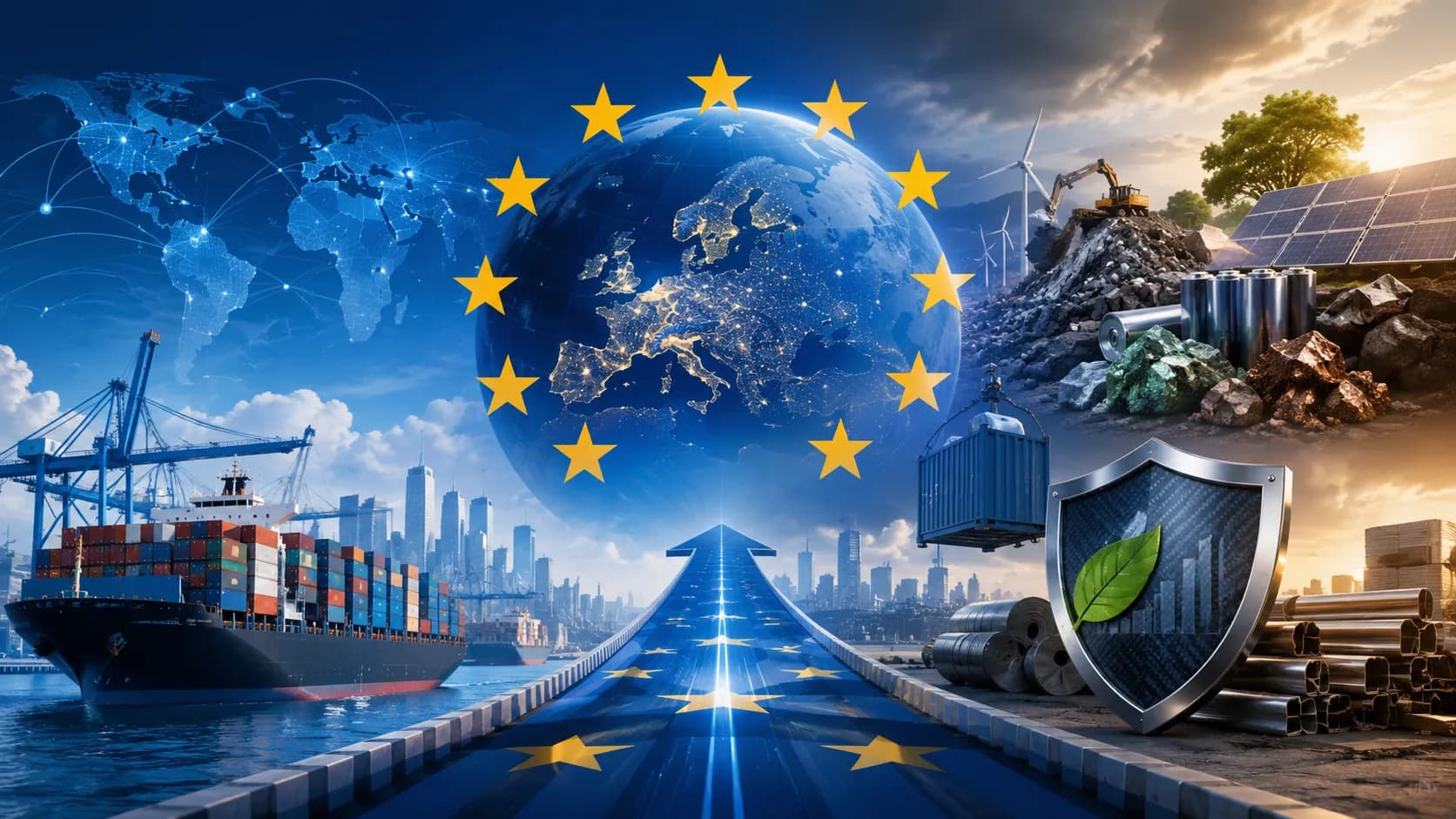
The European Union is a trade giant. In 2025, it sold €130 billion more goods to the rest of the world than it bought. That sounds good. But beneath the surface, there are real problems. EU exports fell for three quarters in a row in 2025. The bloc’s share of global exports has dropped by about 2% since 2019. The world is becoming more divided, with trade wars and new tariffs. To sell more abroad, EU countries must first fix problems at home.
EU countries sell services (like banking or software) to other countries. Big companies make up over half of those sales. Small and medium-sized companies (SMEs) make up only about a quarter. This is a problem. When exports depend on just a few big firms, a shock to trade hurts everyone.
The EU also sells too much to the United States. The US buys 21% of all EU exports. That is €554.9 billion worth of goods. But in August 2025, exports to the US fell by 4.7% because of new US tariffs. The European Central Bank says higher US tariffs could reduce the EU’s total economic output by 0.7% by 2027. That is a big loss.
Why can’t EU exports grow faster? One big reason: Europe spends too little on research. In 2023, the EU spent only 2.22% of its GDP on research and development. The US and China spend much more. This means many EU exports rely on old technology, not new ideas.
This is very clear when you look at raw materials needed for green products (like batteries and solar panels). The EU launched a plan called the Critical Raw Materials Act. It had goals for 2030: recycle 15% of these materials, process 40% at home, and extract 10% from EU mines. But an official audit found the plan has failed. The EU still depends on a few other countries for its materials. This hurts the EU’s ability to sell green products to the world.
The EU created a big project called Global Gateway. It plans to spend over €400 billion on roads, ports, internet cables, and hospitals in poor countries by 2027. The idea is to help those countries while also creating new markets for EU companies. But so far, the project is not well organised. Experts say the EU needs a special team to coordinate export loans and investments. Without that, Global Gateway will just be a collection of small projects, not a real strategy to boost exports.
The EU has a new policy called the Carbon Border Adjustment Mechanism (CBAM). It forces foreign companies to pay for the pollution they cause when they sell certain goods (like steel or cement) to the EU. This is meant to protect EU companies and fight climate change. Some good has come from it while other countries have started their own carbon prices because of CBAM.
But CBAM also has risks. It could reduce EU exports of metals and steel by up to 1.5%. More importantly, other countries may see CBAM as an unfair tax. They could strike back with their own tariffs on EU goods. In a world already full of trade fights, this is dangerous.
Here is a hard truth: the easiest way for EU countries to sell more is not to find new buyers overseas. It is to sell more to each other. The EU’s single market has existed for 30 years, but it is still not complete. Services (like insurance or consulting) make up 70% of the EU economy, but only 20% of trade between EU countries. That is a huge missed opportunity.
The European Commission says that finishing the single market could add €1.3 trillion per year to the EU economy. Right now, EU countries still put up small barriers against each other. For example, the same product can cost twice as much in one country as in the one next door. Removing these barriers costs nothing and it would boost exports overnight.
First, finish the single market. Focus on services, which are still very fragmented. The EU should punish countries that keep unfair rules.Second, fix the raw materials problem. The current plan is too weak. The EU needs binding targets and real investment in mining and recycling at home.Third, help small companies export. Current programmes are too small. The EU should provide more money and simpler rules so SMEs can sell abroad more easily.Fourth, use trade agreements wisely. The EU has new deals with Mexico and South America’s Mercosur bloc. These are good. But agreements only work if the EU enforces them and engages actively with partners.
The EU is still a strong trading power. It has a large surplus, strong services exports, and global influence through its rules. But behind the headlines, there are real dangers: too much reliance on the US and on big companies, weak innovation, and internal barriers that make no sense. The EU can either keep reacting to trade wars and losing ground, or it can finally fix its own market. The choice is clear. The question is whether European leaders have the courage to act.
Uroosa Khan
Contributing writer at EUReflect.
Follow EUReflect
See more of our reporting on Google
Mark EUReflect as a preferred source and our stories are ranked higher for you in Top Stories, Discover and Google News — and carry a “preferred” badge when they are cited in AI results.
Add EUReflect as a preferred source