The Next Health Threat
WHO has drawn up research roadmaps for 10 viral families and a group of bacteria to develop diagnostics, treatments, and vaccines before the next pandemic emerges.
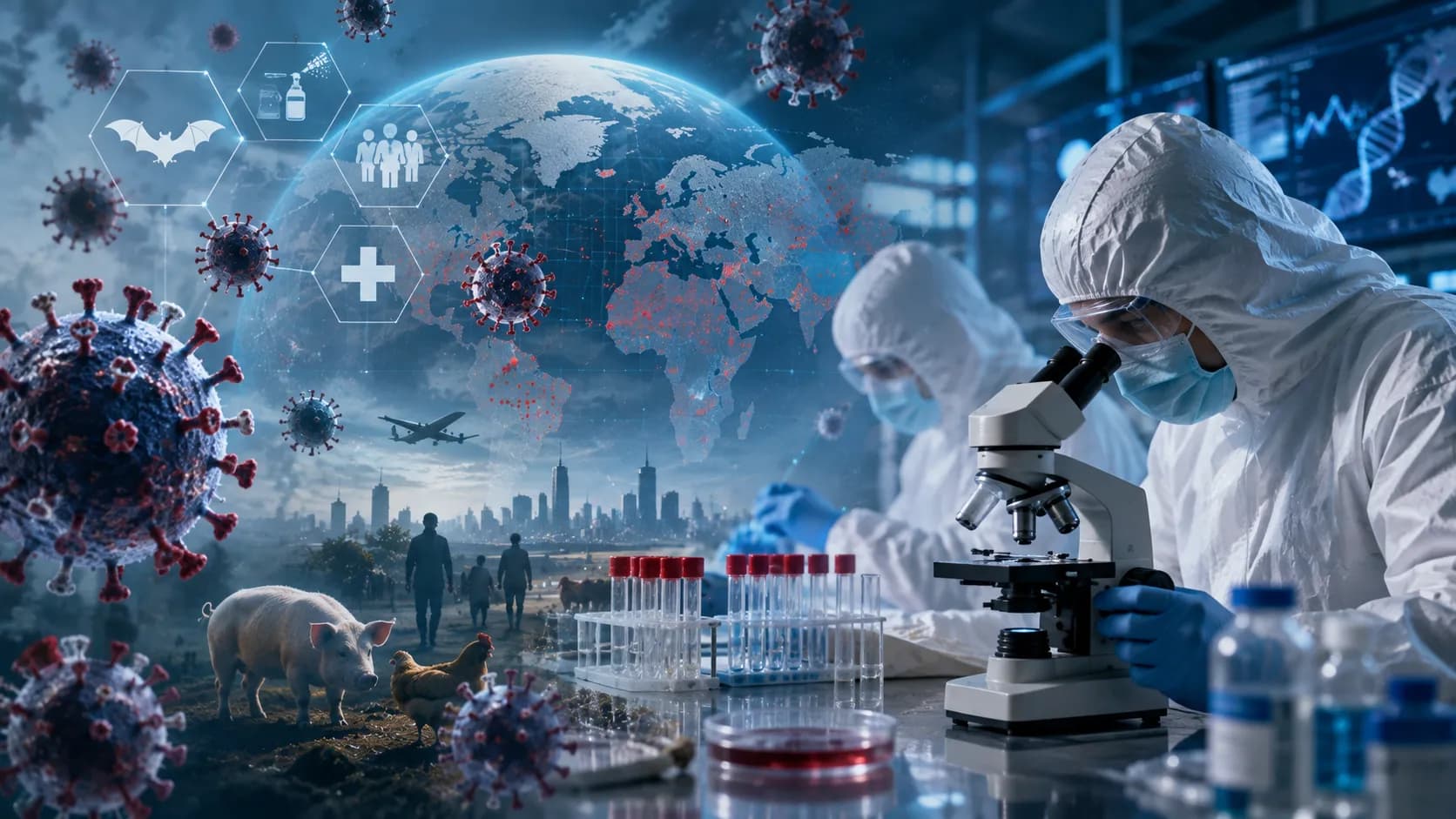
The world may be better prepared for another pandemic than it was before COVID-19, but the global health landscape of 2026 shows that the next major crisis could emerge from several directions at once.
Ebola outbreaks, avian influenza, Nipah virus, food- and water-borne diseases and the growing threat of pathogens crossing from animals to humans are keeping health authorities on alert. At the same time, climate change, international travel, urbanization and antimicrobial resistance are creating conditions in which local outbreaks can become international problems faster than before.
The World Health Organization has responded by expanding preparations not for one predicted virus, but for entire families of pathogens that could potentially cause future epidemics. In April, WHO launched research and development roadmaps covering 10 viral families and a group of bacteria, with the goal of preparing diagnostics, treatments and vaccines before the next major pandemic emerges.
Ebola Shows the Danger Is Still Present
One of the most serious current warnings is coming from Central Africa.
The Democratic Republic of the Congo is facing a major Ebola outbreak caused by Bundibugyo virus. According to WHO data published in August, 3,605 confirmed cases and 1,587 deaths had been recorded as of July 30, producing a crude case-fatality ratio of approximately 44 percent. Cases had been detected across five provinces.
The outbreak demonstrates why highly lethal viruses remain an international concern even when they initially emerge in geographically limited areas.
Modern transportation can move infected people across regions before health authorities fully understand an outbreak. Weak healthcare infrastructure, conflict and population displacement can make containment even more difficult.
Bird Flu Remains on the Watchlist
Influenza remains another major pandemic concern.
WHO continues to describe influenza as a persistent global public-health threat because seasonal epidemics coexist with the possibility that new influenza viruses could acquire characteristics allowing wider transmission among humans.
H5N1 is particularly closely monitored.
The virus has caused unprecedented outbreaks among wild birds and poultry in multiple regions since 2020 and can also infect mammals and, in rare cases, humans.
The central concern is not that another influenza pandemic is inevitable. It is that widespread circulation among animals creates repeated opportunities for viruses to evolve.
For health authorities, this makes surveillance of farms, wildlife and human infections increasingly important.
Nipah Highlights the Animal-to-Human Risk
Another pathogen receiving attention is Nipah virus.
India reported laboratory-confirmed Nipah infections in West Bengal in January 2026, including severe disease among healthcare workers.
Nipah is important because it represents a wider problem confronting global health: zoonotic spillover.
Many emerging infectious diseases originate in animals before crossing into humans. Changes in land use, agricultural expansion, wildlife interaction and environmental conditions can increase opportunities for these encounters.
WHO is consequently strengthening the “One Health” approach, which combines human, animal and environmental health surveillance rather than treating them as separate systems.
This could become one of the most important defenses against future pandemics.
Instead of waiting for hospitals to detect large numbers of sick people, authorities can attempt to identify unusual infections in animals or local communities before widespread human transmission begins.
Climate Change Could Redraw the Disease Map
Future health emergencies may also be closely connected to climate.
Rising temperatures, changing rainfall patterns, flooding and extreme weather can alter the environments in which mosquitoes, ticks and other disease vectors survive.
This means diseases traditionally associated with tropical or subtropical regions could become relevant to new geographical areas.
WHO is already treating climate-related health risks as part of emergency preparedness, including work in 2026 focused on El Niño and climate-linked health threats.
The consequence could be a gradual redrawing of the world's disease map.
Countries may increasingly need surveillance systems for infections that historically occurred far beyond their borders.
Food and Water Could Become Bigger Risks
Not every future epidemic will necessarily come from a new virus.
The United States' major cyclosporiasis outbreak in 2026 demonstrates how food supply chains can spread disease across large geographical areas.
By early August, the investigation had expanded to 15 states, with thousands of infections linked to contaminated iceberg lettuce.
Global food networks mean a contaminated agricultural product can potentially reach multiple cities or countries before authorities identify its source.
Climate pressures may further complicate this problem by affecting water quality, agriculture and sanitation.
Future outbreak surveillance will therefore increasingly involve not only hospitals and laboratories but also agriculture, food distribution and environmental monitoring.
Wastewater Could Become an Early-Warning System
Technology is simultaneously giving governments new tools to detect outbreaks earlier.
During the 2026 World Cup, health specialists in North America prepared wastewater surveillance and other monitoring systems to identify infectious diseases during an event expected to attract millions of international visitors.
Wastewater epidemiology became widely recognized during COVID-19 because viruses and other biological signals can sometimes be detected in sewage before hospitals experience major increases in patients.
Combined with genomic sequencing, artificial intelligence and digital disease surveillance, such systems could provide governments with an early-warning network.
The objective is simple: detect an outbreak while it is still small.
Drug Resistance Could Become a Slower Pandemic
Another threat is less dramatic but potentially enormous: antimicrobial resistance.
Bacteria can evolve resistance to antibiotics, particularly when medicines are overused or misused. As resistance spreads, infections that are currently treatable can become increasingly difficult to control.
Unlike a sudden viral pandemic, antimicrobial resistance develops gradually.
That may make it less visible politically, but its consequences could affect surgery, cancer treatment, intensive care and many routine medical procedures that depend on effective antibiotics.
The fact that WHO's new pandemic research roadmaps include bacterial threats alongside viral families demonstrates how preparedness is expanding beyond the traditional search for the “next virus.”
The Next Pandemic May Not Look Like COVID-19
One of the biggest lessons from the current situation is that governments should not prepare simply for another coronavirus.
A future international health emergency could emerge from influenza.
It could begin with an animal virus.
It could involve a mosquito-borne pathogen expanding into new regions.
It could be driven by antibiotic-resistant bacteria.
Or several outbreaks could occur simultaneously.
WHO's current preparedness strategy increasingly reflects this uncertainty by building systems that can respond to groups of pathogens rather than predicting one specific disease.
The world therefore faces a paradox.
Medical technology is becoming more powerful. Genomic sequencing can identify pathogens rapidly. Artificial intelligence can analyze enormous quantities of health data. Wastewater surveillance can reveal infections before patients arrive at hospitals. Vaccine platforms can potentially be adapted much faster than in previous decades.
But the conditions that allow diseases to spread are also becoming more complex.
International mobility connects continents within hours. Climate change is altering ecosystems. Cities continue to expand. Humans and animals increasingly share changing environments.
The next major health crisis therefore cannot be predicted with certainty.
What can be predicted is that the time available to detect and contain it may be very short.
Ahmet Balakan
Contributing writer at EUReflect.
Follow EUReflect
See more of our reporting on Google
Mark EUReflect as a preferred source and our stories are ranked higher for you in Top Stories, Discover and Google News — and carry a “preferred” badge when they are cited in AI results.
Add EUReflect as a preferred source