WhatsApp Must Allow Rival AI
The European Union has ordered Meta to restore access to WhatsApp for rival AI chatbot providers while an antitrust investigation continues. Regulators argue the restrictions harm competition, while Meta calls the decision regulatory overreach and plans to appeal.
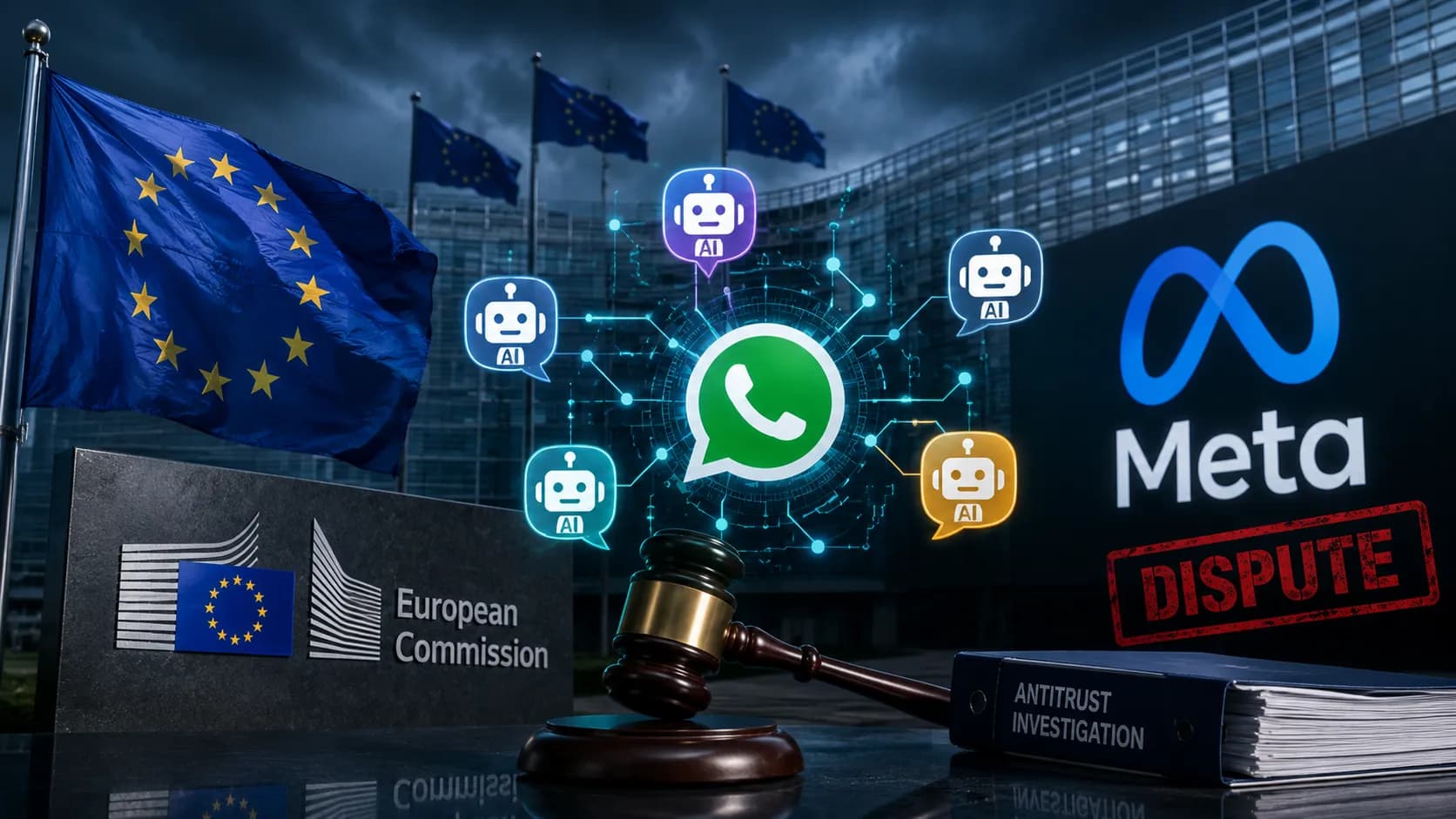
The European Union has intensified its scrutiny of major technology companies by ordering Meta to restore access to WhatsApp for third-party artificial intelligence providers. The move represents one of the most significant regulatory interventions in the rapidly growing AI industry and highlights the ongoing battle between European competition authorities and some of the world’s largest technology firms.
According to the European Commission, Meta must allow rival AI chatbot developers to use WhatsApp’s Business API under the same conditions that existed before access restrictions were introduced. The order comes as part of an ongoing antitrust investigation into whether the company abused its dominant market position by preventing competing AI assistants from operating on the platform while promoting its own Meta AI services.
The decision underscores growing concerns among regulators that dominant technology companies could use control over popular digital platforms to limit competition in the emerging AI sector, potentially reducing consumer choice and slowing innovation.
EU REGULATORS SEEK TO PROTECT COMPETITION IN THE AI MARKET
The European Commission launched its investigation into Meta in December 2025 after the company reportedly restricted access for third-party general-purpose AI assistants on WhatsApp’s Business API. Regulators believe the move may have given Meta AI an unfair competitive advantage by limiting the ability of rival AI providers to reach millions of users through one of the world’s most widely used messaging platforms.
European officials argue that the AI market is developing at an exceptionally rapid pace and that any anti-competitive behavior could have long-lasting consequences. Unlike traditional industries, where investigations can take years without significantly altering market dynamics, emerging technology sectors can change dramatically within a short period.
As a result, the Commission introduced interim measures requiring Meta to restore access while the broader investigation continues. Officials stated that immediate action was necessary to prevent what they described as “serious and irreparable harm” to competition.
European Commission Executive Vice-President Teresa Ribera emphasized that maintaining consumer choice is a central objective of the intervention. According to the Commission, European citizens should be free to choose which AI assistants they wish to interact with through messaging services, rather than having those choices determined by a single platform operator.
The Commission has also warned that failure to comply with the interim order could result in substantial financial penalties, potentially reaching up to 10% of Meta’s global turnover.
META REJECTS THE DECISION AND PREPARES LEGAL CHALLENGE
Meta has strongly criticized the European Commission’s decision, describing it as excessive regulatory intervention that unfairly benefits competing technology companies.
The company argues that the ruling effectively grants access to WhatsApp’s commercial infrastructure without requiring rival firms to pay for the service. According to Meta, large AI companies, including some of the most valuable firms in the world, could potentially gain access to a platform funded by businesses that currently pay to use WhatsApp Business services.
Meta maintains that the Commission’s decision places an unfair burden on the company while creating advantages for competitors. In response, the firm has announced plans to appeal the ruling through legal channels.
The dispute reflects a broader disagreement over how digital platforms should be regulated in the age of artificial intelligence. While regulators emphasize the need to prevent market concentration and encourage competition, technology companies frequently argue that excessive regulation could discourage investment and slow innovation.
For Meta, the case represents another major legal and regulatory challenge in Europe, where the company has repeatedly faced investigations, fines, and compliance requirements related to competition, privacy, and digital market practices.
A GROWING TRANSATLANTIC CONFLICT OVER BIG TECH REGULATION
The latest clash between Meta and European authorities is part of a wider pattern of tension between regulators in the European Union and major American technology companies.
Over the past several years, the EU has adopted a more aggressive approach toward regulating large digital platforms, introducing comprehensive legislation designed to curb anti-competitive behavior and strengthen consumer protections. Companies such as Meta, Google, Apple, Amazon, and others have faced increased oversight under these rules.
European officials argue that strong regulation is necessary to ensure fair competition and prevent dominant firms from using their market power to limit opportunities for smaller competitors. They maintain that intervention is essential for preserving innovation and protecting consumers in increasingly digital economies.
However, critics of the EU’s approach claim that European regulators disproportionately target American technology firms. The issue has become politically sensitive, with the United States expressing concerns that regulatory actions could place domestic companies at a disadvantage in global markets.
The debate has intensified as artificial intelligence emerges as one of the most strategically important industries in the world. Access to users, data, and digital platforms is increasingly viewed as critical to future AI development, making regulatory decisions such as the WhatsApp ruling highly significant.
Industry observers believe the outcome of the Meta investigation could influence future regulatory policies not only in Europe but also in other regions seeking to establish rules for AI competition and digital platform governance.
CONCLUSION
The European Commission’s order requiring Meta to reopen WhatsApp to rival AI chatbots marks a significant moment in the evolving relationship between regulators and major technology companies. As artificial intelligence becomes increasingly integrated into everyday digital services, questions surrounding market access, competition, and consumer choice are becoming more important than ever.
While European regulators argue that intervention is necessary to prevent anti-competitive behavior and preserve innovation, Meta insists that the decision unfairly benefits competitors and represents excessive government involvement in private business operations.
With Meta preparing an appeal and the Commission’s investigation still ongoing, the dispute is likely to become a landmark case in the regulation of artificial intelligence and digital platforms. The final outcome could shape how AI services are distributed, integrated, and regulated across global markets for years to come.
Botakoz Unbayeva
Contributing writer at EUReflect.
Follow EUReflect
See more of our reporting on Google
Mark EUReflect as a preferred source and our stories are ranked higher for you in Top Stories, Discover and Google News — and carry a “preferred” badge when they are cited in AI results.
Add EUReflect as a preferred source